


Summary of ADC0831 8051 LM35 TEMPERATURE CONTROL WITH LCD SCREEN
Summary: This project uses an LM35 temperature sensor with an ADC0831 analog-to-digital converter and an 8051 microcontroller to read ambient temperature, convert it to 8-bit digital data, and display the ASCII temperature values on an LCD. The ADC0831 is clock-driven (8 clock pulses per conversion) with CS toggled each cycle; data is serially shifted into the 8051 accumulator and presented on-screen. Proteus ISIS schematics and source code are provided.Parts used in the ADC0831 8051 LM35 Temperature Control with LCD Screen:
- LM35 temperature sensor
- ADC0831 analog-to-digital converter
- 8051 microcontroller
- Character LCD display
- Clock source or timing circuitry for ADC0831
- Power supply (batteries or regulated DC supply)
- Pull-up/pull-down resistors and decoupling capacitors
- Interconnecting wires or PCB traces
- Proteus ISIS schematic and source code files (project files)
Adc 0831 with 8051 lm 35 temperature sensor, and a detailed project examples for the use of inverters. author :Özer Deniz Objective: LM 35 temperature sensor dealt with 0831 ADC analog-to-digital conversion of knowledge, and expression of this information... Electronics Projects, ADC0831 8051 LM35 Temperature Control with LCD Screen "avr project, microcontroller projects,
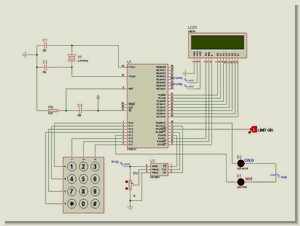
Adc 0831 with 8051 lm 35 temperature sensor, and a detailed project examples for the use of inverters. author :Özer Deniz
Objective: LM 35 temperature sensor dealt with 0831 ADC analog-to-digital conversion of knowledge, and expression of this information as the temperature on the LCD display.
Abstract: In our program; 8-bit temperature data from ADCs continuously scanned and converted into ASCII code is displayed on the LCD. Ambient temperature monitoring any change LM35 temperature sensor and the voltage at the output of digital information at the output of the ADC is displaced.
8051 TEMPERATURE CONTROL
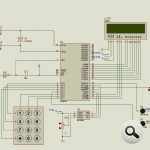
Methods: ADC0831 series 8-bit output, which is an analog-digital converter to receive data sent to the ADC has produced eight clock pulses. After each clock pulse information received from the serial output of the ADC batteries and accumulators given to the low-valent a bit shifted to the left.
Thus, at the end of a loop 8 clock’luk desired digital information is stored in the accumulator. ADC must be switched off after every 8 clock’luk cycle and should be ready to receive a new 8-bit data. For this, the ADC’s CS ‘end of cycle beginning “low”, at the end of the cycle “high” was made.
ADC0831 8051 LM35 Temperature Control with LCD Screen schematic proteus isis source code files
FILE DOWNLOAD LINK LIST (in TXT format): LINKS-6941.zip
Source: ADC0831 8051 LM35 TEMPERATURE CONTROL WITH LCD SCREEN
- How is the LM35 temperature displayed on the LCD?
The 8051 reads analog voltage from the LM35 via the ADC0831, converts the 8-bit digital result to ASCII, and sends it to the LCD for display. - How many clock pulses does ADC0831 need per conversion?
ADC0831 requires eight clock pulses to produce an 8-bit conversion result. - How is serial data received from the ADC0831 by the 8051?
Data is received serially from the ADC0831 output and shifted into the 8051 accumulator one bit at a time over eight clock pulses. - How is the ADC0831 enabled and disabled each cycle?
The ADC0831 chip select (CS) is driven low at the start of a conversion and pulled high at the end of the eight-clock cycle to turn off the ADC and prepare for the next conversion. - Can the system continuously monitor ambient temperature?
Yes. The program continuously scans the ADC, converts readings, and updates the LCD with current temperature values. - What project files are provided for this implementation?
Proteus ISIS schematic and source code files are provided, packaged as project download files (LINKS-6941.zip). - What is the role of the 8051 accumulator in this project?
The accumulator collects each bit shifted in from the ADC during the eight-clock cycle so the full 8-bit digital temperature value is stored there.
Related projects
Spectrum Analyzer using TMS320F28023DA with Proteus Simulation
Introduction This project demonstrates a real-time audio spectrum analyzer using the TMS320F28023DA Piccolo microcontroller, simulated in Proteus VSM. The system captures an...
Sensors & TemperatureDHT22 Low Cost Humidity Sensor using PIC18F25K20 with Proteus Simulation
IntroductionThis microcontroller project demonstrates how to interface a DHT22 (RHT03) digital temperature and humidity sensor with a PIC18F25K20 using Proteus simulation.The project...
Sensors & TemperatureCrafting a Microcontroller-Based Temperature Monitoring System
Abstract As technological advancements progress, processes become increasingly intricate, demanding a corresponding expansion in the parameters necessary for efficient analysis. Data acquisition,...
Sensors & TemperatureAutomated Room Temperature Monitoring System using Microcontrollers
Abstract Monitoring the temperature within a computer server room stands as a crucial responsibility to uphold the server's performance amidst potential disruptions...
Sensors & TemperatureInnovative Approaches to Control System Design for 100KV Impulse Generators
1. INTRODUCTION An impulse generator is an electrical device designed to generate short-duration surges of high voltage or high current. Impulse signals...
Sensors & TemperatureSmart Baby Incubator: Enhancing Care with PIC Microcontrollers
INTRODUCTION Within the effective Baby Incubator system, the incubator serves as an infant-stimulation apparatus designed for the intensive care of newborns, particularly...

Muhammad Bilal
I am a highly skilled and motivated individual with a Master's degree in Computer Science. I have extensive experience in technical writing and a deep understanding of SEO practices.