


Summary of PHILIPS RC5 REMOTE DIMMER WITH PIC16F628
This article describes a 220V lamp dimmer project using the Philips RC5 remote protocol. The PIC16F628 microcontroller controls brightness adjustments via +1, -1, +10, and -10 steps. Key components include the MOC3021 triac driver and 4N35 optocoupler for isolation. Source code in PICBASIC Pro and Proteus simulation files are available for download to implement this remote control system.Parts used in the Philips RC5 Remote Dimmer:
- PIC16F628 Microcontroller
- MOC3021 Triac Driver
- 4N35 Optocoupler
- Philips RC5 Remote Control
- 220V Lamp
The purpose of the remote dimmer control circuit TV (Philips RC5 code) 220V lamp with brightness adjustment can be made. Increase and decrease +10, -10 and +1, -1 as is done in two ways. Circuit PIC16F628, and 4N35 MOC3021’ve... Electronics Projects, Philips RC5 Remote Dimmer with PIC16F628 "microchip projects, microcontroller projects, pic16f628 projects, picbasic pro examples,
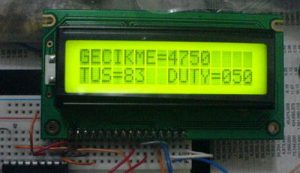
The purpose of the remote dimmer control circuit TV (Philips RC5 code) 220V lamp with brightness adjustment can be made. Increase and decrease +10, -10 and +1, -1 as is done in two ways. Circuit PIC16F628, and 4N35 MOC3021’ve used. @ Melih. While the project design involved a great many thanks to ETE evening.
PIC16F628 REMOTE DIMMER SCHEMATIC
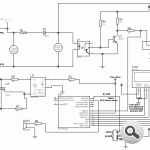
PIC16F628 picbasic pro source code Remote Dimmer proteus isis simulation schematic files:
FILE DOWNLOAD LINK LIST (in TXT format): LINKS-1152.zip
Source: PHILIPS RC5 REMOTE DIMMER WITH PIC16F628
- What is the purpose of this circuit?
The circuit allows brightness adjustment of a 220V lamp using a TV remote with Philips RC5 code. - How many ways can brightness be adjusted?
Brightness can be increased or decreased in two modes: +1/-1 steps and +10/-10 steps. - Which microcontroller is used in the design?
The project utilizes the PIC16F628 microcontroller. - What components provide electrical isolation?
The 4N35 optocoupler and MOC3021 are used in the circuit for isolation. - Can I simulate this project before building it?
Yes, Proteus ISIS simulation schematic files are provided for the project. - In what programming language is the source code written?
The source code is written in PICBASIC Pro. - Is there a way to download the project files?
A file download link list in TXT format containing schematic and code files is available. - What voltage does the lamp operate at?
The lamp operates at 220V.
Related projects
DHT11 Low Cost Humidity Sensor using PIC16F628A with Proteus Simulation
IntroductionThis microcontroller project demonstrates how to interface a low-cost DHT11 temperature and humidity sensor with a PIC16F628A using a Proteus simulation environment.The...
LCD & Display Projects · PIC16F628AFrequency Counter by PIC16F628
In this project we are building a basic and low cost frequency counter circuit . It can measure from 16Hz to 100Hz...
Games, Toys & Calculators · PIC16F628ATIC TAC TOE game using PIC16F628
This project is not to introduce Tic Tac Toe. Everyone knows this game. It's to introduce two features. Bi-coloured LEDs, microcontrollers and...
Motors & RoboticsReal-Time CAN-Based Vehicle Monitoring System with PIC MCU
INTRODUCTION The Controller Area Network (CAN) is a robust vehicle communication bus standard that was primarily developed for automobile applications but has...
Motors & RoboticsEasy Way to Learn Robotics Using Microcontrollers: A Beginner’s Guide
The title, "Easy Way to Learn Robotics Using Microcontrollers," promises an accessible entry point for those curious about the exciting world of...
Motors & Robotics · PIC16F877AEfficient Sun-Following Robot: A Solar Tracker with Microcontroller Control
Abstract The impending global challenge of dwindling non-renewable fuel resources underscores the urgency of transitioning towards renewable energy alternatives like solar power....

Muhammad Bilal
I am a highly skilled and motivated individual with a Master's degree in Computer Science. I have extensive experience in technical writing and a deep understanding of SEO practices.