Projects

This comprehensive hub features the most popular PIC microcontroller projects and tutorials for engineers, hobbyists, and students. From basic LED blinking guides to advanced IoT and robotics implementations using PIC16F and PIC18F microcontrollers, explore step-by-step schematics, C source code, and practical hardware design solutions optimized for real-world applications..

This comprehensive hub features the most popular PIC microcontroller projects and tutorials for engineers, hobbyists, and students. From basic LED blinking guides to advanced IoT and robotics implementations using PIC16F and PIC18F microcontrollers, explore step-by-step schematics, C source code, and practical hardware design solutions optimized for real-world applications.

Project Category Recommended PIC IC Skill Level Key Components
Basic Interfacing PIC16F84A / PIC16F877A Beginner LEDs, Push Buttons, 16×2 LCD
Sensor Monitoring PIC16F877A Intermediate LM35, DHT11, Internal ADC
Motor & Power Control PIC18F4550 / PIC16F877A Intermediate L298N Driver, PWM Module
IoT & Wireless PIC18F4520 / PIC32 Advanced ESP8266, HC-05 Bluetooth, UART
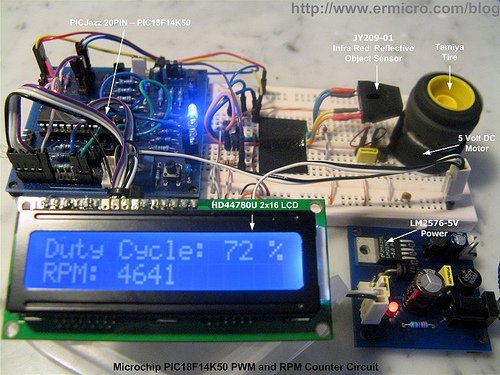
PIC18 Pulse Width Modulation PWM DC Motor Speed Controller with the RPM Counter Project

PIC18 Pulse Width Modulation (PWM) DC Motor Speed Controller with the RPM Counter Project

Equipped with sophisticated Enhanced Capture/Compare/PWM (ECCP) peripheral the Microchip PIC18F14K50 microcontroller could produce up to four PWM channels output. The enhanced PWM (Pulse Width Modulation) mode in ECCP peripheral is capable to drive the full bridge DC Motor circuit directly both in forward or reverse direction. It also could generate single PWM output on the […]

PIC18 Pulse Width Modulation (PWM) DC Motor Speed Controller with the RPM Counter Project Read More »

TIMED DISCHARGE ADAPTER

TIMED DISCHARGE ADAPTER using PIC16F628

Introduction This program is an experimental timed-discharge adapter for a Vericom control panel used with an Orenco Systems AdvanTex® wastewater treatment system (sewage filtration system) marketed by Wastewater Technologies, Inc. Although the Vericom firmware is capable of modification to provide timed-discharge capability by a firmware download via telephone, this adapter was just an experiment to

TIMED DISCHARGE ADAPTER using PIC16F628 Read More »

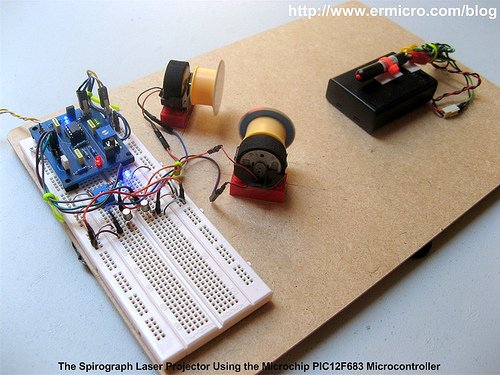
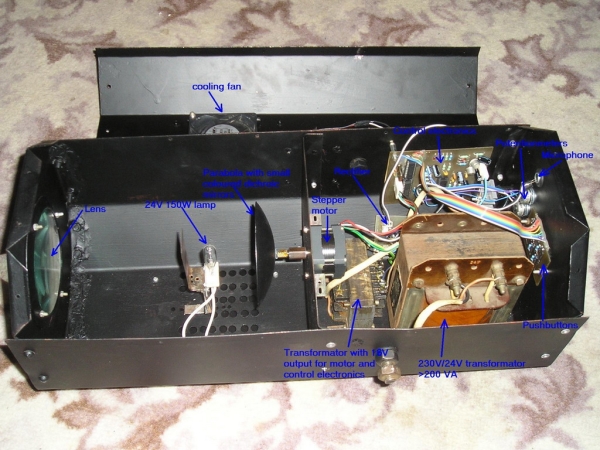
Building your own Simple Laser Projector using the Microchip PIC12F683 Microcontroller

Building your own Simple Laser Projector using the Microchip PIC12F683 Microcontroller

The 8 pins PIC12F683 microcontroller is one of the smallest members of the Microchip 8-bit microcontroller families but equipped with powerful peripherals such as ADC and PWM capabilities. This make this tiny microcontroller is suitable for controlling the DC motor speed. In order to demonstrate the PIC12F683 capabilities and to make this tutorial more attractive,

Building your own Simple Laser Projector using the Microchip PIC12F683 Microcontroller Read More »

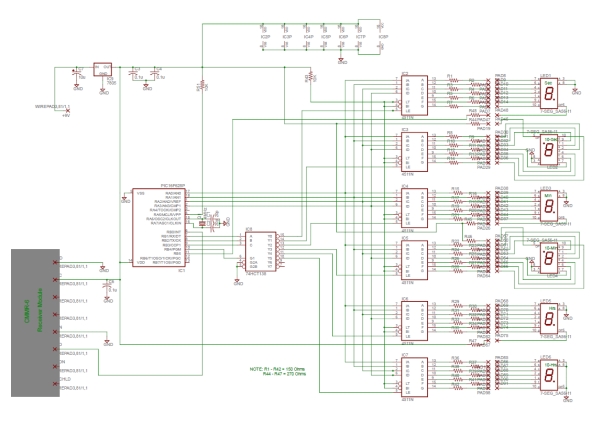
PIC based WWVB clock Schematic

PIC based WWVB clock

Introduction There are many DIY versions of WWVB clock designs available on the web. Commercial “atomic” clocks are inexpensive and widely available, but I wanted to try my hand at designing one to gain insight into WWVB reception and to learn a little about programming a PIC microcontroller. My version is not the simplest available,

PIC based WWVB clock Read More »

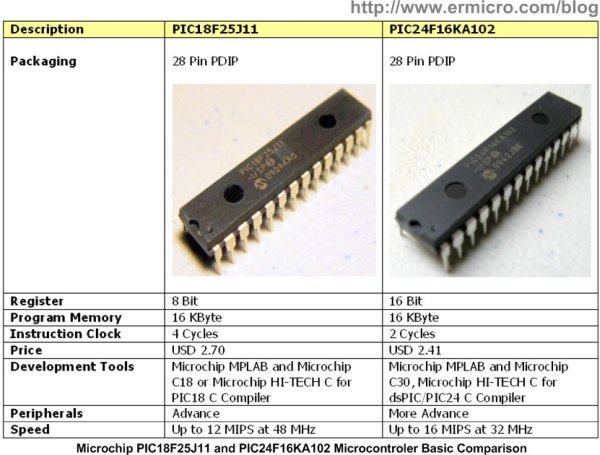
Stepping Into the 16 bit World with the Microchip 16 bit PIC24F16KA102 Family Microcontroller

Stepping Into the 16-bit World with the Microchip 16-bit PIC24F16KA102 Family Microcontroller

One of the commonly asked questions when we move to the bigger and powerful 16-bit microcontroller is do we really need it? As the 8-bit microcontroller is already suite almost all of our needs from a simple blinking LED to more sophisticated embedded application such as robotics. Despite the debate whether to use the 8-Bit

Stepping Into the 16-bit World with the Microchip 16-bit PIC24F16KA102 Family Microcontroller Read More »

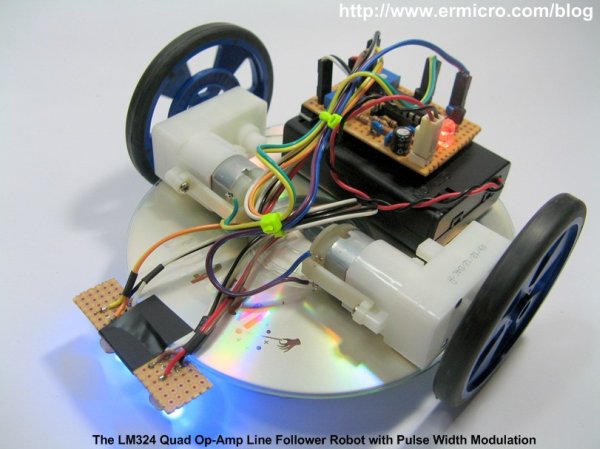
The LM324 Quad Op Amp Line Follower Robot with Pulse Width Modulation

The LM324 Quad Op-Amp Line Follower Robot with Pulse Width Modulation

Designing a simple and yet functional Line Follower Robot (LFR) is always a fascinating and challenging subject to be learned, the LFR actually could be implemented in many ways start from a simple two transistors to a sophisticated PID (Proportional, Integrate and Differential) which take advantage of the programmable feature of microcontroller to calculate the

The LM324 Quad Op-Amp Line Follower Robot with Pulse Width Modulation Read More »

Mid Range PICMicros

Bit-Banging Serial Interfaces for the Low-End and Mid-Range PICMicros using PIC16F84

When I designed the “YAP” for the “YAP” PICMicro programmer presented in “Programming and Customizing the PIC Microcontroller”, I felt that the serial interface provided in “execution mode” of the programmer would be very useful for people developing their own software. With this interface, the user could input new values into the PICMicro application or

Bit-Banging Serial Interfaces for the Low-End and Mid-Range PICMicros using PIC16F84 Read More »