
Summary of SEPTENTRIO STRENGTHENS ITS GNSS/INS PORTFOLIO WITH A SINGLE ANTENNA RECEIVER
Septentrio's AsteRx-i S is a high-precision GPS/INS receiver now available with a single antenna option. This upgrade offers centimeter-level positioning and 3D attitude data while reducing weight, power consumption, and integration complexity. It combines multi-frequency GNSS with an industry-grade IMU for robust performance in challenging environments like under foliage or near structures, making it ideal for robotics and autonomous vehicles.
Parts used in the AsteRx-i S:
- Single antenna option
- Dual antenna option
- Multi-frequency, multi-constellation GNSS (GPS, GLONASS, Galileo, BeiDou, QZSS)
- Industry-grade IMU (Inertial Measurement Unit)
- AIM+ Advanced Interference Monitoring and mitigation system
- GNSS – IMU integration algorithm
Septentrio AsteRx-i S Receiver Adds Single Antenna Positioning
The Septentrio AsteRx-i S Receiver combines high-precision GNSS positioning with an inertial measurement unit to provide position and 3D attitude information. The addition of a single-antenna option is intended to simplify installation while reducing system weight, space requirements, and power consumption.
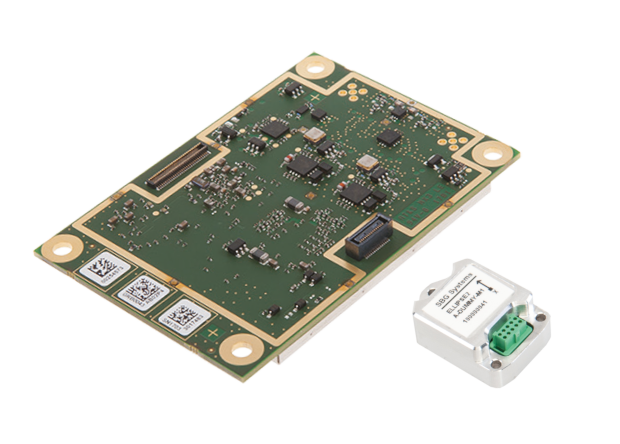
Centimeter-Level GNSS and 3D Attitude
The receiver uses multi-frequency, multi-constellation GNSS supporting systems including GPS, GLONASS, Galileo, BeiDou, and QZSS.
Its integrated IMU works with GNSS measurements to provide:
- Centimeter-level positioning under suitable conditions
- Heading, pitch, and roll information
- High update rates and low-latency output
- Continued positioning during short GNSS interruptions
This combination is useful when satellite reception becomes temporarily limited by structures, vegetation, or other obstacles.
Single-Antenna Advantages
Previously available as a dual-antenna system, the AsteRx-i S can also operate with one antenna.
Using a single antenna reduces hardware requirements, which can benefit compact robots, autonomous platforms, and battery-powered equipment. The dual-antenna configuration remains useful where faster heading initialization or extended stationary operation is required.
GNSS and IMU Integration
The Septentrio AsteRx-i S Receiver combines satellite positioning with inertial measurements to maintain a more continuous navigation solution.
During short GNSS outages, the IMU can help estimate movement through dead reckoning or coasting. This can improve positioning continuity in environments where satellite signals are temporarily blocked or degraded.
AIM+ Interference Mitigation
Septentrio’s AIM+ technology monitors and helps mitigate radio-frequency interference that could affect GNSS reception.
This is particularly relevant in robotic and industrial equipment where nearby electronics may generate electromagnetic noise. A built-in power-spectrum view can also help identify potential interference sources during installation or troubleshooting.
Applications
The receiver is suited to applications requiring accurate positioning and orientation in a compact platform, including:
- Robotics
- Autonomous vehicles
- Logistics equipment
- Industrial positioning systems
- Mobile mapping platforms
The single-antenna version is particularly relevant where size, weight, and power consumption are important design constraints.
Final Overview
The Septentrio AsteRx-i S Receiver provides precise GNSS positioning, IMU-assisted navigation, and full 3D attitude information in either single- or dual-antenna configurations.
The single-antenna option expands its suitability for compact and power-sensitive systems, while features such as dead reckoning and AIM+ help maintain reliable navigation in more challenging operating environments.
Read more: SEPTENTRIO STRENGTHENS ITS GNSS/INS PORTFOLIO WITH A SINGLE ANTENNA RECEIVER
-
What new options are available for the Septentrio GPS/INS receiver?
The receiver is now available with a single antenna option in addition to the previously available dual antenna product. -
How does the single antenna version affect weight and power consumption?
It keeps weight and power consumption to a minimum compared to previous configurations. -
What level of positioning accuracy does the device provide?
It provides reliable centimeter-level positioning based on multi-frequency, multi-constellation GNSS technology. -
Can this receiver measure 3D attitude without two antennas?
Yes, the single antenna receiver delivers full attitude including heading, pitch, and roll. -
Which satellite systems are supported by the AsteRx-i S?
It supports GPS, GLONASS, Galileo, BeiDou, and QZSS. -
How does the device handle short GNSS outages?
It uses coasting or dead reckoning functionality enabled by its unique GNSS-IMU integration algorithm. -
Is the device suitable for use in difficult environments?
Yes, it enables continuous positioning in areas near high structures, under foliage, or during signal outages. -
What specific interference protection does the receiver include?
It includes the AIM+ Advanced Interference Monitoring and mitigation system.
