
Summary of 10BASE-T1S Ethernet: Simplified OEM Design for Auto Devices
This project develops turnkey 10BASE-T1S Ethernet solutions—PHY, MAC, firmware, and ECU modules—to simplify automotive OEM integration, reduce wiring complexity with single twisted-pair links, and lower costs. It targets intra-vehicle networking for ADAS, infotainment, powertrain, and other ECUs within 15 m, supporting AVB, TSN, and standards like ASPICE to improve determinism, maintainability, and time to market.
Parts used in the 10BASE-T1S Ethernet solutions project:
- 10BASE-T1S PHY chips
- MAC (media access control) layer implementations
- ECU modules supporting 10BASE-T1S
- Single twisted pair cables
- Reference firmware and software stacks
- Development tools
- Validation test suites
- Documentation and reference designs
- Engineering support resources
Introduction
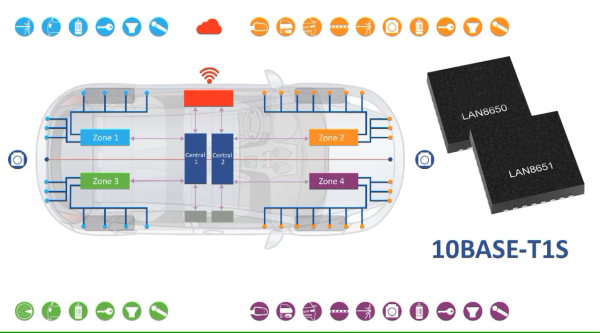
Cars these days are surrounded by technology. They come loaded with all sorts of electronic gadgets and sensors. This project wants to help the big car companies, called original equipment manufacturers (OEMs), build cars that can easily share information between all of these onboard gizmos. The plan is to develop newer Ethernet technology that uses less wiring. Ethernet is a popular way for devices to talk to each other inside a vehicle. But right now, setting all of it up takes a lot of work for the OEMs.
By coming up with new 10BASE-T1S Ethernet solutions, the goal is to make the design process simpler for car manufacturers. Having cars smoothly communicate between things like sensors, entertainment systems, and driver assist features is important these days. This project aims to simplify how OEMs can integrate all that technology into a connected vehicle using a single-cable Ethernet solution. That should help them bring better technology to new cars faster.
10BASE-T1S Ethernet Technology
10BASE-T1S is a new standardized Ethernet physical layer specification specifically designed for automotive applications. Some key advantages it provides over traditional Ethernet include using just a single twisted pair of wires for transmission instead of up to eight pairs. This greatly reduces wiring complexity and harness size in vehicles. 10BASE-T1S also has improved common-mode noise rejection capabilities which are important in the electrically noisy automotive environment.
Furthermore, 10BASE-T1S specifies a maximum link length of 15 meters which matches typical intra-vehicle network topologies. It operates at a lower 10 Mbps data rate to allow for lower-cost PHY (physical layer) chips. All of these features make 10BASE-T1S well-suited for connecting a growing number of electronic control units (ECUs) within modern vehicles simply and cost-effectively.
Ease of Design and Implementation
By developing complete 10BASE-T1S Ethernet solution stacks including PHY, MAC (media access control layer), and example firmware/software, this project aims to simplify the design process for OEMs. Having validated, turnkey solutions will save OEMs significant time and resources compared to having to develop all layers of the network from scratch. Compatible PHYs and ECU modules that directly support 10BASE-T1S will be made available to OEMs to easily integrate into their vehicle designs.
Other similar protocols in the network for which these solutions can be designed include the AVB (audio video bridging) and TSN (time-sensitive networking). This will let different vehicle systems such as ADAS, Infotainment, and Powertrain be capable of communicating to other systems deterministically and reliably over a single backbone network. Comprehensive development tools, documentation, and support will further reduce integration risks for OEMs.
Cost Savings and Other Benefits
By making 10BASE-T1S integration simpler, this project aims to help lower overall vehicle system costs for OEMs. Less complex wiring harnesses, the use of single twisted pair cables, and the availability of off-the-shelf modules and chips versus custom design should reduce the bill of materials. Lower integration efforts through turnkey solutions will also cut engineering costs.
Additionally, a standardized network architecture based on 10BASE-T1S will improve longer-term maintainability, upgradability, and reuse of designs across product lines for OEMs. It could also enable the development of common Tier 1 supplier modules supporting multiple OEMs. Overall, the goal is to accelerate the time to market for new connected vehicle features through simplified integration of reliable and low-cost intra-vehicle networks.
Conclusion
In summary, the development of complete 10BASE-T1S Ethernet solutions is an important project that aims to make it much easier for automotive OEMs to design and implement connected vehicle architectures. By providing validated and tested technology stacks that directly support the 10BASE-T1S specification, integration risk and effort for OEMs can be significantly reduced. This has the potential to lower overall system costs while also improving design reuse through a common networking approach. If successful, it could aid in the advancement of the most up-to-date connectivity inside of automobiles.
FAQ
Q: Who is the target customer for these 10BASE-T1S Ethernet solutions?
A: The leading customer group is the automotive original equipment manufacturers (OEMs) who are planning the electrical line concepts of future cars. Technavio’s turnkey solutions are targeted at making the integration processes of In-Vehicle Networks easier for OEM design engineers.
Q: What automotive systems can benefit from 10BASE-T1S networks?
A: A wide variety of vehicle systems can communicate over 10BASE-T1S networks, including advanced driver assistance systems, infotainment, body controls, seating adjustment, lighting, and more. It’s also well-suited for networking powertrain and emission control components. Essentially any application that requires reliable connectivity between ECUs within a 15m range.
Q: How does 10BASE-T1S compare to other automotive network solutions?
A: It provides better performance than single-wire CAN buses while addressing the complexity issues of traditional automotive Ethernet. 10BASE-T1S uses just one twisted pair vs up to eight for traditional Ethernet. It operates at lower 10 Mbps speeds suitable for most vehicle systems. Maximum 15m link length also matches vehicle topologies better than longer Industrial Ethernet distances.
Q: Will these solutions be compatible with future vehicle connectivity standards?
A: Yes, the solutions are being designed to support evolving automotive standards like TSN for deterministic networking and ASPICE for advanced safety and security. By using open specifications like 10BASE-T1S, they aim to future-proof designs for connectivity trends like software-defined vehicles and over-the-air updates.
Q: How much design and integration support will be provided?
A: Extensive documentation, reference designs, development tools, and validation test suites will be available. Direct engineering support is also planned to help with custom integration work. The goal is to minimize OEM effort through complete, pre-validated solutions requiring little low-level design work.
- What is the goal of the 10BASE-T1S Ethernet solutions project?
To provide validated turnkey PHY, MAC, firmware, and modules that simplify OEM integration of single-pair Ethernet in vehicles. - Who are the target customers for these solutions?
Automotive original equipment manufacturers (OEMs) planning electrical architectures for future cars. - What wiring does 10BASE-T1S use compared to traditional Ethernet?
It uses a single twisted pair instead of up to eight pairs used by traditional Ethernet. - What is the maximum link length for 10BASE-T1S in vehicles?
The specification specifies a maximum link length of 15 meters. - What data rate does 10BASE-T1S operate at?
It operates at 10 Mbps to allow lower-cost PHY chips. - Which vehicle systems can benefit from 10BASE-T1S networks?
ADAS, infotainment, body controls, seating adjustment, lighting, powertrain, emission control, and other ECUs within 15 meters. - How will the project reduce OEM design effort?
By delivering complete validated stacks, reference designs, development tools, documentation, and direct engineering support. - Will these solutions support deterministic networking features?
Yes, they are designed to support AVB and TSN for deterministic and reliable communication. - How do these solutions affect vehicle cost and maintainability?
They aim to reduce bill of materials and engineering costs through single-pair wiring and off-the-shelf modules, while improving maintainability and design reuse.
