
Summary of XENSIV™ MAGNETIC AND PRESSURE SENSORS
Infineon expands its XENSIV sensor portfolio with two analog MAP sensors (KP212F1701, KP212K1409) for two-wheelers, offering high precision and automotive qualification, and highlights high-accuracy magnetic sensors including TLI496x-XM Hall devices and the compact 3D TLI493D-W2BW for space-constrained position sensing.
Parts used in the XENSIV Sensor Updates:
- KP212F1701 manifold air pressure (MAP) sensor
- KP212K1409 manifold air pressure (MAP) sensor
- TLI496x-XM integrated Hall-effect sensor family
- TLI493D-W2BW 3D magnetic Hall sensor
- TLI493D-W2BW Shield2Go
Infineon provides exceptionally precise magnetic sensors comprising industry-leading Hall switches, linear Hall, angle, 3D Hall, and current sensors as well as MAP and BAP pressure sensors. With more than 40 years of experience and a strong understanding of customer needs, Infineon has designed one of the broadest portfolio of sensor types on the market.
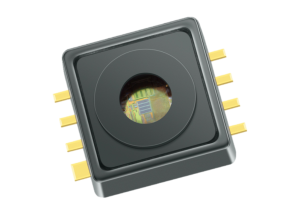
The Infineon manifold air pressure (MAP) sensor family is growing by adding two analog MAP sensors the KP212F1701 and KP212K1409, both dedicated for the two-wheeler market. Just like all other XENSIV™ MAP sensor families, KP212 features its proven high quality with a DPM rate lower than 0.3 DPM. These automotive-qualified analog pressure sensors are characterized by their high-precision pressure sensing: ±1.4 kPa at KP212F1701. The sensors offer dedicated transfer functions for two-wheelers.
XENSIV KP212F1701 Features
- High-precision pressure sensing (±1.4 kPa)
- Ratiometric analog output
- Large temperature range: -40°C to +125°C
- Broken wire detection
- Clamping
- Green 8 pin SMD housing, PG-DSOF-8-16
- Automotive qualified, AEC-Q100
The TLI496x-xM integrated Hall-effect sensors are specially designed for highly accurate applications. The sensors provide an easy-to-use and cost-effective solution for position sensing applications, requiring high temperature stability of the magnetic threshold.
XENSIV TLI496x-XM Features
- 3.0 V to 5.5 V operating supply voltage
- Low current consumption: 1.4 mA
- ESD protection 4 kV HBM
- Active error compensation (chopped)
- High stability of magnetic thresholds
- Low jitter: typ. 0.35 µs
- Operating temperature range: -40°C to +125°C
- Small SMD package SOT23
The XENSIV TLI493D-W2BW 3D magnetic Hall sensor uses the latest 3D Hall generation from Infineon. The 3D sensor is housed in an extremely small wafer-level package. With an 87% smaller footprint and 46% less height than previous comparable products, the sensor opens additional design options for industry and consumer customers, such as joystick (e.g. finger, thumb and gaming paddles), mobile camera lens position sensing for focus and zoom, and much more. To complete the offering TLI493D-W2BW Shield2Go is available.
Read more: XENSIV™ MAGNETIC AND PRESSURE SENSORS
- What new MAP sensors did Infineon add for the two-wheeler market?
Infineon added two analog MAP sensors: KP212F1701 and KP212K1409 dedicated for the two-wheeler market. - What is the pressure accuracy of the KP212F1701?
The KP212F1701 provides high-precision pressure sensing of ±1.4 kPa. - What output type do the KP212 MAP sensors use?
The KP212 sensors use a ratiometric analog output. - What temperature range do KP212 sensors support?
They support a large temperature range from -40°C to +125°C. - Are the KP212 sensors automotive qualified?
Yes, they are automotive qualified and meet AEC-Q100 requirements. - What are key features of the TLI496x-XM Hall sensors?
TLI496x-XM sensors operate from 3.0 V to 5.5 V, have low current consumption (1.4 mA), 4 kV HBM ESD protection, active error compensation, high magnetic threshold stability, low jitter (typ. 0.35 µs), and operate from -40°C to +125°C. - What is notable about the TLI493D-W2BW 3D Hall sensor package?
The TLI493D-W2BW uses an extremely small wafer-level package with an 87% smaller footprint and 46% less height than previous comparable products. - What applications are mentioned for the TLI493D-W2BW sensor?
Applications include joysticks (finger, thumb, gaming paddles), mobile camera lens position sensing for focus and zoom, and other space-constrained position sensing uses.