How To – DIY – Projects

Finger touching PIC16F887 capacitive touch sensor demonstration board

MTOUCH Single Button using PIC16F887 with Proteus Simulation

Introduction Capacitive touch sensing has become a popular feature in modern embedded systems and DIY electronics projects. This MTOUCH Single Button project demonstrates how a touch-sensitive input can be implemented using the PIC16F887 microcontroller inside a Proteus simulation environment. The project uses a simple relaxation oscillator technique to detect human touch on a sensor pad […]

MTOUCH Single Button using PIC16F887 with Proteus Simulation Read More »

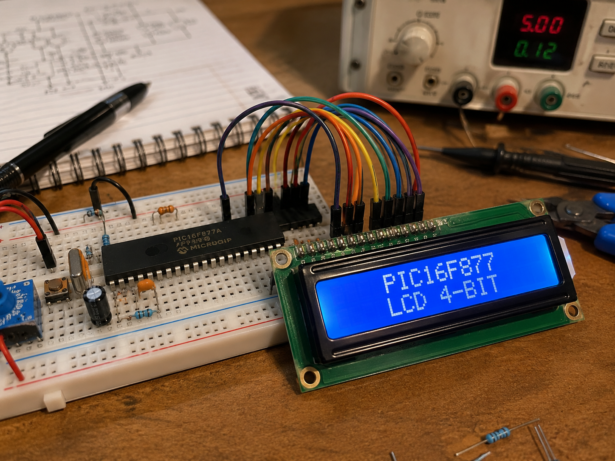
PIC16F877 breadboard LCD 4-bit mode prototype setup

PIC16F877 Driving LCD in 4-Bit Mode using PIC16F877 with Proteus Simulation

Introduction This microcontroller project shows how a PIC16F877 can drive an LCD display using 4-bit mode inside a Proteus simulation.The project demonstrates LCD control with fewer data pins, making it useful for embedded systems where I/O pin saving is important.It is a practical electronics example for learning how a PIC microcontroller communicates with an alphanumeric

PIC16F877 Driving LCD in 4-Bit Mode using PIC16F877 with Proteus Simulation Read More »
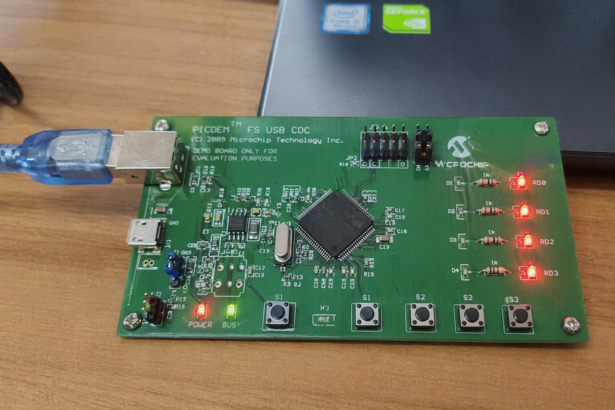
PICDEM USB CDC evaluation board with LEDs and buttons

PICDEM FS USB CDC Evaluation Board using PIC18F4550 with Proteus Simulation

Introduction The PICDEM FS USB CDC Evaluation Board is a practical microcontroller project built around the PIC18F4550, designed to demonstrate USB communication using the CDC (Communication Device Class) protocol. This project allows a microcontroller to behave like a virtual serial port when connected to a computer, making data exchange simple and efficient. Using Proteus simulation,

PICDEM FS USB CDC Evaluation Board using PIC18F4550 with Proteus Simulation Read More »
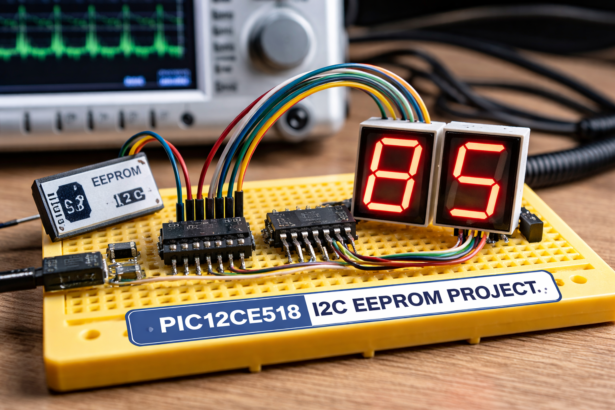
PIC12CE518 EEPROM project with seven-segment display

PIC12CE518 I2C EEPROM using PIC12CE518 with Proteus Simulation

Introduction This microcontroller project demonstrates how to write and read data using the internal I2C EEPROM of the PIC12CE518 and visualize the result through digital outputs. Designed and tested in Proteus simulation, the project highlights practical EEPROM interfacing—an essential concept in embedded systems and DIY electronics. The system writes a value (0x85) into EEPROM memory,

PIC12CE518 I2C EEPROM using PIC12CE518 with Proteus Simulation Read More »
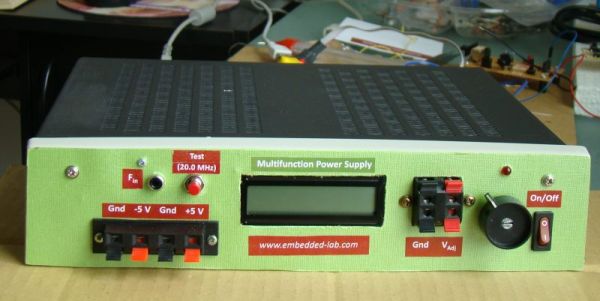
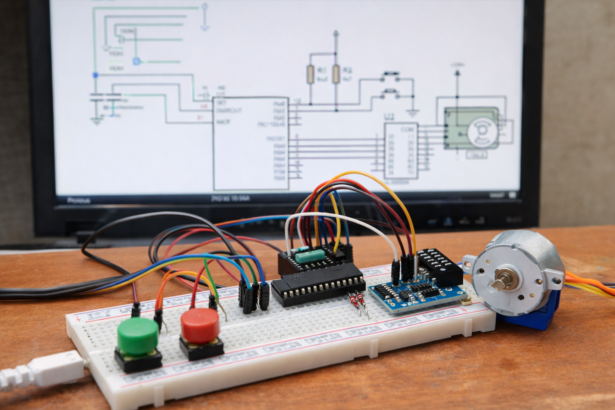
PIC stepper motor breadboard control setup

PIC Stepper Motor Controller using PIC16F84A with Proteus Simulation

Introduction Stepper motors are widely used in embedded systems and DIY electronics projects where precise position control is required. This PIC Stepper Motor Controller microcontroller project uses a PIC microcontroller to control the direction of a stepper motor through simple push-button inputs. The project demonstrates how a PIC16F84A microcontroller can generate the required stepping sequence

PIC Stepper Motor Controller using PIC16F84A with Proteus Simulation Read More »
Breadboard

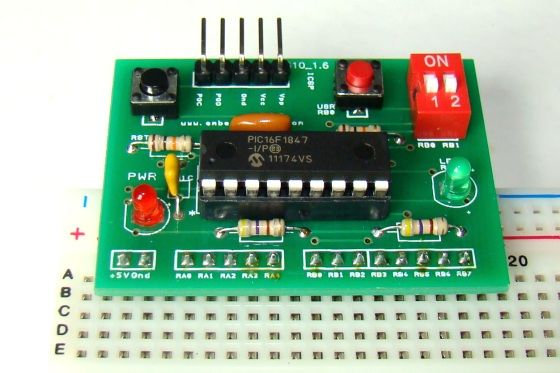
Breadboard module for 18-pin PIC16F microcontrollers (PCB version)

Because of their compact size, ease of use and many built-in peripherals, the 18-pin PIC16F series processors (PIC16F628A, PIC16F88, and now PIC16F1827/47) have always been my favorite microcontrollers. Many of my projects and tutorials written in this blog also use PIC16F628A and PIC16F1827 microcontrollers. As I will be using them more in the future too,

Breadboard module for 18-pin PIC16F microcontrollers (PCB version) Read More »