
Summary of STRETCHABLE CONDUCTORS MAINTAIN CONDUCTIVITY UNDER 700% STRAIN
This article describes Polymerized Liquid Metal Networks developed by the US Air Force Research Laboratory (AFRL). Unlike typical conductive materials that increase resistance when stretched, this material maintains stable conductivity under up to 700% strain due to its self-organized nanostructure. The technology aims to revolutionize wearable electronics by enabling seamless power transfer in garments without performance loss during movement like bending elbows or rotating shoulders.
Parts used in the Polymerized Liquid Metal Networks:
- Liquid metal systems
- Polymerized liquid-metal networks
- Self-organized nanostructure
- Long-sleeve garment textiles
- Circuit system
Conductive materials change their properties under strain or stretching. The electrical conductivity decreases and resistance increases with stretching. The US Air Force Research Laboratory (AFRL) is working with liquid metal systems that can autonomously change the structure to become better conductors in response to strain.
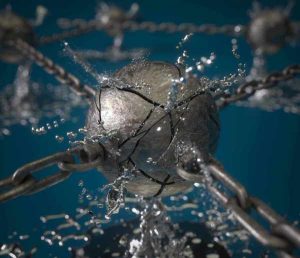
Polymerized Liquid Metal Networks, the material developed by AFRL scientists, can show very odd even opposite properties while under strain. These flexible liquid-metal networks can sustain up to 700% of the strain from the normal stage and still, can keep the resistance virtually the same and still return to their original state. It is all possible due to the self-organized nanostructure within the material that performs these responses automatically.
This response to stretching is the exact opposite of what you would expect,
Dr. Christopher Tabor, AFRL lead research scientist on the project said.
Typically a material will increase in resistance as it is stretched simply because the current has to pass through more material. Experimenting with these liquid-metal systems and seeing the opposite response was completely unexpected and frankly unbelievable until we understood what was going on.
This new material has many applications in next-generation wearable electronics where the material could be combined into a long-sleeve garment. Previous stretchable electronics had a problem with transferring power through the shirt and across the body in a way that bending an elbow or rotating a shoulder would change the power transferred.
The researchers are currently working with both private companies and universities to explore further development of the circuit system. In this case, they will enable the integration of these materials into textiles that can serve to monitor and augment human performance.
Read more: STRETCHABLE CONDUCTORS MAINTAIN CONDUCTIVITY UNDER 700% STRAIN
- How does stretching affect the electrical conductivity of typical materials?
Typically, electrical conductivity decreases and resistance increases because current must pass through more material. - Can the new liquid-metal networks sustain high levels of strain?
Yes, they can sustain up to 700% of the strain from the normal stage while keeping resistance virtually the same. - Why is the behavior of these networks considered opposite to expectations?
It is unexpected because resistance usually increases with stretching, but these networks maintain stable resistance and return to their original state. - What causes the unique response to stretching in these materials?
The response is caused by a self-organized nanostructure within the material that performs responses automatically. - What is a primary application for this new material?
A primary application is next-generation wearable electronics combined into long-sleeve garments. - Did previous stretchable electronics have issues with power transfer?
Yes, previous systems had problems transferring power across the body when bending an elbow or rotating a shoulder changed the power transferred. - Who are the researchers collaborating with to develop this circuit system?
The researchers are working with private companies and universities to explore further development. - How will these materials serve human performance monitoring?
They will enable integration into textiles that can monitor and augment human performance.