Summary of MXIOT, YOUR LOW-COST HARDWARE PROTOTYPING PLATFORM
mxiot is an open-source, low-cost hardware prototyping platform centered on the i.MX6ULZ 900 MHz Cortex-A7 MCU (drop-in compatible with i.MX6UL/6ULL). It enables moving small IoT projects from bare-metal to secure-boot-capable Embedded Linux supporting C/C++ and many high-level languages and frameworks. The board includes UARTs, I2C, SPI, I2S, PWMs, USB, WiFi/Bluetooth via SDIO Ampak modules, QSPI flash, SD card boot, DRAM, analog inputs, APA102 RGB LED, and pushbutton, with a widely available BOM for easy reuse in custom designs.
Parts used in the mxiot:
- i.MX6ULZ 900 MHz Cortex-A7 microprocessor (drop-in compatible with i.MX6UL and i.MX6ULL)
- DRAM
- SD Card socket
- QSPI Flash (optional boot)
- Ampak-compatible 44-pin SDIO WiFi/BT module (user-supplied)
- Texas Instruments TLA2024 (4x 12-bit analog inputs)
- APA102 addressable RGB LED
- UART interfaces (3 UARTs, one with hardware flow control, one dedicated console)
- I2C peripherals (2, one shared with a UART)
- SPI with 2 chip-select signals
- I2S with separate BCLK/WS for TX and RX
- 4x PWM outputs
- Two USB ports
- Pushbutton
Jaydcarlson has posted on GitHub details about mxiot, which is a low-cost hardware prototyping platform, which enables you to explore switching small IoT projects from bare-metal to a secure-boot-capable WiFi/BT-connected Embedded Linux system capable of running rudimentary C/C++, and also applications written in almost any modern language or application framework (like Qt, Rust, Ruby, Python, Node.js, or .NET Core). At the core of mxiot is the i.MX6ULZ, a 900 MHz Cortex-A7 microprocessor. These are drop-in compatible with the i.MX6UL and i.MX6ULL.
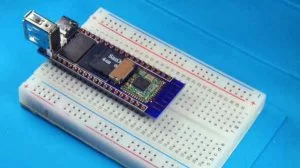
The board features:
- 3 UARTs (one with hardware flow-control signals, and one dedicated to the console)
- Two I2C peripherals (one shared with one of the UARTs)
- SPI with 2 chip-select signals
- I2S with separate BCLK/WS signals for TX and RX paths.
- 4x PWM outputs
- Two USB ports
Apart from the DRAM and SD Card socket necessary for booting, mxiot also features WiFi and Bluetooth connectivity, 4x 12-bit analog inputs, care of the Texas Instruments TLA2024 APA102 addressable RGB LED QSPI Flash (that you can optionally boot from), and Pushbutton. WiFi and BLE are enabled via whatever 44-pin standard SDIO-interfaced WiFi/BT module du jour you’d like to add; the board supports all physically compatible Ampak modules.
The design is open-source, and more importantly, the BOM has wide availability and doesn’t lean on ICs with limited documentation or support. This means you can prototype your project around the mxiot and then copy the guts into your own design to optimize for size, power consumption, cost, or expanded functionality.
Read more: MXIOT, YOUR LOW-COST HARDWARE PROTOTYPING PLATFORM
- What processor does mxiot use?
mxiot uses the i.MX6ULZ 900 MHz Cortex-A7 microprocessor, compatible with i.MX6UL and i.MX6ULL. - Can mxiot run Embedded Linux and high-level languages?
Yes, it can run secure-boot-capable Embedded Linux and applications in C/C++ and many modern languages and frameworks like Qt, Rust, Ruby, Python, Node.js, or .NET Core. - How is WiFi and Bluetooth provided on mxiot?
WiFi and Bluetooth are provided via a 44-pin standard SDIO-interfaced Ampak-compatible WiFi/BT module chosen by the user. - Does mxiot support booting from QSPI Flash?
Yes, mxiot features QSPI Flash that you can optionally boot from. - What analog input capability does mxiot have?
mxiot includes 4x 12-bit analog inputs provided by the Texas Instruments TLA2024. - What serial and peripheral interfaces are available?
It provides 3 UARTs (one with hardware flow control, one console), 2 I2C peripherals (one shared with a UART), SPI with 2 chip-selects, and I2S with separate TX/RX BCLK and WS. - How many PWM outputs and USB ports does mxiot have?
mxiot has 4 PWM outputs and two USB ports. - Is the mxiot design open-source and its BOM widely available?
Yes, the design is open-source and the BOM emphasizes wide availability without relying on poorly documented ICs. - Can projects prototyped on mxiot be migrated into custom designs?
Yes, you can prototype on mxiot and then copy its core into your own design to optimize size, power, cost, or functionality.