Summary of UP CORE PLUS – POWER UP YOUR PROJECT WITH UP CORE PLUS MODULAR BOARDS
AAEON introduces the second-generation UP modular board kit, featuring the UP Core Plus maker board alongside Net Plus and Vision Plus X docking boards. Powered by Intel Apollo Lake processors, this system offers up to 8 GB of memory and 128 GB eMMC storage. The architecture supports flexible expansion via two 100-pin connectors, enabling users to create compact networking devices or powerful AI Edge systems tailored to specific project requirements.
Parts used in the UP Core Plus Project:
- UP Core Plus maker board
- Net Plus docking board
- Vision Plus X docking board
- Intel Apollo Lake processors
- Onboard memory (up to 8 GB)
- eMMC storage (up to 128 GB)
- USB 3.0 connections
- DisplayPort (DP)
- USB OTG connections
- Two 100-pin connectors
- Four Intel i211 Gigabit LAN ports
- SATA port
- mPCIe slot
AAEON, an award winning developer of Edge AI Computing solutions, announces the 2nd Generation of UP modular boards, the UP Core Plus maker board along with the Net Plus and Vision Plus X docking boards. Together these board kits provide developers and easy way to build a system designed for the needs of their project, whether it’s a compact networking device, or a powerful AI Edge system.
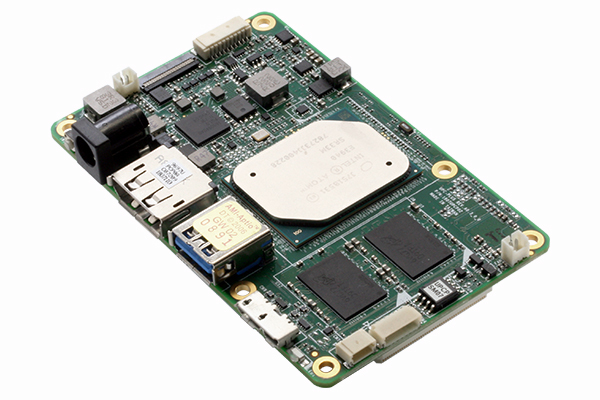
The UP Core Plus is the 2nd Generation of the UP modular maker board from AAEON. Featuring Intel Apollo Lake processors, the UP Core Plus offers a great leap in performance over the previous generation. The board can be configured with up to 8 GB of onboard memory, and up to 128 GB onboard eMMC storage. The UP Core Plus also features USB 3.0, DP, and USB OTG connections, as well as support for wireless and Bluetooth connectivity. The UP Core Plus also supports up to four PCI express lanes thanks to the Apollo Lake processors.
While the UP Core Plus has fewer I/O ports than the UP Squared, it offers unmatched flexibility thanks to its two 100-pin connectors. With these connectors, users can add-on docking boards that help tailor the board to their applications. AAEON currently offers two boards as part of the UP Core Plus family, the Net Plus and UP Vision Plus X.
The Net Plus docking board expands the I/O support of the UP Core Plus system, with four Intel i211 Gigabit LAN ports, or optional Intel i210 with Time-Sensitive Network (TSN) support. It also features a SATA port for hard drive support, as well as an mPCIe slot which supports a wide range of Mini-Card solutions, including 4G, WiFi, and more. The Net Plus is perfect for developers looking to build a compact network device, or to connect multiple network devices to the system.
Read more: UP CORE PLUS – POWER UP YOUR PROJECT WITH UP CORE PLUS MODULAR BOARDS
- What is the main purpose of the UP Core Plus kit?
The kit provides developers an easy way to build systems for compact networking devices or powerful AI Edge systems. - How much onboard memory can the UP Core Plus support?
The board can be configured with up to 8 GB of onboard memory. - Does the UP Core Plus offer wireless connectivity?
Yes, it supports wireless and Bluetooth connectivity. - What processor powers the UP Core Plus?
The board features Intel Apollo Lake processors. - How many I/O ports does the UP Core Plus have compared to the UP Squared?
The UP Core Plus has fewer I/O ports than the UP Squared but offers unmatched flexibility through its connectors. - Can the Net Plus board support Time-Sensitive Network features?
Yes, it offers optional Intel i210 chips with Time-Sensitive Network support. - What types of cards can the mPCIe slot on the Net Plus board support?
The slot supports a wide range of Mini-Card solutions including 4G and WiFi. - How many PCI express lanes does the UP Core Plus support?
The board supports up to four PCI express lanes thanks to the Apollo Lake processors.