
Summary of SITIME PRESENTS A FAMILY OF MEMS OSCILLATORS FOR MOBILE APPLICATIONS
SiTime offers low-power and high-temperature MEMS oscillators featuring small SOT23 packaging, wide frequency ranges, and programmability. These devices provide superior stability, RFI resilience, and mechanical stress resistance compared to traditional quartz. They support industrial sensor applications with fast start-up times and flexible drive strength options, ensuring board-level reliability and simple interchangeability.
Parts used in the SiTime MEMS Oscillators Project:
- General purpose low-power oscillators
- SOT23 package components
- Programmable MEMS timing technology
- High-temperature field-programmable oscillators
- Industrial temperature rated devices
- Automotive temperature rated devices
- 2.0 mm x 1.6 mm package types
- FlexEdge configurable drive strength
Low-Power Oscillators
SiTime Corporation’s general purpose low-power oscillators offer a perfect combination of low power consumption, excellent stability, small size, and fast start-up. Parts are also available in an SOT23 package which offers excellent board-level solder-joint reliability and enables low-cost, optical-only board-level inspection. Now system designers have lower frequency options based on programmable MEMS timing technology. This technology is ideal for industrial sensor applications because of its low frequency range, low power consumption, and resilience to radio-frequency interference (RFI) and mechanical stressors.
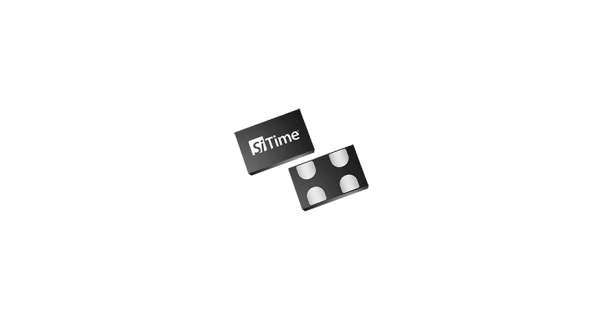
Traditionally, system designers have been limited to very few frequency options if they wanted less than a megahertz output frequency. With conventional quartz devices, the crystal resonator is cut from the blank material in a specific size, angle, and shape to achieve each frequency. Due to manufacturing constraints, quartz vendors select a limited number of frequencies to support, especially in the lower frequency range. MEMS technology provides robustness against shock, vibration, and RFI. Resistance to mechanical force is due to the miniaturization of MEMS. The mass of a MEMS resonator is 500 to 3,000 times smaller than a quartz resonator.
Features
- Configurable feature set
- Wide range of frequencies
- Very small packaging
- Low power consumption
- FlexEdge™ configurable drive strength
- Field programmability
- SOT23 option
- Short lead times
High-Temperature MEMS Oscillators
High-temperature oscillators from SiTime Corporation are field-programmable and offered in a wide range of frequencies. Both industrial and automotive temperatures are available, along with options for package types as small as 2.0 mm x 1.6 mm. The footprint compatibility to quartz allows for simple interchangeability. These devices also feature vibration sensitivity as well as shock and vibration resistance. SOT-23 devices are also available for board-level solder joint reliability and low-cost, optical-only board-level inspection.
Read more: SITIME PRESENTS A FAMILY OF MEMS OSCILLATORS FOR MOBILE APPLICATIONS
- What are the key benefits of SiTime's general purpose low-power oscillators?
They offer a combination of low power consumption, excellent stability, small size, and fast start-up. - Why is the SOT23 package option beneficial for these devices?
The SOT23 package offers excellent board-level solder-joint reliability and enables low-cost, optical-only board-level inspection. - How does MEMS technology compare to quartz resonators regarding mass?
The mass of a MEMS resonator is 500 to 3,000 times smaller than a quartz resonator. - Can system designers access frequencies below one megahertz with this technology?
Yes, system designers now have lower frequency options based on programmable MEMS timing technology. - What makes MEMS technology ideal for industrial sensor applications?
It is ideal due to its low frequency range, low power consumption, and resilience to radio-frequency interference and mechanical stressors. - Do the high-temperature oscillators support interchangeability with quartz?
Yes, their footprint compatibility to quartz allows for simple interchangeability. - Are there specific features available for configuring drive strength?
Yes, the devices feature FlexEdge configurable drive strength. - What package sizes are available for the high-temperature oscillators?
Options include package types as small as 2.0 mm x 1.6 mm.