
Summary of NEW PIEZOELECTRIC FILM HAPTIC ACTUATOR MADE FROM ELECTRO-ACTIVE POLYMER FILM
KEMET announced a 150 µm-thin piezoelectric polymer film haptic actuator that acts as haptic skin when embedded into product surfaces, providing localized, high-definition tactile sensations without shaking the entire device. The flexible, conformable electro-active polymer film enables a wide bandwidth of tactile effects—clicks, textures, raindrops—suitable for remote controls, smart buttons, medical devices, AR/VR, gaming controllers, and touch interfaces to increase immersion and user satisfaction.
Parts used in the Piezoelectric Film Haptic Actuator Project:
- Piezoelectric polymer film (electro-active polymer film)
- Thin-film actuator (150 µm thick)
- Flexible, conformable substrate/material
- Embedding/interface layer for product surface integration
- Drive electronics to actuate the piezoelectric film
- Mounting/adhesive materials for surface integration
- Protective/encapsulation layer for durability
KEMET Introduces High-Definition Piezoelectric Film Haptic Actuator for Next Generation of User Interfaces
Thin-film actuators add haptic skin to any product surface to create localized, independent sensations at any frequency creating a wide range of tactile effects.
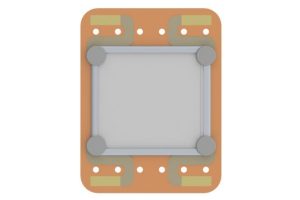
KEMET, part of the Yageo Group and leading global electronic components supplier, announces its innovative haptic solution: the piezoelectric polymer film haptic actuator. When embedded directly into a product’s surface, the actuator acts as haptic skin that provides localized bodily sensations and tactile effects unavailable with other haptic solutions currently in the market. KEMET film actuators enable design engineers to implement advanced haptic solutions with high-performance actuators in a broad spectrum of applications that include remote controls, smart buttons, medical devices, AR/VR, and anything in contact with hands, fingers, head, and lips.
While piezoelectric haptic solutions are found in many applications, they are often large and heavy, thus shaking the entire device. KEMET’s thin (150 µm), flexible and conformable haptic actuators are made from a proprietary, patent-protected paper-thin material, an electro-active polymer film, that enables piezoelectric effects to mimic the sense of touch. Unlike eccentric rotating mass (ERM) technology, which is often used in devices for haptic sensations, KEMET haptic actuators do not shake the entire device. KEMET’s lightweight piezoelectric polymer film actuators offer superior performance with a combination of displacement and force, as well as response time, thus offering high-definition haptic feedback.
These haptic actuators can convey specific material textures and familiar feelings, like the clicks and clacks of buttons, raindrops, and so much more through localized sensations on consumer devices’ surface. The wide bandwidth of the devices coupled with some physiology of touch and sensation allows for a richer user experience for many consumer devices, including gaming controllers, virtual reality (VR) haptic gloves, and devices with touch user interfaces. These haptic actuators offer an in-depth interaction with our consumer devices by using the sense of touch to increase immersion and user satisfaction.
Read more: NEW PIEZOELECTRIC FILM HAPTIC ACTUATOR MADE FROM ELECTRO-ACTIVE POLYMER FILM
- What is the thickness of KEMETs piezoelectric film haptic actuator?
The actuator is 150 µm thin according to the article. - Can the film actuator be embedded directly into product surfaces?
Yes, the article states the actuator can be embedded directly into a product’s surface to act as haptic skin. - Does the KEMET film actuator shake the entire device like ERM technology?
No, the article says KEMET actuators do not shake the entire device, unlike ERM technology. - What kinds of tactile effects can the film actuators produce?
The article mentions effects such as clicks, clacks, raindrops, and material textures through localized sensations. - Which applications are suitable for these haptic actuators?
The article lists remote controls, smart buttons, medical devices, AR/VR, gaming controllers, VR haptic gloves, and touch user interfaces. - What material enables the piezoelectric effect in these actuators?
The actuator uses a proprietary electro-active polymer film to enable piezoelectric effects. - Do these actuators offer high-definition haptic feedback?
Yes, the article states they offer high-definition haptic feedback with a combination of displacement, force, and response time. - How do these actuators affect user experience?
The article says they increase immersion and user satisfaction by providing richer tactile interactions.