
Summary of VECOW LAUNCHES VAC-1000 ARM-BASED EDGE AI COMPUTING SYSTEM
Vecow’s VAC-1000 is an Arm-based Edge AI computing system built on a 24-core Foxconn Cortex-A53 MPU, integrating Hailo-8 (26 TOPS) and Lightspeeur 2801S (5.6 TOPS) accelerators. With up to 16GB DDR4, NX Witness VMS support, and compact I/O (GigE, IPMI, USB3, Micro USB, SATA, M.2), it targets intelligent surveillance, traffic vision, factory automation, and AIoT/Industry 4.0 deployments.
Parts used in the Vecow VAC-1000:
- Foxconn 24-core Cortex-A53 MPU (up to 1 GHz)
- Hailo-8 AI accelerator (26 TOPS)
- Lightspeeur 2801S Neural accelerator (5.6 TOPS)
- Up to 16GB DDR4 2133 memory
- 1 GigE LAN port
- 1 IPMI port
- 2 USB 3.0 ports
- 1 Micro USB port
- 1 SATA storage interface
- 1 M.2 form factor storage slot
- Optional NX Witness VMS (software)
Featuring Foxconn Cortex-A53 MPU, running Hailo-8™/Lightspeeur® AI accelerator, with support for mainstream deep learning framework, Vecow VAC-1000 Edge AI Computing System provides greater flexibility in device architecture, making it an ideal solution for Public Surveillance, Factory Automation, Traffic Vision, and any AIoT/Industry 4.0 applications.
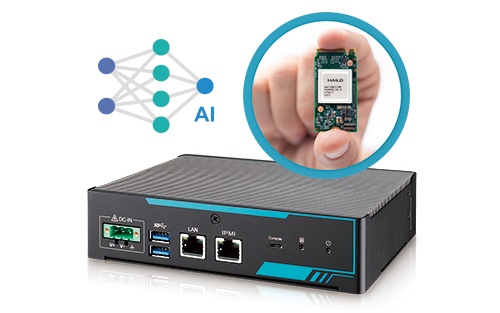
Vecow Co., Ltd., a team of global embedded experts, announced the latest Arm-based family of Edge AI Computing System VAC-1000. Powered by 24-core Foxconn Cortex-A53 MPU, running Hailo-8™ AI accelerator at 26 TOPS, and Lightspeeur® 2801S Neural accelerator at 5.6 TOPS, VAC-1000 series delivers improved efficiency and integration for broad adoption of the latest IoT Edge computing solutions. With up to 16GB DDR4 2133 memory and optional NX Witness VMS (Video Management System) supported, VAC-1000 provides a server-grade computing capability that is ideally suited for the customer requirements in intelligent surveillance applications including Public Surveillance, Traffic Vision, Factory Automation and any AIoT/Industry 4.0 applications.
Vecow VAC-1000 Series is an Arm-based computing system that is built on 24-core Cortex-A53 processor, with 64-Bit MPU capabilities up to 1GHz. Featuring simplified I/O interfaces including 1 GigE LAN, 1 IPMI, 2 USB 3.0, 1 Micro USB and equipped with 1 SATA and 1 M.2 form factor storage, Vecow VAC-1000 is a compact design yet provides mighty configurations.
We are excited to announce this new family of Arm-based Edge AI Computing System to our partners,” said Joseph Huang, Sales Manager, Sales & Marketing Division at Vecow. “Vecow VAC-1000 is based on Cortex-A53 processor and integrated with AI accelerator for inferring. Artificial intelligence is getting more and more popular in these 2 years and we can see many AI applications deployed in vertical markets for better and smart living for the human beings. For the intelligent surveillance and vision fields, we are pleased that VAC-1000 can bring a brand new hardware and software architecture, dedicated and easy-to-use functionality for our customers and partners.
Read more: VECOW LAUNCHES VAC-1000 ARM-BASED EDGE AI COMPUTING SYSTEM
- What processors and accelerators power the VAC-1000?
It uses a 24-core Foxconn Cortex-A53 MPU, Hailo-8 AI accelerator (26 TOPS), and Lightspeeur 2801S neural accelerator (5.6 TOPS). - How much memory does the VAC-1000 support?
It supports up to 16GB DDR4 2133 memory. - What storage options are available on the VAC-1000?
The system includes one SATA interface and one M.2 form factor storage slot. - Which I/O interfaces are provided on the VAC-1000?
It provides 1 GigE LAN, 1 IPMI, 2 USB 3.0, and 1 Micro USB. - Can the VAC-1000 support video management software?
Yes, it has optional support for NX Witness VMS. - What applications is the VAC-1000 intended for?
It is targeted at public surveillance, traffic vision, factory automation, and AIoT/Industry 4.0 applications. - What computing capability does the VAC-1000 claim to provide?
It provides server-grade computing capability suitable for intelligent surveillance applications. - Does the VAC-1000 support mainstream deep learning frameworks?
Yes, it supports mainstream deep learning frameworks as stated in the article.