


Summary of Setting Up CloudX
This tutorial guides users on setting up the CloudX Microcontroller environment, including software downloads, driver installation, and configuring a "Hello World" project. It details the necessary tools for Windows systems to write code, compile programs using MPLAB XC8, and utilize pre-written libraries for simplified development.Parts used in the CloudX Starter Kit Setup:
- A Computer (Windows XP, 7, 8, or 10)
- A CloudX compatible microcontroller
- A CloudX SoftCard
- CloudX Software Editor
- CloudX Software Driver
- MPLABX IDE
- MPLAB® XC8 Compiler
- Proteus Simulation software
- CloudX Libraries v1.01

So, you've just bought, or are considering buying, an CloudX Starter kit. Your mind is probably full of questions about how and what you can get started right away maximizing your experience. Nothing is stopping you from coding the next big thing. To help you on get started without anyone's help or guide, this article will cover required software downloads, driver installation and device configuration. This should be enough to get you running and exploring!
Step 1: What You Will Need:
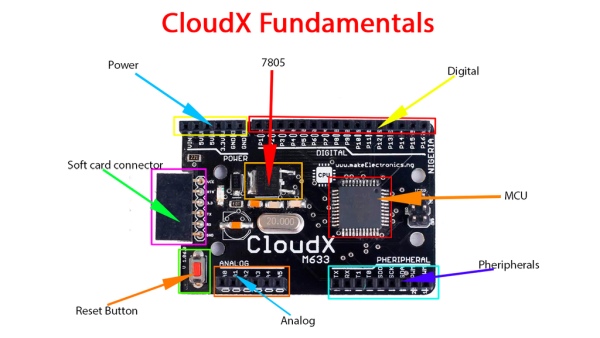
- A Computer (Operating system Windows XP or Windows 7 or Windows 8 or Windows 10 -- They are all supported)
- A CloudX compatible microcontroller
- A CloudX SoftCard.
Step 2: Software Required
The only operating system that cloudX software supported at the time of writing this article is Windows, Click on the software list below to download
- CloudX Software Editor
- CloudX Software Driver
- MPLABX IDE
- MPLAB® XC8 Compiler
- Proteus Simulation software (Optional, but you can find free version everywhere on the internet)
- CloudX Libraries v1.01
Step 3: CloudX Software Editor
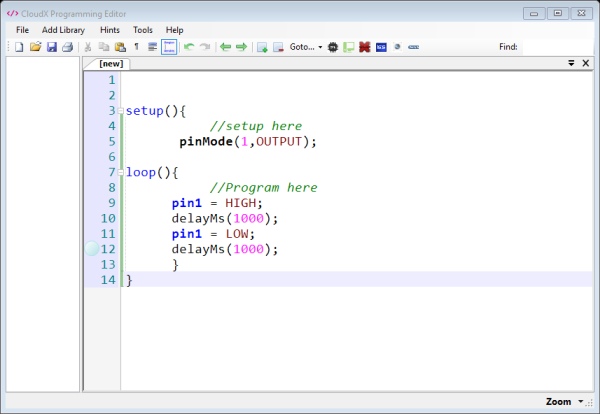
The CloudX Software Editor is a programming environment just like Notepad++ that allows you to write your codes and highlights recognized CloudX C syntax, pre-processor libraries with auto-complete feature. With the CloudX software editor, programming errors is reduced to less than 3% so it makes it more fun for hobbyists to write codes without any bug. Click to download the CloudX Editor Software and install the setup on your computer. To learn more on the CloudX editor click here
Step 4: CloudX Software Driver
The CloudX Softcard Software Driver is based on the cheap CH340 IC. It functions as a USB - Serial board which allows you to communicate the CloudX Controller with your Computer. The CloudX driver uses CH340G and be downloaded here.
Step 5: Steps to Install

- Download the driver.zip
- Unzip the file
- Run the installer which you unzipped
- Open the CH341SER folder
- Run the SETUP.EXE
- Just click on the install button.
- In the CloudX Editor Software, when the Softcard is connected you will see a Selected COM Port dropdown in the Tools > CodeLoader , the COM number for your device may vary depending on your system.
For more tutorial on how to setup the driver click here
Step 6: MPLABX IDE Installation
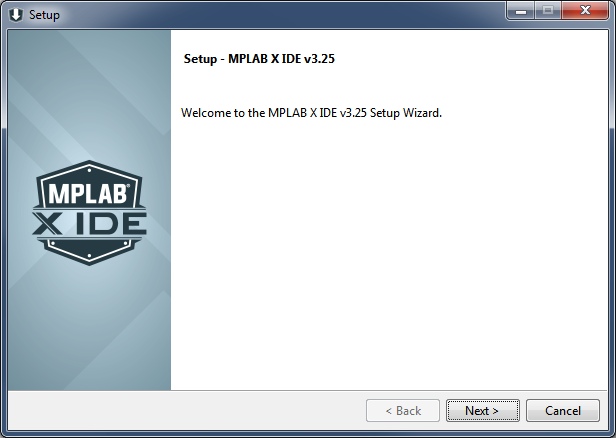
The CloudX Microcontroller is based on the Microchip Technology PIC16F877A processor, here we won't be saying much about the installation process but incase you are having challenge installing the software then visit mplabx ide installation tutorial website or use our chat box at the right-corner below to ask then ask for support.
Step 7: MPLAB® XC8 Compiler Installation
Since the XC8 Compiler is also a third party software, we won't be talking about the installation process here but if you encounter any challenge then visit XC8 installation page on microchip website or or use our chat box at the right-corner below to ask then ask for support.
Step 8: CloudX Library
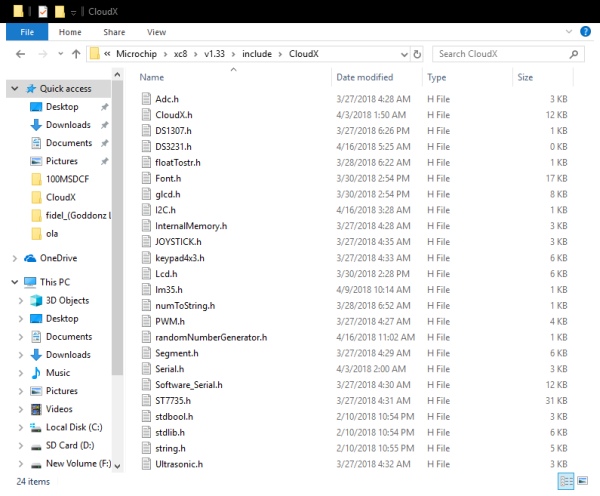
These are pre-written code that helps to simplify users code to few lines, for example, if i want to display a simple "Hello World" on an LCD display, i don't need to start writing all the LCD instructions and commands which may take hundreds lines of code but with cloudX LCD library you can't only write the complete project with less than five lines. All you need to know to Where and How to use each library.
After downloading the library in zip file all you need to do is to unzip it and copy the folder "CloudX" and paste to 64 - bits Windows
C:\Program Files (x86)\Microchip\xc8\v1.45\include
32 - bits Windows
C:\Program Files\Microchip\xc8\v1.45\include
The v1.45 is based on your xc8 Compiler version.
Source: Setting Up CloudX
Quick Solutions to Questions related to CloudX Starter Kit Setup:
- What operating systems are supported for the CloudX setup?
The CloudX software supports Windows XP, Windows 7, Windows 8, and Windows 10. - How do I install the CloudX Softcard driver?
Download the driver.zip file, unzip it, navigate to the CH341SER folder, run SETUP.EXE, and click the install button. - Can I use Proteus Simulation software for this project?
Yes, Proteus Simulation software is optional but can be found as a free version on the internet. - Where should I paste the CloudX library folder after unzipping?
Paste the CloudX folder into C:Program Files (x86)Microchipxc8v1.45include for 64-bit Windows or C:Program FilesMicrochipxc8v1.45include for 32-bit Windows. - Does the CloudX Software Editor reduce programming errors?
Yes, the editor reduces programming errors to less than 3% by highlighting syntax and providing auto-complete features. - Which processor does the CloudX Microcontroller use?
The CloudX Microcontroller is based on the Microchip Technology PIC16F877A processor. - How does the CloudX Library simplify coding?
The library allows users to complete projects with fewer lines of code, such as writing a Hello World LCD display in under five lines. - What function does the CloudX Softcard perform?
The Softcard functions as a USB-Serial board allowing communication between the CloudX Controller and the computer.
Related projects
Calculator Test using PIC24FJ64GA006 with Proteus Simulation
Introduction The Calculator Test using EASYHDL is a practical microcontroller project built on the PIC24FJ64GA006 and simulated in Proteus. This project demonstrates...
Programmers & ICSPPID Controlled Oven using TMS320F28027PT with Proteus Simulation
IntroductionThis project demonstrates a PID controlled oven implemented using a PICCOLO TMS320F28027PT microcontroller and verified through Proteus simulation.It is a practical microcontroller...
Programmers & ICSPPICCOLO Motor Controller Sample Design using TMS320F28023PT with Proteus Simulation
IntroductionThis project demonstrates a PICCOLO motor controller sample design implemented using the TMS320F28023PT Piccolo microcontroller and tested through Proteus simulation. It focuses...
Programmers & ICSP · PIC16F84APIC Musical Doorbell using PIC16F84A with Proteus Simulation
IntroductionThis microcontroller project demonstrates a musical doorbell built around a PIC16F84A and a simple piezo sounder.Using two push buttons, the system allows...
Programmers & ICSP · PIC16F877AEPE PIC/LCD Demo using PIC16F877 with Proteus Simulation
IntroductionThe EPE PIC/LCD Demo is a classic microcontroller project that demonstrates how a PIC16F877 can fully control a PG12864F graphical LCD.Designed as...
Programmers & ICSP · PIC16F628ADHT11 Low Cost Humidity Sensor using PIC16F628A with Proteus Simulation
IntroductionThis microcontroller project demonstrates how to interface a low-cost DHT11 temperature and humidity sensor with a PIC16F628A using a Proteus simulation environment.The...

Muhammad Bilal
I am a highly skilled and motivated individual with a Master's degree in Computer Science. I have extensive experience in technical writing and a deep understanding of SEO practices.