
Summary of SE-DPIN: 16 TO 256 CHANNEL I/O CARD FOR PXIE AND ATE INSTRUMENTS
Salland Engineering leverages 28 years of expertise to create custom ATE instruments, addressing the balance between performance, density, and cost. Their latest proof of concept utilizes ElevATE's Mystery Octal SOC ASIC to develop a scalable 200MHz Digital I/O card. This solution offers high channel counts up to 256+ within a PXIe format while maintaining air-cooled efficiency and low power consumption.
Parts used in the Salland DPin IO Card:
- ElevATE Mystery Octal SOC ASIC
- Mystery ICs (8 onboard)
- FPGA based timing generator
- PXIe card chassis
- Digital I/O technology (200MHz/500Mbps)
Salland Engineering delivers over 28 years of services to develop and build custom ATE instruments for the semiconductor industry. CEO, Paul van Ulsen said;
Building high density instruments is always about finding the right balance between performance, density/throughput within the right available power and cooling at the right cost per channel.
To address these challenges, Salland decided to design the Instrument IP themselves. This enables customers to benefit from proven and available building blocks to achieve high performance and very high density at the right cost.
Salland’s ‘’off-the-shelf’’ custom OEM instrument solutions allow customers to build ATE instruments at a fraction of the cost and at minimal risk. In this respect Salland follows a similar approach as Elevate, building standard solutions for custom applications.
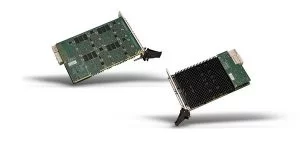
Salland’s latest proof of concept is a scalable 200MHz DPin IO technology based on ElevATE’s Mystery Octal SOC ASIC. This is a 64ch PXIe card with 8 Mystery ICs onboard featuring:
- 64 (/32)-channel, 200MHz/up to 500Mbps Digital I/O card in PXIe format
- Based on ElevATE Mystery ASIC and a FPGA based timing generator
- Scalable architecture in blocks of 16 channels up to 256+
- Technology can be used in all kind of form-factors; modules, ATE, PXIe, etc.
With the Mt. Mystery ASIC, Salland was able to dramatically increase channel count and speed in an air-cooled solution designed to fit into the strict power/space requirements for a PXIe card.
Read more: SE-DPIN: 16 TO 256 CHANNEL I/O CARD FOR PXIE AND ATE INSTRUMENTS
- What is the primary goal of Salland's new instrument design?
To find the right balance between performance, density, throughput, power, cooling, and cost per channel. - How does Salland reduce risk for customers building ATE instruments?
By offering off-the-shelf custom OEM solutions that allow customers to build instruments at a fraction of the cost with minimal risk. - What specific ASIC technology powers the new DPin IO card?
The card is based on ElevATE's Mystery Octal SOC ASIC. - Can the architecture be scaled beyond 64 channels?
Yes, the scalable architecture works in blocks of 16 channels up to 256 or more. - What is the maximum data rate supported by the new technology?
The technology supports speeds up to 500Mbps. - Does the high-density solution require liquid cooling?
No, it is an air-cooled solution designed to fit strict power and space requirements. - In what form factors can this technology be implemented?
It can be used in modules, ATE systems, PXIe, and other form factors.