


Summary of PIC16F84 AMMETER CIRCUIT 0-80A UGN3503
This project describes a PIC16F84-based automotive ammeter capable of measuring current up to 80A. It utilizes a UGN3503 Hall effect sensor and an LM358 operational amplifier to process signals, which are then displayed on an LTS542R LED module. The device features a 2-digit display with 1A resolution, a bar graph indicator, and automatic screen dimming for low-light conditions, offering precise monitoring of battery charge and discharge rates compared to standard vehicle warning lights.Parts used in the PIC16F84 Ammeter:
- PIC16F84 microcontroller
- UGN3503 Hall effect sensor
- LM358 operational amplifier
- LTS542R LED display
- 7-segment LEDs
- Bar graph display
PIC16F84 Ammeter, ampere meter circuit pic16f84 microcontroller has been made with the current sensor is used for UGN3503 hall effect sensor output op amp with integrated lm358 strengthened pic16f84 RB0 pin connecting led display current information (lts542r) displays on... Electronics Projects, PIC16F84 Ammeter Circuit 0-80A UGN3503 "microchip projects, microcontroller projects, pic assembly example, pic16f84 projects,
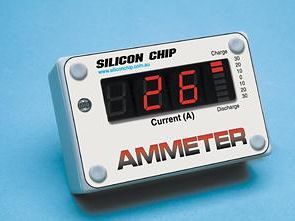
PIC16F84 Ammeter, ampere meter circuit pic16f84 microcontroller has been made with the current sensor is used for UGN3503 hall effect sensor output op amp with integrated lm358 strengthened pic16f84 RB0 pin connecting led display current information (lts542r) displays on the microcontroller, hall effect sensor with the current measuring is a good example
7-segment LEDS and bar graph display plus 2-digit display
5A step bar chart ± 0-30A indicator
2-digit display 1A resolution
Typical 80A maximum reading
Charge and discharge for dual display
Low light conditions automatic screen dimming
It’s now rare to see an amp meter installed in a car. Instead, virtually all modern cars have an “idiot” light to indicate battery charging. Normally, this light is off when the engine is running and only comes on if the alternator fails; ie, when no charge is being delivered. Apart from that, it doesn’t provide any other information during normal driving. This means that when the light is out, you have no idea how much current is going into the battery or is being pulled out. And even when an ammeter was fitted, it was hardly what you would call a precision instrument. Most only gave a very rough idea of what happening. However, if you are an enthusiast, you will want to know more about battery charge and discharge rates. This Automotive Ammeter can provide this information with a high degree of accuracy.
Source: http://www.siliconchip.com.au/cms/A_30551/article.html PIC16F84 Ammeter Circuit 0-80A UGN3503 pic assembly source code schemmatic pcb alternative link:
FILE DOWNLOAD LINK LIST (in TXT format): LINKS-2335.zip
Source: PIC16F84 AMMETER CIRCUIT 0-80A UGN3503
Quick Solutions to Questions related to PIC16F84 Ammeter:
- How does the circuit measure current?
The circuit uses a UGN3503 Hall effect sensor combined with an LM358 op amp to detect and strengthen the signal. - What is the maximum reading capacity of this ammeter?
The typical maximum reading capacity is 80A. - Can the display show both charge and discharge?
Yes, the device supports dual display functionality for both charge and discharge cycles. - How accurate is the measurement resolution?
The display offers a 1A resolution for precise readings. - Does the display work in dark environments?
Yes, it features automatic screen dimming for low light conditions. - What type of display is connected to the RB0 pin?
An LTS542R LED display is connected to the RB0 pin to show current information. - Why is this ammeter better than a standard car idiot light?
Unlike standard lights that only indicate failure, this meter provides high accuracy regarding battery charge and discharge rates.
Related projects
PIC Stepper Motor Controller using PIC16F84A with Proteus Simulation
Introduction Stepper motors are widely used in embedded systems and DIY electronics projects where precise position control is required. This PIC Stepper...
Programmers & ICSP · PIC16F84APIC Musical Doorbell using PIC16F84A with Proteus Simulation
IntroductionThis microcontroller project demonstrates a musical doorbell built around a PIC16F84A and a simple piezo sounder.Using two push buttons, the system allows...
Beginner Tutorials · PIC16C84Exploring the World of PIC Microcontrollers: An Architectural Overview
A Peripheral Interface Microcontroller (PIC), developed by General Instruments Microcontrollers in 1993, operates under software control and is programmed to execute various...
Meters & Test Instruments · PIC16F688Determine capacitance by measuring the charging time using PIC16F688
When TEST botton is pressed, RA3 pin is set to "1". R2 and R3 are divide the voltage to 1/2 Vra3 which...
Meters & Test InstrumentsFrequency Meter Using Microcontroller
This tutorial simply states how to calculate frequency of a pulse source using a microcontroller. Story https://youtu.be/NAoj-HLRIro This tutorial simply states how...
Meters & Test Instruments · PIC16F84ADigital thermometer with PIC16F84 circuit
This electronic project is a very simple thermometer that is based on the PIC16F84A microcontroller, designed by Microchip. Why to use a...

Muhammad Bilal
I am a highly skilled and motivated individual with a Master's degree in Computer Science. I have extensive experience in technical writing and a deep understanding of SEO practices.