
Summary of Hack a Robot
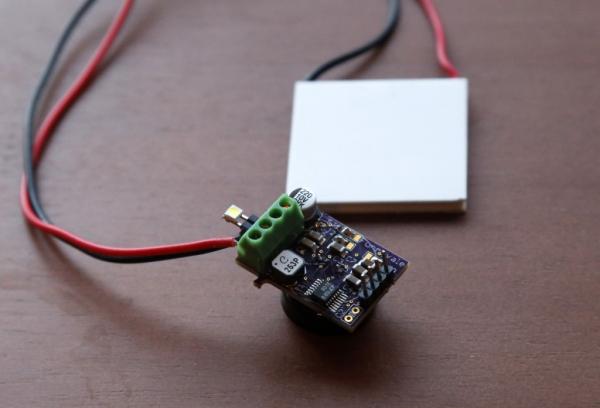
Recently I built an energy harvesting circuit using the LTC3108 ultra-low-voltage DC/DC step-up converter and a 1:100 CoilCraft LPR6235 transformer to boost tiny voltages from a Peltier thermoelectric generator. Body heat produced enough voltage to slowly charge a 5.5 V, 1 F supercapacitor; when the capacitor reached the converter's threshold the LED lit. The setup can trickle-charge rechargeable batteries or use other low-voltage sources (small solar cells, piezo generators, small motors). The LTC3108 offers selectable outputs: 2.35 V, 3.3 V, 4.1 V, and 5.0 V for small microcontrollers and sensors.
Parts used in the Energy harvesting circuit with LTC3108:
- LTC3108 ultra low voltage DC/DC step-up converter chip
- CoilCraft LPR6235 1:100 coil transformer
- Peltier thermoelectric generator module
- 5.5 V 1 F supercapacitor
- LED
- Rechargeable battery (optional, for trickle charge)
- Small solar cell (optional, < 0.5 V)
- Piezoelectric generator or small motor (optional)
- Wiring and prototyping PCB or breadboard
Recently, I built an energy harvesting circuit based on an ultra low voltage DC/DC step up converter chip (LTC3108) from Linear Technology. With a 1:100 coil transformer (CoilCraft LPR6235), it converts the tiny voltage generated from Peltier thermo-electric generator into high enough level to drive small circuits.
In the following video, I demonstrated that body heat is enough to power a LED. When there is a temperature difference between the two sides of the Peltier module, electricity is generated. A 5.5V 1F supercapacitor is used as energy storage. Initially, the super capacitor was fully discharged. As the energy harvesting circuit stores the electricity generated from body heat, the voltage across the capacitor continues to rise. When it reaches the threshold voltage, the LED turns on.
When my palm moves away, the Peltier module stops generating electricity. The LED continues to turn on until the energy stored in the super capacitor is fully depleted.Other than super capacitors, LTC3108 could trickle charge rechargeable batteries. In addition, other energy sources like, small solar cells (< 0.5V), piezoelectric generators and small motors could be used.
There are 4 different output voltage levels that could be selected: 2.35V, 3.3V, 4.1V and 5.0V. It is flexible enough to drive small micro controllers (like Arduino, Teensy, etc.) and sensors.
Please to get updates on future projects.
For more detail: Hack a Robot
- Can body heat power the LED in this setup?
Yes; body heat on the Peltier module generated enough voltage that, after charging the supercapacitor, the LED turned on. - What energy storage was used in the demonstration?
A 5.5 V 1 F supercapacitor was used as energy storage. - Which DC/DC converter chip was used?
The LTC3108 ultra low voltage DC/DC step-up converter chip was used. - What transformer was used with the LTC3108?
A CoilCraft LPR6235 1:100 coil transformer was used. - What other energy sources can be used with this circuit?
Other energy sources mentioned are small solar cells under 0.5 V, piezoelectric generators, and small motors. - Can the LTC3108 trickle charge batteries?
Yes; the article states LTC3108 could trickle charge rechargeable batteries. - What output voltages can be selected on the LTC3108?
Four output voltage levels can be selected: 2.35 V, 3.3 V, 4.1 V, and 5.0 V. - Is the LTC3108 suitable for microcontrollers and sensors?
Yes; it is flexible enough to drive small microcontrollers like Arduino or Teensy and sensors.