
Summary of Mitsubishi Electric Develops High-precision Air-quality Sensor for PM2.5
Mitsubishi Electric developed the world's first small, high-precision air-quality sensor capable of detecting PM2.5 particles, pollen, and dust while precisely measuring particle density. The prototype utilizes a unique double-sided mirror design to capture 1.8 times more scattered light than conventional models. An integrated air flow controller ensures stable airflow, while an original shape-discrimination algorithm differentiates between pollen and dust based on optical characteristics.
Parts used in Mitsubishi Electric Air-Quality Sensor:
- Double-sided mirror design
- Air flow controller
- Laser beams
- Shape-discrimination algorithm
TOKYO, February 8, 2016 – Mitsubishi Electric Corporation (TOKYO: 6503) announced today that it has developed a small, high-precision air-quality sensor, the world first to detect all fine particles measuring no more than 2.5 micrometers in diameter, called PM2.5, as well as pollen and dust. It also senses the density of particles precisely.
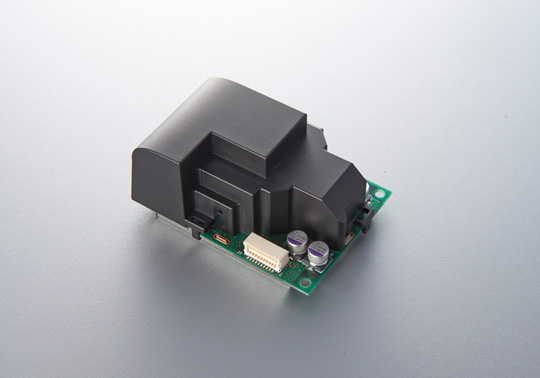

Enlarge
Prototype of Mitsubishi Electric’s new air-quality sensor
Scattered light from PM2.5 particles is measured with Mitsubishi Electric’s unique double-sided mirror design, which collects about 1.8 times more scattered light than conventional single-sided designs. An air flow controller provides stable airflow. Components were optimally designed to achieve a small form factor and were carefully aligned to avoid obstructing the airflow and laser beams. Mitsubishi Electric’s original shape-discrimination algorithm distinguishes between pollen and dust based on the respective differences in the optical characteristics of their scattered light, resulting in the world’s first sensor capable of detecting all PM2.5, pollen and dust particles.

The air-quality sensor prototy
The air-quality sensor prototy
For more detail: Mitsubishi Electric Develops High-precision Air-quality Sensor for PM2.5
- What makes this sensor unique compared to others?
It is the world's first sensor capable of detecting all PM2.5 particles, pollen, and dust simultaneously. - How does the sensor measure scattered light?
It uses a unique double-sided mirror design that collects about 1.8 times more scattered light than single-sided designs. - Can the sensor distinguish between pollen and dust?
Yes, its original shape-discrimination algorithm distinguishes them based on differences in optical characteristics. - Does the sensor ensure stable airflow?
Yes, an air flow controller is provided to maintain stable airflow within the device. - What is the size characteristic of this new sensor?
The components were optimally designed to achieve a small form factor. - How does the sensor avoid obstructing measurements?
Components were carefully aligned to avoid obstructing the airflow and laser beams. - What specific particle size can this sensor detect?
It detects fine particles measuring no more than 2.5 micrometers in diameter.