


Summary of A Beginner’s Guide to Mictrocontrollers
Microcontrollers are specialized, compact computing units designed to perform single tasks in everyday electronics like TVs, cars, and smartphones. Unlike general-purpose computers, they integrate processors, memory (RAM/ROM), and input/output interfaces to interact with sensors and actuators in real-time. Their ability to withstand extreme conditions and handle specific functions makes them essential for modern technology development and business applications in electronics manufacturing.Parts used in the Microcontroller System:
- Processor
- RAM
- ROM
- Sensors
- Relays
- LEDs
- Switches
- Motherboard with pins
What a Microcontroller Actually Does
A microcontroller is a compact integrated circuit designed to control a specific embedded system or a limited group of related functions. Rather than behaving like a general-purpose computer that runs many different applications, it typically executes dedicated firmware written for the device in which it is installed.
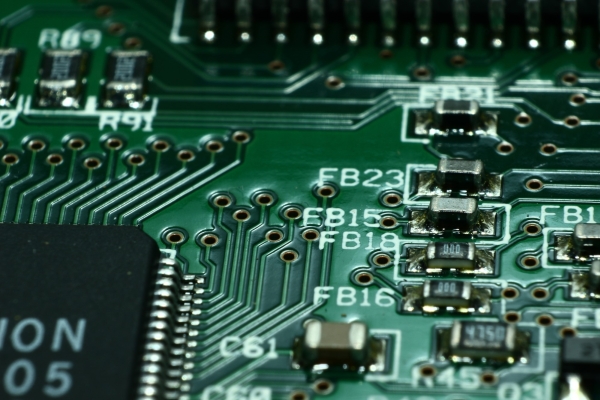
Microcontrollers are found in appliances, vehicles, remote controls, sensors, toys, industrial equipment, smart-home devices, and many other electronic products. Their main role is usually to receive information, process it according to programmed instructions, and produce an appropriate output.
How Microcontrollers Process Information
A typical microcontroller combines a processor, memory, and input/output peripherals on a single chip. The processor executes instructions, while memory stores the program and temporary data needed during operation.
Sensors and relays are usually external components rather than parts of the microcontroller itself. They communicate with the microcontroller through its input/output interfaces. For example, a temperature sensor can provide a measurement to the microcontroller, which can then decide whether to activate a fan, heater, warning indicator, or another connected device.
RAM Provides Temporary Working Memory
RAM is the microcontroller's temporary working memory. It can hold variables, sensor readings, calculation results, buffers, and other information needed while a program is running.
Most microcontroller RAM is volatile, meaning its contents disappear when electrical power is removed. The amount of RAM required depends heavily on the application. A simple controller may need very little, while networking, graphics, audio, or more complex embedded software can require considerably more.
Program Memory Stores the Firmware
The article refers to ROM, but many modern microcontrollers actually use non-volatile Flash memory to store their firmware. Unlike RAM, this memory retains information when power is switched off.
The stored firmware defines how the microcontroller responds to inputs. In a remote control, for example, programmed instructions determine how a button press is interpreted and what signal should be transmitted. Developers can often reprogram Flash-based microcontrollers during product development or firmware updates.
Inputs and Outputs Connect Electronics Together
Input/output interfaces allow a microcontroller to interact with the physical world. Inputs can come from switches, buttons, temperature sensors, light sensors, motion detectors, humidity sensors, communication modules, and many other devices.
Outputs can control LEDs, displays, motors, relays, buzzers, heaters, and other electronics. Microcontrollers commonly provide GPIO pins as well as interfaces such as ADC, PWM, UART, SPI, and I²C for communicating with different kinds of hardware.
For example, a temperature-control system could read a sensor, compare the measurement against a programmed threshold, and automatically switch heating or cooling equipment when necessary.
Real-Time Response Enables Automatic Control
Microcontrollers are particularly valuable when an electronic device needs to respond quickly to changing conditions. A washing machine controller, for example, can continuously monitor water level, door state, temperature, and other inputs before controlling pumps, valves, and motors.
However, simply using a microcontroller does not automatically make a system "real-time." Real-time operation means the system must respond within defined timing requirements. Simple applications can accomplish this directly through firmware, while more complex systems may use interrupts, timers, or a real-time operating system.
Why Microcontrollers Matter in Modern Electronics
Microcontrollers allow manufacturers to add programmable behavior to products without requiring a complete general-purpose computer. A single chip can perform calculations, monitor sensors, communicate with peripherals, and control hardware while consuming relatively little power and occupying limited circuit-board space.
Advances in semiconductor technology continue to increase the processing capability, memory capacity, connectivity, and integrated peripherals available in microcontrollers. Modern devices range from extremely small low-power controllers to substantially more capable chips designed for connected, industrial, automotive, and IoT applications.
Choosing a Microcontroller for a Project
The correct microcontroller depends on what the product needs to accomplish. Developers should consider factors such as processing performance, Flash and RAM capacity, available GPIO pins, analog capabilities, communication interfaces, operating voltage, power consumption, physical package size, and software support.
For example, a battery-powered sensor may prioritize low energy consumption, while a motor-control application may require specialized timers and PWM peripherals. A connected IoT product may instead place greater emphasis on Wi-Fi, Bluetooth, security features, or sufficient memory for networking software.
Choosing based on actual technical requirements is therefore more useful than simply selecting the most powerful microcontroller available.
Microcontrollers Provide a Practical Entry Into Embedded Development
For electronics learners, microcontrollers offer a practical way to understand how software controls physical hardware. Development boards can be connected to buttons, LEDs, displays, motors, and sensors, allowing programmers to immediately observe the results of their code.
Starting with simple input-and-output projects can provide the foundation for more advanced work involving communication protocols, automation, robotics, data collection, IoT systems, and other embedded applications.
- What is the main difference between a microcontroller and a computer?
A microcontroller specializes in doing one task, whereas a computer handles a variety of tasks. - How does RAM function in a microcontroller?
It stores data while operating, but all memory gets erased when the device is disconnected. - What role does ROM play in microcontroller operations?
ROM allows the microcontroller to understand commands, such as which button changes a channel. - Can microcontrollers operate in real-time environments?
Yes, they can detect events like an overflowing washing machine and prompt immediate actions. - Why are microcontrollers suitable for extreme temperatures?
Their small size and design allow them to withstand extreme temperatures better than many other components. - Do most objects with digital input and output use microcontrollers?
Yes, most objects with digital input and output make use of a microcontroller to handle the task. - What types of inputs and outputs can be connected to a microcontroller?
You can connect LEDs, switches, and sensors that measure light levels or humidity. - Are microcontrollers becoming smaller over time?
Yes, technology is evolving to make electronics smaller, and future microcontrollers will take up less space. - Who should consider investing in microcontrollers?
Business owners entering the electronics industry or those who want to create custom products should invest in them. - Can microcontrollers be made from materials other than traditional electronics?
Yes, researchers are learning how to create them out of new materials like plastic.
Related projects
PIC16F877 Driving LCD in 4-Bit Mode using PIC16F877 with Proteus Simulation
Introduction This microcontroller project shows how a PIC16F877 can drive an LCD display using 4-bit mode inside a Proteus simulation.The project demonstrates...
Beginner Tutorials · PIC18F4550PICDEM FS USB CDC Evaluation Board using PIC18F4550 with Proteus Simulation
Introduction The PICDEM FS USB CDC Evaluation Board is a practical microcontroller project built around the PIC18F4550, designed to demonstrate USB communication...
Beginner TutorialsPIC12CE518 I2C EEPROM using PIC12CE518 with Proteus Simulation
Introduction This microcontroller project demonstrates how to write and read data using the internal I2C EEPROM of the PIC12CE518 and visualize the...
Beginner TutorialsPico Timer Project using Pico with Proteus Simulation
Introduction Timers are one of the most important features in embedded systems because they allow microcontrollers to perform tasks at precise intervals...
Beginner Tutorials · PIC16F84APIC Stepper Motor Controller using PIC16F84A with Proteus Simulation
Introduction Stepper motors are widely used in embedded systems and DIY electronics projects where precise position control is required. This PIC Stepper...
Beginner TutorialsWhat is a TVS diode? Working principle and parameters of TVS diode
TVS (Transient Voltage Suppressor) diode is a component specially used for protecting circuits. It can absorb excessive voltage pulses in an instant...

Ibrar Ayyub
I am an experienced technical writer holding a Master's degree in computer science from BZU Multan, Pakistan University. With a background spanning various industries, particularly in home automation and engineering, I have honed my skills in crafting clear and concise content. Proficient in leveraging infographics and diagrams, I strive to simplify complex concepts for readers. My strength lies in thorough...