Summary of PIC18F452 LED Blinking Code and Proteus Simulation
This article provides LED blinking code for the PIC18F452, compiled with MPLAB and HI-TECH C, plus a Proteus simulation and downloadable project files. It uses a 10 MHz crystal with the PIC18F452's PLL to run at 40 MHz internal clock, yielding 10 MIPS (one instruction per 4 cycles). The article includes circuit diagram, compilation/simulation details, and a download link for the complete code and Proteus model.
Parts used in the PIC18F452 LED Blinking Project:
- PIC18F452 microcontroller
- 10 MHz crystal
- Capacitors for crystal (typically 18pF each)
- LED(s)
- Current-limiting resistor(s) for LED(s)
- Power supply (Vcc and GND)
- Optional pull-up or reset components (MCLR circuitry)
- Proteus simulation files (software component)
- MPLAB and HI-TECH C compiled code (software component)
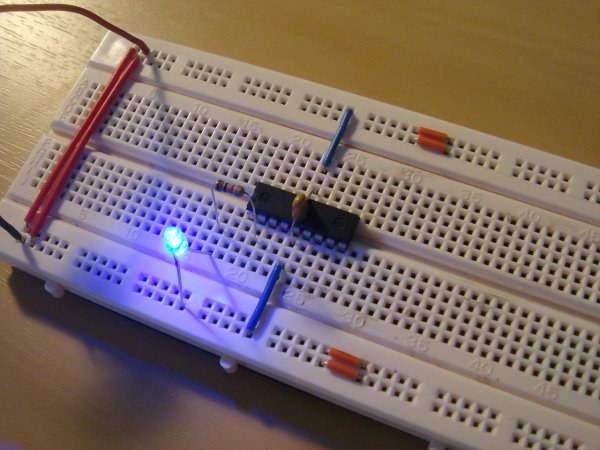
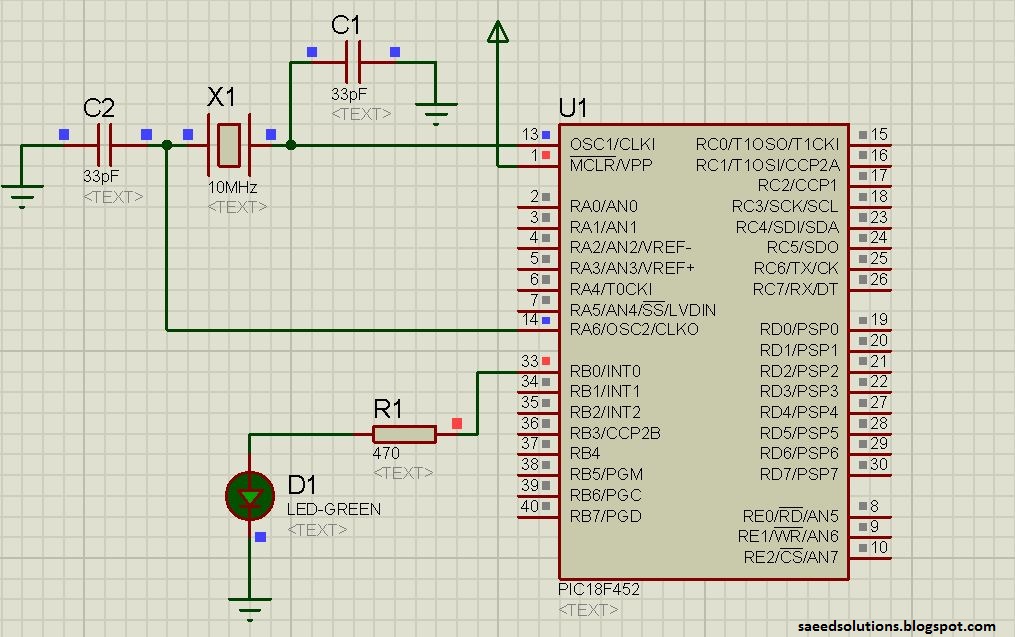
This post provides the LED blinking code (compiled in MPLAB + HI-TECH C) for PIC18F452. Complete project code and the proteus simulation can be downloaded from the Downloads section at the bottom of this post. The following diagram shows the required circuit.
In this project a crystal of 10MHz is used with PIC18F452. This crystal frequency is fed into PLL of PIC18F452, which boosts it to 40MHz. As we know that any PIC micro controller has an architecture which executes an instruction in 4 CPU cycles, hence this 10Mhz crystal + PLL makes this PIC run at 10MIPS (Million of instructions per second). The code for this project is shown below.
Downloads
The code was compiled in MPLAB v8.76 with HI-TECH C and simulation was made in Proteus v7.7.
To download code and proteus simulation click here.
For more detail: PIC18F452 LED Blinking Code and Proteus Simulation
- What microcontroller is used in this project?
The PIC18F452 microcontroller is used in this project. - What crystal frequency is used?
A 10 MHz crystal is used. - Does the project use the PIC18F452 PLL?
Yes, the 10 MHz crystal frequency is fed into the PIC18F452 PLL which boosts it to 40 MHz. - What is the effective instruction rate (MIPS) of the PIC in this setup?
With the 40 MHz internal clock and 4-cycle instruction architecture, the PIC runs at 10 MIPS. - Which tools were used to compile the code?
The code was compiled in MPLAB v8.76 using HI-TECH C. - Which tool was used for simulation?
Simulation was performed in Proteus v7.7. - Can I download the complete project code and simulation files?
Yes, the complete project code and Proteus simulation can be downloaded from the Downloads section linked in the article. - Is a circuit diagram provided?
Yes, the article shows the required circuit diagram for the project.