
Summary of Radioactivity detection using very simple ionization chamber
This article describes a simple, passive ionization chamber capable of detecting radioactivity from sources like smoke detectors without an external power supply. The device utilizes a multimeter's internal voltage to polarize electrodes and features robust shielding against electromagnetic interference (EMI) using copper and tin foil.
Parts used in the Ionization Chamber Project:
- Copper plate
- BF256B n-channel J-FET transistor
- THT resistor leg
- Metal case
- Tin foil
- Insulation tape
- PCB
- Keysight 34460A multimeter
Today I will show a very simple ionization chamber that can detect radioactivity. I was able to detect with it ionizing radiation from a smoke detector (Am241 isotope). It’s also immune to electromagnetic interference (EMI) due to a good shielding.
This device doesn’t explicitly use any power supply. It’s connected to a multimeter set to measure resistance, in this mode, the multimeter provides a small voltage to its probes (R=I/U, so to measure resistance, it has to put voltage across measured element). This is sufficient here, because basically we just need to polarise electrodes of the ionization chamber and nothing more. My multimeter provides 5.6V in this mode.
My setup is presented below, note that the sensor is this metal box, not the PCB visible on the image.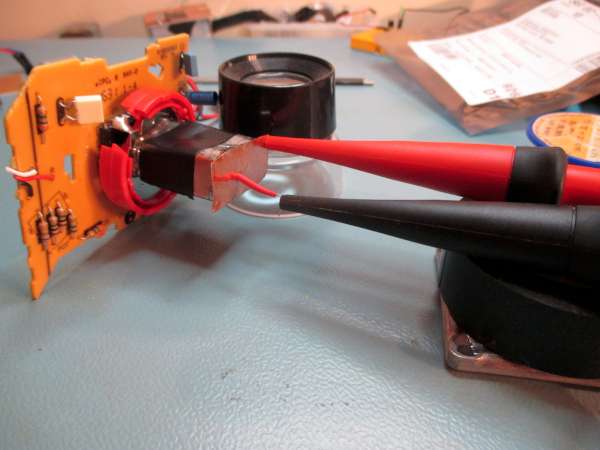
The chamber is made from copper plate soldered carefully to prevent any holes where electromagnetic fields could flow and disturb readings. Inside is one BF256B (n-channel J-FET) transistor, its gate is connected to one of ionization chamber plate made from a leg of a THT resistor, source pin is available externally, this is where “plus” probe of the DMM is connected, drain is connected to the metal case (that is both and electrode and is shielded against EMI).
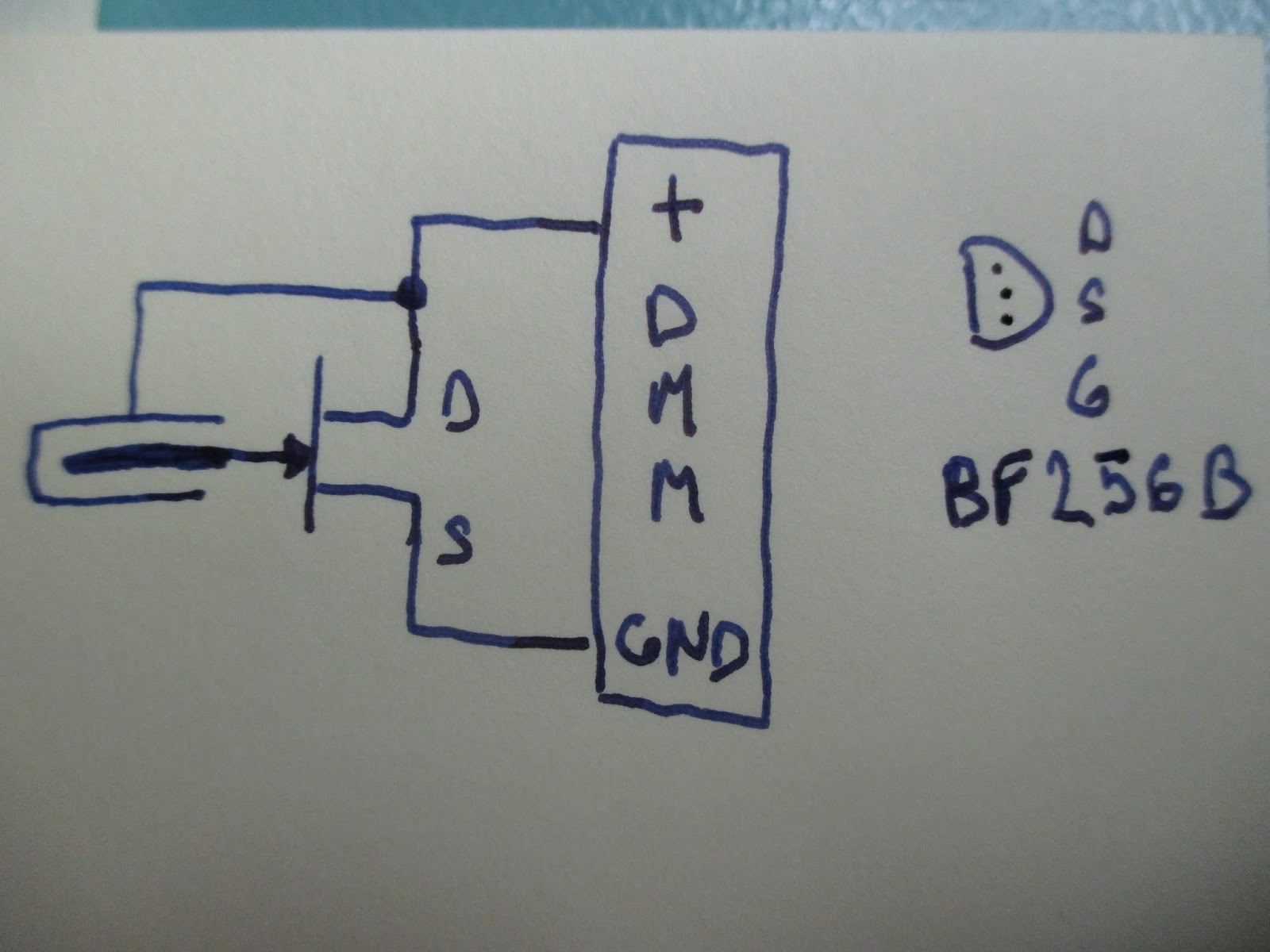
I’ve used Keysight 34460A as a multimeter here, because it has histogram mode, that will be useful to look if the measured value is stable over time. PLC was set to 0.2, it will reduce accuracy, but will give much more samples.
Below two images present what is inside of the sensor (only JFET, as mentioned above) and the sensor mounted. The front was shielded using tin foil, that was secured tightly by insulation tape.
For more detail: Radioactivity detection using very simple ionization chamber
- How does the device detect radioactivity?
The device detects ionizing radiation by using the multimeter's internal voltage to polarize the electrodes within the ionization chamber. - Does the project require an external power supply?
No, the device does not explicitly use any power supply and relies on the multimeter's probes for voltage. - What voltage does the multimeter provide in resistance mode?
The author's multimeter provides 5.6V when set to measure resistance. - Can this device detect radiation from a smoke detector?
Yes, the device was able to detect ionizing radiation from the Am241 isotope found in a smoke detector. - How is electromagnetic interference prevented?
EMI immunity is achieved through good shielding using a soldered copper plate, a metal case, and tin foil secured with insulation tape. - Which multimeter model was used for the experiment?
A Keysight 34460A multimeter was used because it features a histogram mode to check value stability over time. - Why was the PLC set to 0.2 on the multimeter?
The PLC was set to 0.2 to reduce accuracy slightly while providing many more samples for analysis. - What component serves as one of the ionization chamber plates?
A leg of a THT resistor is used inside the chamber to serve as one of the ionization chamber plates.