
Summary of PIC programmer using PIC16F84A Microcontroller
This article details a versatile PIC programmer capable of handling various PIC16F and PIC18F series microcontrollers (including 8, 18, 28, and 40-pin models) as well as 24LCxx EEPROMs. It supports programming via IC-Prog software through the printer port or PICPgm software for auto-detection. The project utilizes Eagle 4.11e for schematic and PCB design and mentions compatibility with bootloader programming for specific chips like the 16F877 and 18F4550.
Parts used in the PIC Programmer:
- PIC16F84A Microcontroller
- PIC16F877A Microcontroller
- PIC18F452 Microcontroller
- PIC18F4550 Microcontroller
- 24LCxx EEPROMs
- Printer Port (RS232)
- Eagle 4.11e Software
- Tiny PIC Bootloader
- 44-pins PLCC-socket Adapter
- 40-pins DIL Output Connector
Essential when experimenting with PIC.
Programs PIC16Fxxx and PIC18Fxxxx series (8, 18, 28 and 40 pins)
-
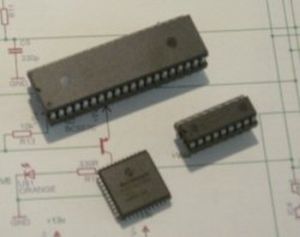
16F84A, 16F877A, 18F452 (DIL and PLCC) tested successfully with the IC-Prog software.
-
18F4550 (DIL) works fine with the PICPgm programmer software.
Also programs EEPROMs (8 pins) type 24LCxx with the IC-Prog software.
Follow the software configuration steps below to insure correct functioning..
Schematic and PCB (Eagle) available for download. This page was last updated on August 24, 2005.
Software:
PIC and EEPROM programming can be done with IC-Prog through the printer port (RS232).
Make sure you have these settings in IC-Prog:
The PICPgm programmer software needs no settings. It even auto-detects the PIC!
Tools:
Check out our development tools page.
When working with a 16F877, 18F452, 18F2550 or a 18F4550, prototype programming with a bootloader can be done with the excellent Tiny PIC bootloader, through the RC6 & RC7 pins. But, you will need this PIC programmer to write the PIC the first time with… there are some bootloader HEX-files available below.
Eagle 4.11e was used for the schematic & PCB layout.
PLCC is also possible! Just build a small adapter-pcb with a 44-pins PLCC-socket and a 40-pins DIL output… only 5 wires are needed!
For more detail: PIC programmer using PIC16F84A Microcontroller
- Which PIC series does this programmer support?
It programs PIC16Fxxx and PIC18Fxxxx series including 8, 18, 28, and 40 pin variants. - Can I program EEPROMs with this device?
Yes, it programs 8-pin type 24LCxx EEPROMs using IC-Prog software. - How do I connect the programmer to the computer?
PIC and EEPROM programming is done through the printer port (RS232). - Does the PICPgm software require manual configuration?
No, the PICPgm programmer software needs no settings and auto-detects the PIC. - What tools were used to create the schematic and PCB?
Eagle 4.11e was used for the schematic and PCB layout. - Is it possible to use PLCC packages?
Yes, you can build a small adapter-pcb with a 44-pins PLCC-socket and a 40-pins DIL output. - How many wires are needed for the PLCC adapter?
Only 5 wires are needed for the adapter connection. - Can I use a bootloader for prototype programming?
Yes, you can use the Tiny PIC bootloader through RC6 and RC7 pins for specific chips.
