Projects

Whac a Veggie

Whac-a-Veggie using PIC18F4550 microcontroller

Whac-a-Veggie For this year’s Trunk ‘O’ Treat game I wanted to make a something fun and exciting for kids to play so I choose a Whac- a-Mole type game called Whac-a-Veggie using the Veggie Tales characters.   The Whac-a-Veggie game is played with a foam hammer in your hand and the veggie characters randomly popping-up […]

LED Strobe for PIC12F629 675 schematic

LED Strobe for PIC12F629 / 675

 Description This project functions as a simple strobe for driving an LED.  The use of an output transistor allows it to pulse the strobe LED with a current up to 100mA. Four jumpers provide options for changing the pulse width, strobe repeat interval and single or double strobe flash.  The programmer ready code has default […]

IRMimic™ Trainable IR Remote Control Transmitter

IRMimic™ Trainable IR Remote Control Transmitter using pic microcontoller

IRMimic features: Simple to train – Can learn up to 16 IR commands, and each can be in a different format/protocol Two different operating modes – Keypad or MCU interface LED indicator output – Indicates training is complete Small size – 18 pin DIP IC Chip operates from 3-5 volts DC Standby mode permits battery […]

PIC16F84 Introduction

PIC16F84 Introduction

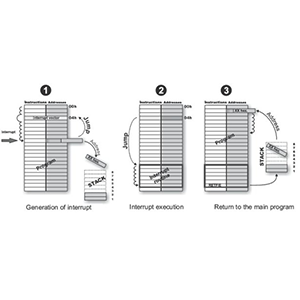
The 16F84 is deserves looking at because it is the GranDaddy of PIC Microcontrollers but you should not use it for new designs (see Below)… The PIC16F84 is a the most well known and most well used of all the PIC microcontrollers – it is used in numerous projects that you can find across the web. […]

USB Voltmeter

USB Voltmeter using pic microcontoller

USB Voltmeter USB Voltmeter is a PC based dual channel voltmeter built around PIC18F2455 / PIC18F2550 microcontroller that measures voltage from 0.00V up to 500.00V with 10mV resolution. USB Voltmeter sends measured data to PC via standard USB connection displaying data on a computer monitor. USB Voltmeter is self-powered drawing very little current from USB […]

Microcontroller with single LED Project in Proteus schematic1

Microcontroller with single LED Project in Proteus

This is a simulation project that shows how to write program in assembly language for PIC16F84A microcontroller that turns on a single LED and use it in Proteus VSM to stimulate the working of the microcontroller controlled LED. To do this start by creating a new project in Proteus, give some name and save it […]

OLED module interface

Low cost OLED module interface using PIC18F452

Here are the technical specifications: OLED resolution: 96 x 64 pixels OLED manufacturer: OSRAM. OLED model: Pictiva 1.1 inch OS096064PN11MY0B10 (San Diego.) On-board lcd controller SSD1303, with 31 pins connector, can be soldered directly. Low power operation (less than 15-25mA @3V, depending on contrast/brightness setting) Fast serial interface (only 8 wires needed) Molex miniature connector. […]

LED Mood Light

A remote controlled power RGB LED mood light using PIC16F627A

A remote controlled power RGB LED mood light. Control the colour of a powerful LED light beam with a remote control, store the colours and recall them at will. With this thing I can control the colour of a bright light into many different colours using the three fundamentals colours : red green and blue. […]

DIY plug in modules to make microcontroller breadboarding easier

DIY plug-in modules to make microcontroller breadboarding easier

Breadboards are a great tool for prototyping and testing electronics circuits. Here I am sharing with you some plug-in modules that I once made to make my breadboarding life easier. I have used these modules many times in the PIC experiments described in this blog. These modules  serve very common functions that are required in […]

race track Grid Start Lights

Mini F1 race track Grid Start Lights using PIC12F627A

(See big LED version here) My nephews got a Scalextric slot car racing circuit from Santa for Christmas. This was a blast-from-the-past for my brother and me and we were soon showing the kids how to race. However it quickly became apparent that “3-2-1-Go” wasn’t the best way to start a race so I put […]