
Summary of How Do Multilayer Chip Resistors Work?
This article explains Surface Mounted Devices (SMDs) and the critical role of resistors in electronic circuits. It details Ohm's Law, describing how resistors manage voltage drops and reduce current flow to protect components like LEDs. The text categorizes resistors as passive components made from materials such as metal, metal-oxide, or carbon film. It highlights multilayer chip resistors for their quality and durability, noting their application across telecommunications, medical, automotive, and aerospace industries.
Parts used in the Resistor Circuit Project:
- Surface Mounted Devices
- Printed circuit board
- Tiny resistors
- LED light bulb
- Metal resistor
- Metal-oxide resistor
- Carbon resistor
- Multilayer chip resistors
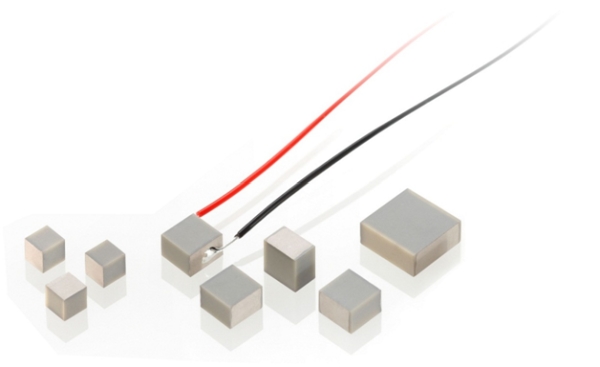
The world of SMDs – meaning Surface Mounted Devices – can be challenging, especially for someone who didn’t pay attention to Physics lessons while in school. Briefly, an SMD is an electronic device produced through mounting electronic circuits onto the surface of a printed circuit board. Well, somewhere around those circuits there are some tiny resistors. You are about to find out more about their functionality and purpose in the following article. Pay attention!
Let’s start with Ohm’s law
Named after the German physicist Georg Ohm, this law puts into direct relation the voltage and the electric current. And this is the best way of understanding a circuit – by studying the relationship between voltage and current. But where does the resistor come into the equation; you might ask? Right here! It plays a vital role in this proportionality. Find out more about Ohm’s law by reading this interesting article. Because he was the one to discover the law, the unit of resistance was named after him: Ohm, which is abbreviated with the Greek letter Omega – it looks like this Ω.
What is the purpose of a resistor?
Until now, we know that a resistor comes in the equation of voltage and current. We will find out what it does in the following lines. You can determine that by simply analyzing its name: a resistor comes from “resistance” or “to resists”. This means that its purpose is to fight the current that is flowing through. This means that there is a voltage difference between when the current is running through it – this process being known as a voltage drop. Consequently, the resistor has the purpose to weaken or reduce the current flow. At the same time, a chip resistor has the capacity of maintaining the current at a certain level inside a circuit. Because they cannot generate power – they only consume it, they are categorized into passive electronic components.
Because its main purpose is to reduce current flow, the symbol of a resistor is a straight line turned into a zig-zag, perfectly depicting the its capacity to reduce current flow.
Let’s make an experiment
The best way of understanding a physics law is by applying it. So, it’s time for an experiment! Let’s take the example of a LED light bulb. If there would be too much current running through it, the LED would ultimately be destroyed. But we have a savior here – the resistor, which will control and decrease the current flow to the other elements in the circuit. In this way, our LED will be saved. if you want to find out more about what resistors do and their importance, you can read some really good information at the following link: https://www.electropages.com/blog/2016/12/passive-components-at-the-performance-limit
What are resistors made of?
They can be made out of different materials. The most common types nowadays are made out of metal, metal-oxide or carbon film. Metal ones are made of Nichrome, tantalum nitride and other materials. Being a combination of Ceramic material and a Metal, these are also known as Cermet. In comparison to the carbon film, both stability and tolerance are better in the case of a metal resistor.
Metal oxide resistors are very similar to metal ones, the oxide being the only difference. This gives them higher durability and reliability. Also, stability is increased in the case of the metal oxide ones. This makes them perfect for use in the case of applications needing high endurance.
Carbon resistors are less popular than metal or metal oxide ones but are indicated to be used in the case of applications that require high pulse stability.
Let’s get to multilayer chip resistors
The best resistor choice is made to ensure the highest quality products. Smart experts and top SMD suppliers of multilayer chip resistors will commit to excellent quality, promising to deliver zero defect products. Additional traits such as moisture resistance are welcome as they increase the life of the resistor and product itself. Years of research and plenty of knowledge are combined at the creation of the perfect piece.
Chip resistors can be used in a multitude of scenarios, being very useful and resourceful. Some domains of interest are telecommunications, medical, audio, automotive, industrial and even aerospace.
- What is the primary purpose of a resistor?
The purpose of a resistor is to fight the current flowing through it, thereby weakening or reducing the current flow. - How does a resistor affect voltage in a circuit?
A resistor creates a voltage difference known as a voltage drop between when the current runs through it. - Can resistors generate power?
No, resistors cannot generate power; they only consume it, which categorizes them as passive electronic components. - What are the common materials used to make resistors?
Resistors are commonly made from metal, metal-oxide, or carbon film. - Why might one choose a metal oxide resistor over a carbon resistor?
Metal oxide resistors offer higher durability, reliability, and stability, making them perfect for applications needing high endurance. - Which type of resistor is indicated for applications requiring high pulse stability?
Carbon resistors are indicated for use in applications that require high pulse stability. - What is the symbol used to represent a resistor?
The symbol of a resistor is a straight line turned into a zig-zag shape. - In which domains are chip resistors commonly used?
Chip resistors are used in telecommunications, medical, audio, automotive, industrial, and aerospace domains.
