
Summary of GYPRO® HIGH PERFORMANCE MEMS GYROSCOPES
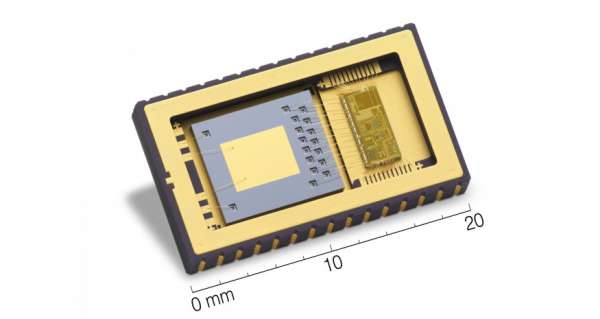
The GYPRO® product line features high-performance MEMS gyroscopes designed for precision navigation, motion tracking, and optical stabilization. These closed-loop sensors offer superior bias stability and low noise, bridging the gap between automotive grade and tactical FOG/DTG systems. Tronics has partnered with Premier Farnell to expand global distribution, providing system manufacturers with compact, cost-effective solutions that maintain high reliability without compromising performance.
Parts used in the GYPRO High Performance MEMS Gyroscopes:
- GYPRO2300
- GYPRO2300LD
- GYPRO3300
The GYPRO® high performance MEMS gyroscopes product line has been specifically designed for applications that are more demanding than automotive, while not requiring ‘tactical grade’ FOG (Fiber Optic Gyros) or DTG (Dynamically Tuned Gyros). GYPRO® offers high bias stability, low noise and low latency. The closed-loop gyroscopes product family is well suited to precision navigation and stabilization applications.
We are delighted to have our high performance MEMS gyros now part of Premier Farnell’s portfolio of inertial sensing solutions. Partnering with such a key distributor will strengthen the exposure of our standard inertial products as well as our recognized expertise in this field”, said Vincent Gaff, Tronics’ Director Marketing and Business Development.
This move will further structure our supply chain at global level thanks to Premier Farnell’sreliable and responsive distribution capabilities, and will open up new opportunities for worldwide customers eager to integrate our current and future generation of high performance standard inertial products into their targeted applications.
Tronics high performance MEMS inertial sensors are ideally suited for system manufacturers with strong requirements for high bias stability and high-performance inertial sensors. Key applications include precision navigation, motion tracking and control, and optical stabilisation. Tronics’ comprehensive sensor portfolio brings a tailored solution to support system manufacturer’s transition to MEMS products, with huge benefits in terms of size, weight, power and price, without compromising on performance and reliability.
The Tronics’ GYPRO® series combines several key benefits on a single chip, and features bias instability of only 0.8̊ per hour and ultra-low noise (Angular Random Walk) of only 0.14° per √h. The standard GYPRO2300 product features a data rate of 200 Hz with RMS Noise [1-100Hz] of 0.02°/s; the GYPRO2300LD offers a data rate of 1700 Hz at 2ms latency tailored for motion tracking and stabilisation. The GYPRO3300 boasts improved tolerance to harsh environments (vibration rectification coefficient of 0.5°/h/g²) and a latency of 1ms due to improved integrated circuitry, tailored for precision navigation and stabilisation.
Read more: GYPRO® HIGH PERFORMANCE MEMS GYROSCOPES
- What applications are GYPRO gyroscopes best suited for?
They are ideal for precision navigation, motion tracking and control, and optical stabilisation. - How does the GYPRO2300 perform regarding data rate?
The standard GYPRO2300 features a data rate of 200 Hz. - Can the GYPRO2300LD handle high-speed motion tracking?
Yes, it offers a data rate of 1700 Hz at 2ms latency tailored for motion tracking and stabilisation. - Does the GYPRO3300 have improved tolerance to harsh environments?
Yes, it boasts improved tolerance with a vibration rectification coefficient of 0.5° per h per g squared. - What is the latency of the GYPRO3300 model?
The GYPRO3300 has a latency of 1ms due to improved integrated circuitry. - How much bias instability does the GYPRO series achieve?
The series features a bias instability of only 0.8 degrees per hour. - Is there an Angular Random Walk specification for the GYPRO series?
Yes, the ultra-low noise Angular Random Walk is 0.14 degrees per square root hour. - What benefits do these sensors offer over traditional systems?
They provide huge benefits in terms of size, weight, power, and price without compromising performance.