
Summary of Galvanic Skin Response System
The Galvanic Skin Response (GSR) wrist device monitors skin impedance and temperature to assess autonomic nervous system function. It uses a wellness microcontroller with integrated analog front-end components, including ADCs, DACs, operational amplifiers, and switches. Powered by an LIR2032 battery, it connects via Bluetooth Low Energy to Android devices for real-time data tracking within 20 meters. This reference design supports GSR and AC impedance measurements for medical, lie detection, and wellness applications.
Parts used in the Galvanic Skin Response System:
- Wrist-worn GSR system
- Wellness measurement microcontroller
- TE Connectivity micro USB 2.0 connector
- LIR2032 rechargeable coin battery
- 16-bit ADC with input MUX and PGA
- Two 12-bit DACs
- Two 8-bit DACs
- Four operational amplifiers (OP AMP)
- Four uncommitted SPST analog switches
- Internal voltage references
- Bluetooth low-energy wireless interface
The Galvanic Skin Response (GSR) is a property of the skin to exhibit electrical characteristics. It is also known as Electrodermal Activity (EDA), Electrodermal Response (EDR), Electrodermal Level (EDL), Skin Conductance Activity (SCA), Skin Conductance Response (SCR), and a lot more. The GSR utilizes the principle that skin property varies with the state of sweat glands. The electro-physiological signal is generated by the sweat glands, and the sweat is the cause of the variation in resistance and conductivity. The signal can be used for capturing the autonomic nerve responses as a parameter of the sweat gland function.
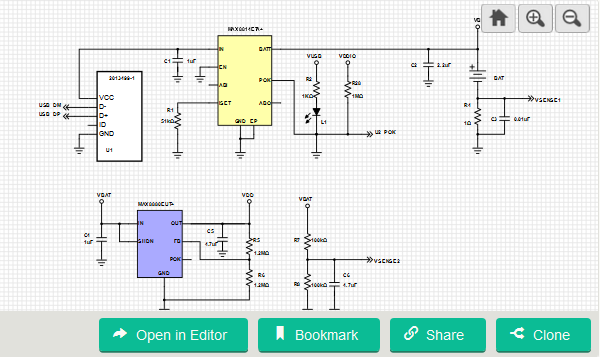
This reference design is a GSR system that is worn in the wrist. It monitors the user’s skin impedance and temperature. This design features a wellness measurement microcontroller and the TE Connectivity’s micro USB 2.0 that is used as the charging port of this device. The TE micro USB connector is ideal for this application because of its reliability, robustness, and versatility. On the other hand, the microcontroller integrates all the analog front-end and other peripherals required for impedance measurements, including one 16-bit ADC with input MUX and PGA, two 12-bit DACs and two 8-bit DACs, 4 operational amplifiers (OP AMP), 4 uncommitted SPST analog switches, and internal voltage references. This design is powered by LIR2032 rechargeable coin battery. With a mobile device for Android that is free to download, a user can monitor his or her skin resistance and temperature within 20m through the Bluetooth low-energy (BLE) wireless interface.
This reference design is applicable to GSR measurement and other AC impedance measurements. The principle of GSR system is the basis for some significant tools such as electrocardiograph (ECG) and electroencephalograph (EEG). The GSR measurement has a good repeatability. Therefore, it is considered to be a useful tool for examination of the autonomous nervous system function, and especially the peripheral sympathetic system. The GSR devices can be used in medical treatment, lie detection, and wellness monitoring.
For more detail: Galvanic Skin Response System
- What is the primary function of the Galvanic Skin Response system?
The system monitors user skin impedance and temperature to capture autonomic nerve responses. - How does the GSR signal get generated?
The electro-physiological signal is generated by sweat glands, which cause variations in resistance and conductivity. - Can this device connect to mobile phones?
Yes, users can monitor data using a free Android mobile application via Bluetooth low-energy. - What type of power source does the device use?
The design is powered by an LIR2032 rechargeable coin battery. - What are some applications for GSR devices?
GSR devices are used in medical treatment, lie detection, and wellness monitoring. - Does the microcontroller include analog peripherals?
Yes, it integrates analog front-end components like ADCs, DACs, OP AMPS, and analog switches. - What is the maximum range for the wireless connection?
A user can monitor skin resistance and temperature within 20 meters through the Bluetooth interface. - Is the GSR measurement considered reliable?
Yes, the GSR measurement has good repeatability and is useful for examining peripheral sympathetic system function. - Which company provides the micro USB connector for this design?
TE Connectivity provides the micro USB 2.0 connector used as the charging port.
