Summary of The future of IC design
This article predicts that by 2076, IC design will rely on mixed-signal devices like quantum and photonic technologies, with advanced tools enabling novice designers to create complex systems. It highlights BeSang's 3D stacked memories as a key advancement, integrating memory cells vertically atop CMOS logic to boost density and extend silicon memory lifespan beyond Moore's Law.
Parts used in the Future of IC Design:
- 3-D room-temperature superconducting devices
- Quantum devices
- Neuromorphic devices
- Photonic mixed-signal devices
- Sophisticated design tools
- System-in-package designs
- BeSang 3D stacked memories
- Vertical memory cells
- Standard complementary metal oxide semiconductor (CMOS) logic
- DRAM memory
- NAND-flash memory
- NOR-flash memory
- Robotic assistants
To celebrate 60 years of EDN, we’re looking into the future to predict what advancements will be made in IC Design in the next 60 years. By 2076 3-D room-temperature, superconducting, quantum, neuromorphic, and photonic mixed-signal devices will be the common denominator for all integrated circuit designs. Design tools will be so sophisticated that even novice designers will be able to mix and match these technologies into system-in-package designs that solve all application problems behind the scenes. Users will be so used to extensions to their innate brain capabilities that the technologies which perform the tasks will be taken for granted, leaving the engineering community—and its robotic assistants—on a unique echelon of society that actually understands how the world works.
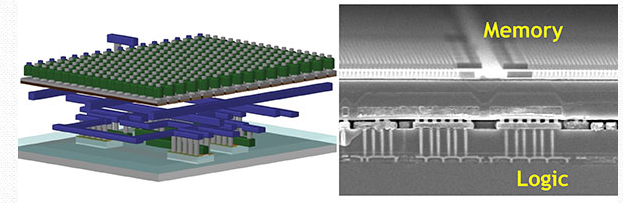
3D stacked memories
BeSang’s 3D stacked memories integrate memory cells in the vertical direction atop standard complementary metal oxide semiconductor (CMOS) logic, therefore boosting memory density in the smallest possible footprint. Unlike 3D NAND, BeSang’s 3D stacked-memory designs can be applied to almost any type for memory including DRAM, NAND- and NOR-flash. BeSang believes its architecture will expand silicon memories’ lifespan for at least 20 years after the end of Moore’s Law and maybe even to 2076.
For More Details : The future of IC design
-
What types of devices will be common in IC design by 2076?
By 2076, 3-D room-temperature, superconducting, quantum, neuromorphic, and photonic mixed-signal devices will be the common denominator for all integrated circuit designs. -
How will design tools function in the future?
Design tools will be so sophisticated that even novice designers will be able to mix and match these technologies into system-in-package designs. -
What is the primary benefit of BeSang's 3D stacked memories?
BeSang's 3D stacked memories integrate memory cells in the vertical direction atop standard CMOS logic, thereby boosting memory density in the smallest possible footprint. -
Does BeSang's architecture apply only to NAND flash?
No, unlike 3D NAND, BeSang's designs can be applied to almost any type of memory including DRAM, NAND-, and NOR-flash. -
How long does BeSang believe its architecture will extend silicon memories?
BeSang believes its architecture will expand silicon memories' lifespan for at least 20 years after the end of Moore's Law and maybe even to 2076. -
Who will understand how the world works in this future society?
The engineering community and its robotic assistants will be on a unique echelon of society that actually understands how the world works.