
Summary of EPISHINE’S WORLD UNIQUE SOLAR CELL PROVIDES POWER INDOORS DOWN AT ~2 UW/CM²
Epishine has launched a thin, flexible organic solar light cell for powering low-power indoor electronics, reducing or eliminating batteries. Scalable roll-to-roll printed production yields recyclable, non-toxic cells ideal for IoT and sensor integration. The cells operate under indoor light (~2 µW/cm²), come in six standard sizes, are 0.2 mm thick, semi-transparent, and reduce environmental impact and maintenance costs significantly.
Parts used in the Epishine Light Cell Project:
- Organic photovoltaic active layers (organic electronic materials)
- Printed conductive traces (using printing techniques)
- Encapsulation plastics (recyclable plastic encapsulation)
- Roll-to-roll printed substrate
- Module cells (configured as 6-cell and 8-cell modules)
- Semi-transparent module area
- Thin flexible substrate (0.2 mm thickness)
Now it’s here. Epishine’s ”light cell” can change how we power small electronics – a thin and flexible organic solar cell that can be integrated into sensors, consumer electronics, and other low power devices to reduce or eliminate the need of batteries.
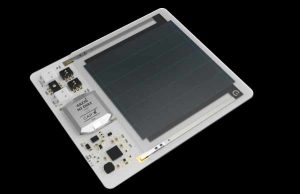
We are very proud to have taken the results from more than 25 years of research into this product. What makes it even better is that we have also developed a production process that is scalable into large volumes. This makes us one of the global leading actors in printed organic solar cells says Anna Björklou, new CEO of Epishine.
Epishine’s light cells are non-toxic, based on organic electronics, and encapsulated in recyclable plastics. The unique scalability is due to the fact that the entire manufacturing process is based on different printing techniques, roll-to-roll. The thin and flexible cells can easily be integrated into typical plastic-based electronics housings.
We can now offer a product that completely redefines the possibilities for anyone developing low-power wireless devices for instance for the growing IoT and PropTech markets. You can now develop products that don’t dependent on expensive battery replacements
says the sales director Jonas Palmér, Epishine.
The global digital transformation requires more and more dataflow between the physical and digital worlds. This will rapidly lead to a countless number of small sensors and displays, that today are powered by batteries. This is not sustainable, neither from an environmental perspective nor from a maintenance perspective.
Features:
- Ideal for powering wireless indoor low-power applications, such as IoT devices, various sensors, etc.
- Made from low-cost organic materials.
- Reduces environmental impact by up to 99% and cuts maintenance costs by replacing batteries in wireless devices.
- Intended for use indoors and under indoor light conditions, e.g. office, supermarket, home, etc.
- Flexible, compact and lightweight design with 0.2 mm thickness.
- Available in 6 standard sizes: 20, 30 and 50 mm with 6 or 8 cells.
- Semi-transparent module area for easy integration.
Read more: EPISHINE’S WORLD UNIQUE SOLAR CELL PROVIDES POWER INDOORS DOWN AT ~2 UW/CM²
- What is the Epishine light cell used for?
Powering wireless indoor low-power applications such as IoT devices and various sensors. - Can the Epishine light cell replace batteries?
Yes, it can reduce or eliminate the need for batteries in low-power wireless devices, cutting maintenance costs. - What materials are used in the light cell?
Low-cost organic electronic materials with recyclable plastic encapsulation are used. - How is the Epishine light cell manufactured?
The cells are produced using scalable roll-to-roll printing techniques. - Is the Epishine light cell suitable for indoor use?
Yes, it is intended for use indoors under indoor light conditions like offices, supermarkets, and homes. - What sizes and configurations are available?
Available in six standard sizes: 20, 30, and 50 mm with either 6 or 8 cells. - How thin and flexible is the product?
The design is flexible, compact, lightweight, and 0.2 mm thick. - Does the module support integration into plastic housings?
Yes, the thin and flexible cells can easily be integrated into typical plastic-based electronics housings. - How much environmental impact can the light cell reduce?
The product reduces environmental impact by up to 99% according to the article.