
Summary of Cheap, ultra low-power light source runs on just 0.1 Watts
Researchers at Tohoku University developed a low-cost flat panel light source using arrays of highly conductive single-walled carbon nanotubes. Acting like microscopic cathode ray tubes, nanotube tips emit electron beams under strong electric fields that strike a phosphor screen in vacuum, producing light with high efficiency at power as low as 0.1 W. Fabrication involves mixing crystalline nanotubes with solvent and surfactant, painting the mixture on the cathode, and roughening the surface with sandpaper to aid electron emission.
Parts used in the Carbon Nanotube Flat Panel Light Source:
- Highly crystalline single-walled carbon nanotubes
- Organic solvent
- Surfactant compound
- Cathode substrate (painted with nanotube mixture)
- Sandpaper (for surface scratching)
- Phosphor screen
- Vacuum enclosure
- Electrodes to create strong electric field (diode-like structure)
Researchers at Tohoku University in Japan have developed a new low-cost flat panel light source that could pioneer a new generation of brighter, cheaper and greener lighting devices to rival LEDs. The device uses arrays of highly conductive carbon nanotubes to deliver evenly-distributed illumination with high efficiency and a power consumption as low as 0.1 Watts – about 100 times lower than that of light-emitting diodes.
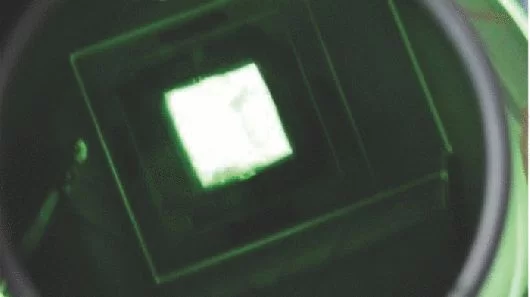
LED lights are renowned for their high efficiencies, but the fact that only a fraction of the photons they produce actually ends up illuminating the surrounding environment suggests that there is still much room for improvement. One alternative approach explored by Prof. Norihiro Shimoi and colleagues was to build a structure based on carbon nanotubes, one-atom thick layers of carbon folded into a cylindrical shape.
This state-of-the-art device has a diode-like structure like LEDs but, curiously enough, the way in which it produces light is actually closer to the cathode ray tubes used in the TVs and computer monitors of the past century. Under the influence of a strong electric field, each carbon nanotube acts as a tiny cathode ray tube that releases a high-speed beam of electrons from its tip. These electrons then hit a phospor screen kept under vacuum and, in the process, release a small amount of energy that causes the phospor to glow.
Building the device was a fairly simple, low-cost process. The researchers started by mixing highly crystalline single-walled carbon nanotubes with an organic solvent and a surfactant compound. They then painted the mixture on the cathode and scratched the surface with sandpaper, which allows the electrons to more easily separate from the tip of the nanotubes.
For more detail: Cheap, ultra low-power light source runs on just 0.1 Watts
- What is the power consumption of the nanotube flat panel light source?
The device can operate at power consumption as low as 0.1 Watts, about 100 times lower than LEDs according to the article. - How does the device produce light?
Each carbon nanotube emits a high-speed electron beam under a strong electric field that strikes a phosphor screen in vacuum, causing the phosphor to glow. - Can this device rival LEDs in efficiency?
The researchers suggest it could pioneer a new generation of brighter, cheaper and greener lighting devices to rival LEDs due to its high efficiency and low power use. - What materials are mixed to form the cathode coating?
Highly crystalline single-walled carbon nanotubes are mixed with an organic solvent and a surfactant compound. - Why is the cathode surface scratched with sandpaper?
Scratching the painted surface with sandpaper allows electrons to more easily separate from the tips of the nanotubes, aiding emission. - Does the device use a vacuum?
Yes, the phosphor screen is kept under vacuum so the emitted electrons can strike it and produce light. - Is the device structure similar to LEDs?
The device has a diode-like structure like LEDs, but its light production mechanism is closer to cathode ray tubes. - What role do carbon nanotubes play?
Each carbon nanotube acts as a tiny cathode ray tube, emitting electrons from its tip under a strong electric field.