
Summary of BEACON KEYER
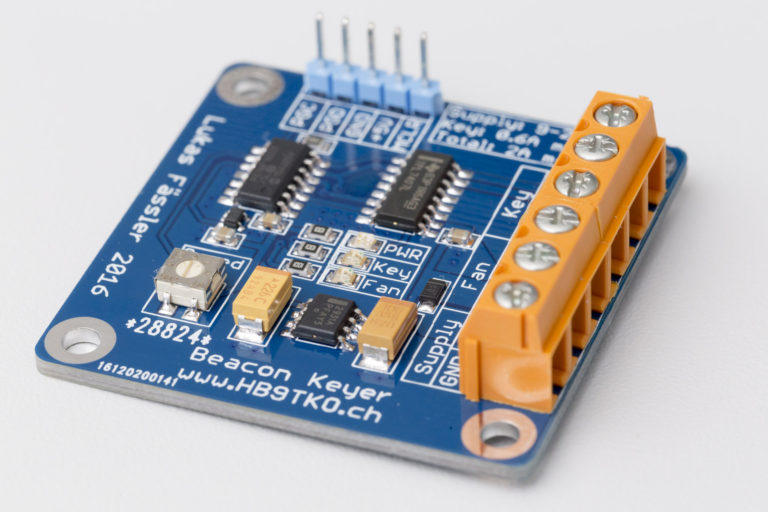
This article introduces a new beacon keyer project for a 10GHz ham radio station, requested by HB9MPU. It contrasts this design with the author's 2013 PIC16F688 beacon keyer built for his father, which used DIP sockets and Sprint Layout software. The new project is designed from scratch to meet specific requirements: 12V operation, open drain outputs using transistors to ground, and two outputs where one is inverted.
Parts used in the Beacon Keyer:
- PIC microcontroller
- Transistor
- Resistors
- Capacitors
- PCB
This is likely the first ham radio related project that I document here on this blog. But my very first PIC project was a beacon keyer that I made for my father, HB9BBD. That was was in 2013. A beacon keyer is a great project to get started with microcontrollers since it’s not much more than a fancy way of blinking an LED.
At that time I didn’t even use Eagle yet and so the layouts were based on a software called Sprint Layout. These were all very simple circuits, all based on a PIC16F688, and therefore perfectly suited for making some of my first homemade PCBs as well. The very early versions like the one in the picture above even used the DIP version of the PIC in a socket. All the resistors and capacitors are 1206 size not 0805 like of my later designs.
In fall last year, HB9MPU asked me if I could make some keyers for his new 10GHz beacon. That was a great oportunity to design a new one from scratch and this is what this post is about.
Requirements
These were the requirements:
– 12V operation
– Open drain outputs, i.e. a transistor to ground
– 2 outputs, one of them inverted
for more detail: BEACON KEYER
- What was the author's first PIC project?
The author's first PIC project was a beacon keyer made for his father, HB9BBD, in 2013. - Which software was used for early PCB layouts?
The early versions of the circuit layouts were based on a software called Sprint Layout. - What type of package did the early PIC chips use?
The very early versions used the DIP version of the PIC in a socket. - Why was a new keyer designed from scratch?
A new keyer was designed because HB9MPU asked the author to make keyers for his new 10GHz beacon. - What voltage does the new project operate at?
The new project requires 12V operation. - How many outputs does the new keyer have?
The new keyer has two outputs. - What type of output configuration is required?
The project requires open drain outputs, meaning a transistor to ground. - Is there any inversion in the outputs?
Yes, one of the two outputs must be inverted.