
Summary of ARM LPC2138 MICROCONTROLLER BASED DIGITAL AUDIO PLAYER
This project implements a digital audio player using an LPC213x microcontroller to play music from a removable flash card. It interfaces with a car audio head-end unit via a component-bus protocol, outputting a stereo line signal. The system utilizes bit-banging for SPI communication due to hardware limitations and supports various LPC213x targets with specific toolchain and memory requirements.
Parts used in the Flash Card Audio Player for Head End Unit:
- LPC213x Microcontroller (LPC2132, LPC2134, LPC2136, LPC2138)
- Removable Flash Card
- GCC Toolchain within Keil uVision
- SPI Interface
- I2C Interface
- UART Interface
- Timer1
- DAC Sample Buffer
- Car Audio Head-End Unit
Flash Card Audio Player for Head End Unit This project uses an LPC213x to implement a simple digital audio player, capable of playing music tracks from a removable flash card. The player is controlled using the component-bus interface from… Electronics Projects, ARM LPC2138 microcontroller based digital audio player “arm project, microcontroller projects,
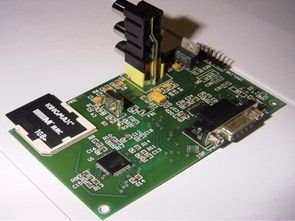
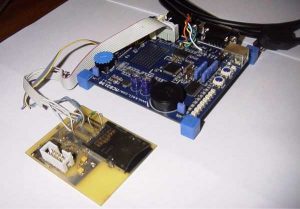
Flash Card Audio Player for Head End Unit This project uses an LPC213x to implement a simple digital audio player, capable of playing music tracks from a removable flash card. The player is controlled using the component-bus interface from a car audio head-end unit, and provides a line out stereo signal, suitable for plugging into the auxiliary input connector of the head-end unit. Author: Lindsay Meek
Resource Requirements
TOOLCHAIN GCC within Keil uVision
RAM 11K
ROM 24K
CPU CLOCK 60 MHz
UARTS 1 (For In-circuit programming and debugging)
SPI 2
I2C 1
TIMERS 2
INPUT CAPTURES 1
GPIO USED 15 (Include Peripherals)
MODES Thumb (Background), ARM (IRQs)
INTERRUPTS 2
TARGETS LPC2132, LPC2134, LPC2136, LPC2138
LPC2131 with a smaller DAC sample buffer
Head End Protocol Disrupt
The head-end protocol program consisted of a SPI-like servile [1], with a concentrated bi-directional accumulation connexion, with a 1ms gap between bytes, and a 50ms+ gap between packets.
As no SPI skirting was free on the LPC213x to cater the low-level byte program, a bit-banging software act was victimized. This operated using Timer1, with a compounding of slip charm on the bus timekeeper differentiation and oscillating counters.
FILE DOWNLOAD LINK LIST (in TXT format): LINKS-20984.zip
Source: ARM LPC2138 MICROCONTROLLER BASED DIGITAL AUDIO PLAYER
- What microcontroller is used in this project?
The project uses an LPC213x series microcontroller. - How does the player interface with the car audio head-end unit?
It is controlled using the component-bus interface and provides a line out stereo signal. - Why was bit-banging software used for the SPI interface?
No free SPI skirting was available on the LPC213x to handle the low-level byte program. - Which timer is used to operate the bit-banging act?
Timer1 operates the bit-banging act with compounding of slip charm on the bus timekeeper differentiation. - What are the RAM and ROM requirements for the GCC toolchain?
The project requires 11K RAM and 24K ROM. - Does the CPU run at 60 MHz?
Yes, the CPU clock speed is specified as 60 MHz. - Can the LPC2131 be used for this project?
Yes, the LPC2131 can be used but requires a smaller DAC sample buffer. - What is the gap duration between packets in the head-end protocol?
The protocol has a 50ms or greater gap between packets.
