Summary of MYPART, AN OPEN SOURCE PORTABLE AIR PARTICLE COUNTER
This article introduces "MyPart," an open-source, portable air particle counter developed by the Hybrid Ecologies Lab at UC Berkeley to measure particulate matter for better indoor and ambient air quality assessment. Designed with goals of accuracy, size, portability, and low cost, the device matches the performance of expensive $5000 instruments while remaining accessible. The project aims to help users understand cleanliness levels and health risks associated with particles smaller than 10 microns.
Parts used in the MyPart Project:
- MyPart device prototypes
- MetOne HHPC-6 instrument (for comparison)
- Calibration particles of known sizes
- Test chamber
- Ambient outdoor environment testing site
One of the most harmful airborne pollutants with respect to human health is particulate matter. Air particle counters are used to determine the air quality by counting and sizing the number of particles in the air. This information is useful in determining the amount of particles inside a building or in the ambient air. It is also useful in understanding the cleanliness level in a controlled environment.
Airborne particles with a diameter of less than 10 microns pose a large risk, they can travel deeply into the respiratory system, causing a variety of cardiovascular and respiratory diseases. Combustion (e.g. burning wood; automobiles) can generate particles less than 2.5 microns in diameter. Between 2.5 and 10 microns are particles such as dust, pollen, and mold. (More information about particulate matter can be found here.)
Four members of the Hybrid Ecologies Lab at UC Berkeley, Rundong Tian, Sarah Sterman, Chris Myers, and Eric Paulos, developed “MyPart”, a device that attempts to measure air particulate matter
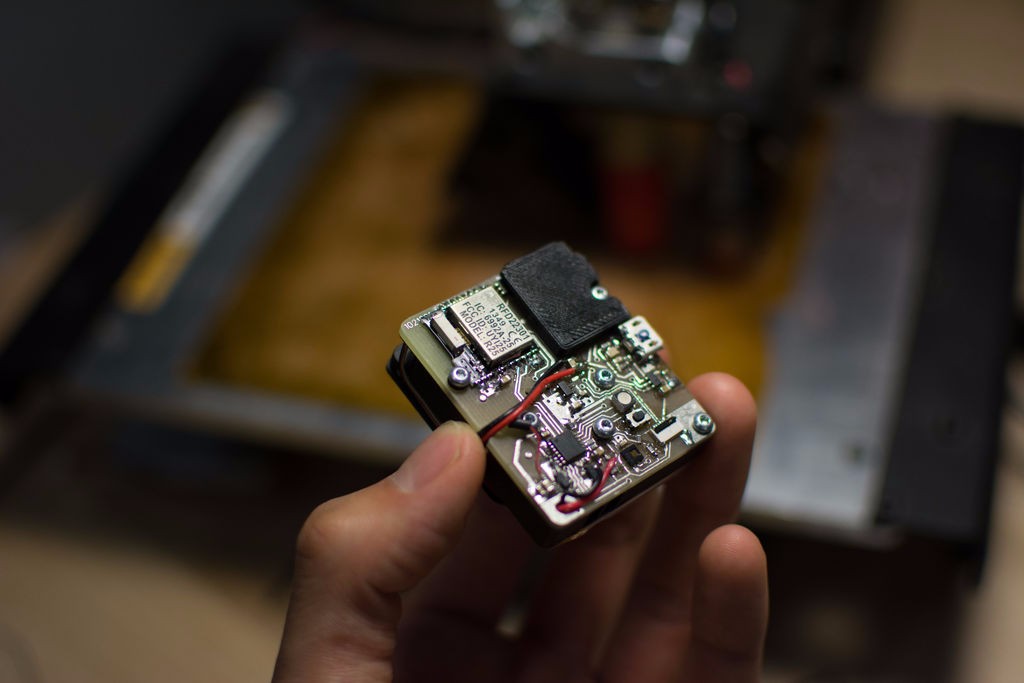
MyPart’s design focuses on four goals; accuracy, size and portability, cost, and open source.
Accuracy
In the test chamber, smoke concentration was allowed to decay naturally over about 2 hours. Three prototypes of MyPart gave similar accuracy results to an expensive instrument results ($5000 MetOne HHPC-6).
Additional experiments conducted with calibration particles of known sizes and in outdoor ambient environments, and more information about the tests can be found here.
for more detail: MYPART, AN OPEN SOURCE PORTABLE AIR PARTICLE COUNTER
- What is the primary purpose of the MyPart device?
It is designed to measure air particulate matter to determine air quality and cleanliness levels. - Can MyPart accurately detect harmful airborne pollutants?
Yes, it provides accuracy results similar to expensive instruments when measuring smoke concentration decay. - How does the cost of MyPart compare to professional instruments?
MyPart is a low-cost alternative compared to expensive instruments like the MetOne HHPC-6 which costs $5000. - What are the four main design goals of the MyPart project?
The goals are accuracy, size and portability, cost, and being open source. - Which particles pose the largest health risk according to the text?
Airborne particles with a diameter of less than 10 microns can travel deeply into the respiratory system. - Where did the creators of MyPart work?
The team from the Hybrid Ecologies Lab worked at UC Berkeley. - Does the MyPart device work in outdoor environments?
Yes, additional experiments were conducted in outdoor ambient environments to test its functionality. - What types of combustion generate particles smaller than 2.5 microns?
Burning wood and automobiles are examples of combustion that generate these small particles.