
Summary of IWAVE UNVEILS THE IMPLEMENTATION OF ARINC 818-2 IP CORE ON MICROSEMI POLARFIRE FPGA
iWave Systems implemented their ARINC 818-2 IP Core on Microsemi PolarFire FPGAs, enabling low-latency, high-speed point-to-point video for mission-critical avionics (cockpit displays, cameras, IR sensors). The PolarFire devices provide flash-based, secure, small-form-factor FPGAs with ~50% lower power than comparable mid-range FPGAs. The IP supports TX/RX, configurable ADVB formats, progressive/interlaced video, flexible streaming interfaces, and can use optical or copper transmission; IP parameters are configurable per customer ICD.
Parts used in the ARINC 818 IP Core Implementation on Microsemi PolarFire FPGA:
- iWave ARINC 818-2 IP Core
- Microsemi (Microchip) PolarFire FPGA device
- FPGA development board or carrier (PolarFire-compatible)
- Optical transmission medium (fiber transceiver) or copper transmission cabling
- Video source devices (cameras, IR sensors) or video processors/displays
- Configuration interface for ICD-based parameterization
- Power supply suitable for PolarFire FPGA
- Clocking resources and timing circuitry supporting synchronous video
The ARINC 818 video protocol since its inception has gained wide adoption on large aircrafts such as Airbus A350XWB, Boeing 787, KC46A, and many others.
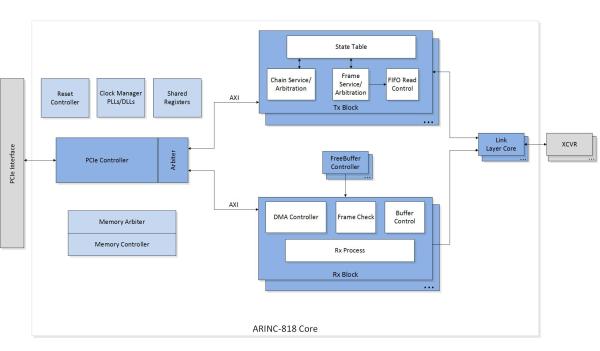
ARINC 818 protocol is used to provide point to point, high-speed, low-latency video transmission for mission-critical systems such as cockpit display, video processors, cameras, and IR sensors. Offering high-speed ARINC 818 interfaces in FPGA arises many challenges due to low-latency and synchronous timing requirements for most displays.
iWave Systems, being the leading FPGA design house, offers an extensive portfolio of FPGA IP Cores. And one of the most predominant being ARINC 818 IP. Today, we are excited to announce the successful implementation of iWave’s ARINC 818 IP Core on Microsemi PolarFire FPGA devices. The PolarFire devices offer the highest security, small form factor, flash-based FPGA, that consume 50% low power competing to mid-range FPGA’s.
Key features include:
- Fully compliant with ARINC 818-2 standards
- Can be used for both transmit and receive applications
- Flexible streaming video interface
- Configurable ADVB video formats(resolution, pixel type, etc.)
- Supports progressive and interlaced video formats
- IP parameters can be configured as per customers interface control document(ICD)
- Transmission medium – either optical or copper
Read more: IWAVE UNVEILS THE IMPLEMENTATION OF ARINC 818-2 IP CORE ON MICROSEMI POLARFIRE FPGA
- What standard is the IP core compliant with?
The IP core is fully compliant with ARINC 818-2 standards. - Can the IP core be used for both transmit and receive?
Yes, it can be used for both transmit and receive applications. - Does the IP support different video formats?
Yes, it supports configurable ADVB video formats including resolution and pixel type, and supports progressive and interlaced formats. - Is the transmission medium limited to optical only?
No, transmission medium can be either optical or copper. - Are IP parameters configurable for customer requirements?
Yes, IP parameters can be configured as per the customer's interface control document (ICD). - What types of applications is the ARINC 818 IP core intended for?
It is intended for mission-critical systems such as cockpit displays, video processors, cameras, and IR sensors. - Why choose PolarFire FPGAs for this implementation?
PolarFire devices offer high security, small form factor, flash-based operation, and about 50% lower power consumption compared to competing mid-range FPGAs. - Does the implementation address low-latency and synchronous timing needs?
Yes, the IP implementation on FPGA addresses the low-latency and synchronous timing requirements for most displays.