
Summary of COMPUTER CONTROLLED ROBOT PROJECT PIC16F877
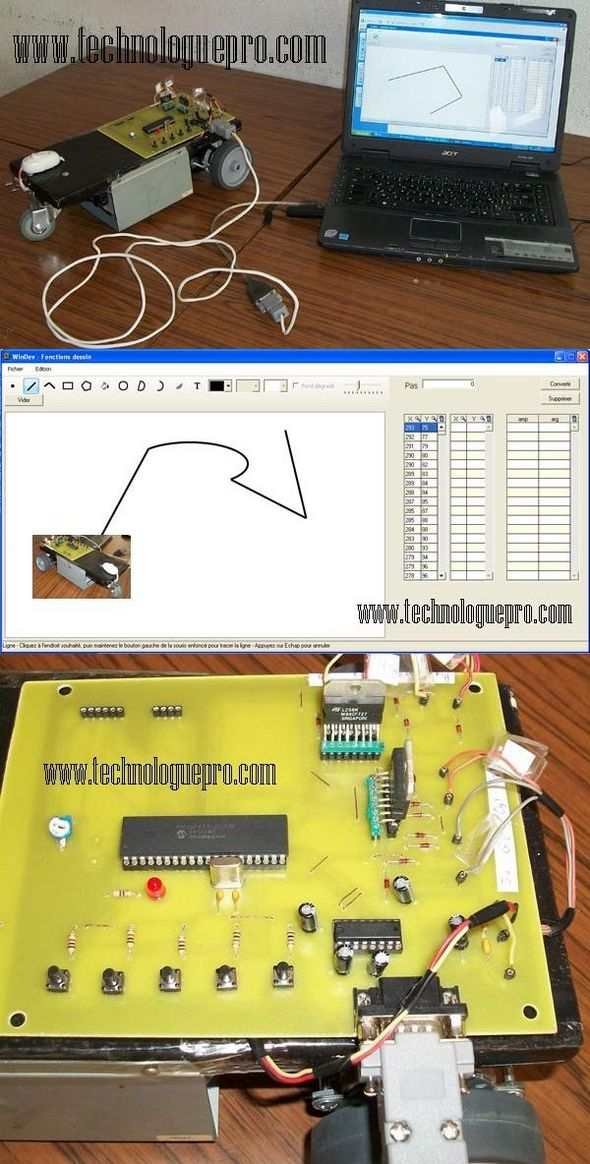
Computer-controlled robot project using a PIC16F877 microcontroller moves according to shapes drawn in a PC program; it can also follow coordinate inputs. Communication between PC and robot uses an RS232 serial link. The L298 motor driver controls the motors. Project files include Micro-Pascal source code and Proteus ISIS (Ares) simulation/design files.
Parts used in the Computer Controlled Robot Project PIC16F877:
- PIC16F877 microcontroller
- L298 motor driver
- RS232 serial port interface (PC communication)
- Motors (driven by L298)
- Power supply for microcontroller and motors
- PC with software to draw shapes or enter coordinates
- Micro-Pascal source code files
- Proteus ISIS / Ares project files
Computer-controlled robot circuit special program is moving according to the shapes drawn on further action can be achieved by giving the coordinates instead of drawing circuit PIC16F877 microcontroller used robot communication between computers via… Electronics Projects, Computer Controlled Robot Project PIC16F877 “microchip projects, microcontroller projects, pic16f877 projects, “
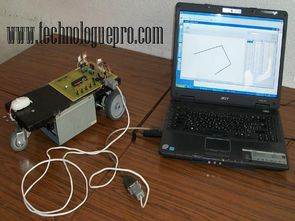
Computer-controlled robot circuit special program is moving according to the shapes drawn on further action can be achieved by giving the coordinates instead of drawing circuit PIC16F877 microcontroller used robot communication between computers via RS232 serial port is provided. L298 as motor driver PIC16F877 software used for the project prepared by micro-pascal computer program source code file and ares proteus isis files there ..
Source: COMPUTER CONTROLLED ROBOT PROJECT PIC16F877alternative computer-controlled-robot-project-pic16f877.rar
- How does the robot receive movement instructions?
The robot receives instructions from a PC program either by shapes drawn or by giving coordinates via RS232 serial communication. - What microcontroller is used in this project?
The project uses a PIC16F877 microcontroller. - Which motor driver is used to control the robot motors?
The L298 motor driver is used to control the motors. - Can the robot follow coordinates instead of drawing shapes?
Yes, further action can be achieved by giving coordinates instead of drawing. - What software development language is the project source written in?
The software for the project is prepared in Micro-Pascal. - Are simulation or design files provided with the project?
Yes, Proteus ISIS and Ares files are provided. - How does the PC communicate with the robot?
The PC communicates with the robot via an RS232 serial port. - Does the project include source code?
Yes, the project includes Micro-Pascal source code files.
