
Summary of Airbag System Basis Chip (SBC) with PSI5
This design integrates a PSI5-enabled airbag system basis chip (MCZ33789) to manage squib drivers, SPI communications with the MCU, accelerometer and satellite sensors, DC monitoring, safing state machine, diagnostics, LC filtering, and power mode control—providing a complete, self-protecting airbag subsystem for automotive safety and further development in crash-prone vehicles.
Parts used in the Airbag System Basis Chip with PSI5 Project:
- MCZ33789 Freescale airbag system basis chip (SBC)
- Squib driver IC
- Microcontroller Unit (MCU)
- Accelerometer sensor
- Satellite sensors
- DC sensors for monitoring
- LC filters
- PSI5 Peripheral Sensor Interface
- Power supply for squib firing and system power mode control
The automotive industries are now into electronics applications in which embedded systems are already part of its major components. In this design, it features the Peripheral Sensor Interface 5 (PSI5), which is the most efficient standard interface of sensors and electronic control units in automotive. It supports complete airbag system that includes system power mode control, supplies for squib firing, satellite sensors, and local Electronic Control Unit (ECU) sensors and ECU logic circuits. It has dedicated safing state machine that complements the airbag’s MCU hardware/software safing approach. The system itself is capable of diagnostics and self-protection.
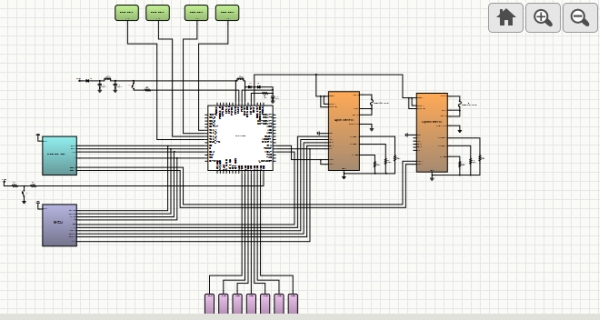 The design is comprised of MCZ33789 Freescale airbag system basis chip that manages the entire airbag partitions and some major components like squib driver IC, SPI communications with MCU, accelerometer sensor, satellite sensors, and dc sensors for monitoring. The squib driver IC supports air bag modules and seat belt retention that functions with accelerometer sensor. The MCU provide the connection of airbag system with the entire electronic applications of the vehicle. The LC filters are provided to ensure frequency range.
The design is used in different airbag system in which it optimizes the capability of providing safety to users. It can be used for further development of safety system in automotive and other vehicle that is prone to crash or collisions. It can help save lives during accidents.
For more detail: Airbag System Basis Chip (SBC) with PSI5
- What is the main chip used in this airbag system design?
The design uses the MCZ33789 Freescale airbag system basis chip (SBC). - Can this system interface with vehicle electronics?
Yes, the MCU provides connection of the airbag system with the vehicle's electronic applications. - Does the design support PSI5?
Yes, the design features the Peripheral Sensor Interface 5 (PSI5). - What sensors are supported by the system?
The system supports an accelerometer sensor, satellite sensors, and DC sensors for monitoring. - How does the design handle safing for airbags?
It has a dedicated safing state machine that complements the MCU hardware/software safing approach. - Is diagnostics and self-protection included?
Yes, the system is capable of diagnostics and self-protection. - What role do LC filters play in the design?
LC filters are provided to ensure the required frequency range. - Does the squib driver support seat belt retention?
Yes, the squib driver IC supports airbag modules and seat belt retention functions with the accelerometer sensor.