Summary of XCOM – COMPACT, EMBEDDED X86 PLATFORM FOR SDR AND OTHER APPLICATIONS
Fairwaves developed XCOM, a compact x86 embedded platform designed for unattended operation, IP65+ ruggedness, and passive cooling. Ideal for Software Defined Radios (SDRs) like UmTRX and XTRX, it offers high CPU power and I/O throughput compared to ARM chips. The system ensures 99.999% uptime with remote reflashing capabilities, supporting diverse applications from OpenRAN base stations to underwater or aerial deployments.
Parts used in the XCOM:
- x86 CPU
- IP65+ enclosure
- Coreboot support
- USB interface
- Ethernet interface
- miniPCIe interface
Designed To Support Unattended Operation, IP65+, And Passive Cooling
Have you ever tried designing a truly embedded x86-based system? We have, and it was a journey full of unexpected pitfalls.
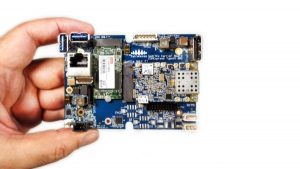
Consider the importance of unattended operation, including resilience in the face of power failures and power voltage fluctuation. Need support for different CPU models? A compact, IP65+ enclosure? Each of these requirements is tricky on its own; taken together, they begin to feel insurmountable. But wandering into previously uncharted territory is half the fun of engineering, and we at Fairwaves are not ones to shy away from a challenge!
Today, we are making the results of more than a year’s worth of development available to the world. With the launch of XCOM, no one ever needs to face this particular set of challenges again.
We designed XCOM to be the ultimate platform for the Fairwaves UmTRX and XTRX Software Defined Radios (SDRs), but it works just as well with other USB, Ethernet, and miniPCIe SDRs. We have already started using the first revision of XCOM in our OpenRAN cellular base stations, and the version that will ship at the end of this campaign will incorporate everything we have learned from that field experience.
We also believe that XCOM has many applications outside of the SDR space. If you have suggestions for how we could make XCOM even more useful for non-SDR projects, please reach out and let us know!
XCOM Handles Demanding CPU And I/O Requirements
These days, a lot of control boards are based on ARM chips because they are small, inexpensive, power-efficient, and embedded-friendly. But what if you need more CPU power or faster I/O than an ARM chip can provide?
What if, for example, you are working in the growing field of Software-Defined Radio (SDR) and the RF processing of your application demands intensive Digital Signal Processing (DSP) and high throughput I/O? You could use a specialized DSP chip or an FPGA, but processing your data on a sufficiently powerful x86 CPU is not only simpler, it also benefits from a more developed software ecosystem and easy virtualization.
XCOM Supports Reliable, Unattended, Always-On Operation
The downside of using x86 is a less developed ecosystem of truly embedded, unattended designs. A lot of x86-based embedded systems are used in point-of-sale terminals, measurement devices, and other equipment that are easy to access and therefore easy to restart or fix if something goes wrong. For our use case, we need equipment that adheres to the infamous telecom standard of 99.999% uptime, even though it might be hundreds of kilometers – and many hours of driving – away from anyone who could fix it. Or it might be deep under water. Or hanging from a weather baloon. Or orbiting the Earth!
Building an x86-based device that is always on when it’s connected to power, and that can be reliably reflashed to a new software release remotely is surprisingly non-trivial. We had to pay special attention to everything from hardware design to Coreboot support to make it possible.
Read more: XCOM – COMPACT, EMBEDDED X86 PLATFORM FOR SDR AND OTHER APPLICATIONS
- What is the primary purpose of the XCOM platform?
XCOM is designed as an ultimate platform for Fairwaves UmTRX and XTRX SDRs, handling demanding CPU and I/O requirements. - Can XCOM operate without human intervention?
Yes, XCOM is designed to support unattended operation with resilience against power failures and voltage fluctuations. - Does XCOM require active cooling fans?
No, the device features passive cooling to ensure reliable operation in harsh environments. - How does XCOM compare to ARM-based control boards?
XCOM provides more CPU power and faster I/O than ARM chips, which is necessary for intensive DSP and high throughput. - Is XCOM compatible with other SDR types?
Yes, it works well with other USB, Ethernet, and miniPCIe SDRs beyond just Fairwaves models. - What level of uptime does XCOM guarantee?
The system adheres to the telecom standard of 99.999% uptime even when located far from maintenance personnel. - How can software updates be managed on XCOM?
The device supports reliable remote reflashing to new software releases while remaining always on. - What operating system firmware does XCOM utilize?
Special attention was paid to Coreboot support to enable the required embedded functionality.