
Summary of 5.25″ SBC WITH INTEL KABY LAKE OR XEON CPU
The BVM Limited LS-579 is a powerful 5.25" embedded single-board computer featuring Intel 6th/7th Gen Skylake/Kaby Lake or Xeon E3 processors with the C236 chipset. It supports up to 32GB DDR4 RAM, four SATAIII ports, and four Gigabit Ethernet LANs. Optimized for workstations, video processing, and network servers, it offers robust I/O including VGA, LVDS, HDMI, and DisplayPort connections for multi-display setups.
Parts used in the LS-579:
- Intel 6th and 7th Generation Skylake and Kaby Lake Core processor families
- Xeon E3-1200 v5/v6 processor
- FCLGA1151 socket
- Intel C236 chipset
- HD530 GPU (in Xeon processor)
- 630 GPU (in Kaby Lake version)
- DDR4 DRAM (up to 32GB)
- SATAIII mass storage interfaces (four ports)
- Gigabit Ethernet LAN ports (4 total: 3x Intel I210-AT, 1x Intel I219-LM)
- VGA port
- LVDS port
- HDMI ports (2)
- DisplayPort (DP) port
The new LS-579 announced by BVM Limited is one of the most powerful SBCs available in the compact 5.25” embedded form factor. With outstanding computing power from the latest generation processors, comprehensive I/O capability, four SATAIII mass storage interfaces and supporting up to 32GB of DDR4 DRAM, the LS-579 is optimised for use as a network computer or workstation. CAD work stations, video processing, graphics design, database management and network servers are typical applications that will benefit from the enhanced performance over previous generations of embedded SBCs.
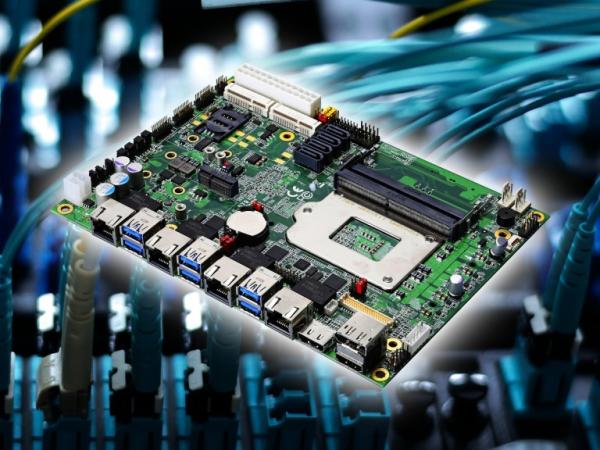
The LS-579 is based on the Intel 6th and 7th Generation Skylake and Kaby Lake Core processor families or the Xeon E3-1200 v5/v6 processor in a FCLGA1151 socket all with the Intel C236 chipset. The HD530 GPU in the Xeon processor offers 24 execution units (EUs), clocked at up to 1150MHz, decoding H.265/HEVC completely in hardware; the 630 GPU in the Kaby Lake version is largely identical to the 530 found in Skylake but with HEVC and VP9 support as the key feature of the upgrade. Displays can be connected via 1 VGA, 1 LVDS, 2 HDMI and one DP port, with up to three separate displays controlled simultaneously.
The LS-579 is equipped with 4 Gigabit Ethernet LAN ports, 3 x Intel I210-AT Gigabit Ethernet and 1 x Intel I219-LM Giga bit PHY LAN. The I210-AT enables 1000BASE-T implementations using an integrated PHY; it can be used for server system configurations. The I210-AT implements 4 receive queues and 4 transmit queues, with up to two queues dedicated for stream reservation or priority, and up to three queues allocated for strict priority.
Read More: 5.25″ SBC WITH INTEL KABY LAKE OR XEON CPU
- What is the primary form factor of the LS-579?
The LS-579 is available in a compact 5.25 inch embedded form factor. - Can the LS-579 support multiple displays simultaneously?
Yes, displays can be connected via one VGA, one LVDS, two HDMI, and one DP port to control up to three separate displays simultaneously. - Which processors are compatible with the LS-579?
The board is based on Intel 6th and 7th Generation Skylake and Kaby Lake Core processor families or the Xeon E3-1200 v5/v6 processor. - Does the LS-579 support hardware decoding for H.265/HEVC?
Yes, the HD530 GPU in the Xeon processor and the 630 GPU in the Kaby Lake version offer complete hardware decoding for H.265/HEVC. - How many Gigabit Ethernet LAN ports does the LS-579 have?
The LS-579 is equipped with four Gigabit Ethernet LAN ports, consisting of three Intel I210-AT and one Intel I219-LM. - What is the maximum amount of DDR4 DRAM supported by the LS-579?
The system supports up to 32GB of DDR4 DRAM. - What are typical applications for the LS-579?
Typical applications include CAD work stations, video processing, graphics design, database management, and network servers. - Does the Intel I210-AT controller support queue prioritization?
Yes, the I210-AT implements four receive queues and four transmit queues, allowing dedicated queues for stream reservation, priority, or strict priority.