
Summary of HeartyPatch – Open source ECG patch with Wifi
HeartyPatch is an open-source, single-lead ECG wearable patch utilizing the ESP32 chip for heart rate variability (HRV) analysis. It offers accurate electrocardiography measurements compared to optical monitors, suitable for medical research, fitness training, stress management, and biofeedback applications. The device provides raw data access, allowing users to modify software for continuous streaming or custom modes.
Parts used in the HeartyPatch:
- ESP32 system-on-a-chip
- Low-cost highly-integrated components
- Adhesive electrodes
- Single lead ECG sensor
- WiFi module
HeartyPatch is a completely open source, single-lead, ECG-HR wearable patch with HRV (Heart Rate Variability) analysis. It is based on the popular ESP32 system-on-a-chip. By using low-cost, highly-integrated components, we are able to keep the BOM’s cost low, while the simplicity of the circuit design means future expansion will be easier. HeartyPatch can be used both as a lifestyle device for managing fitness and stress as well as for diagnostics and medical research, with the potential for even more interesting applications.
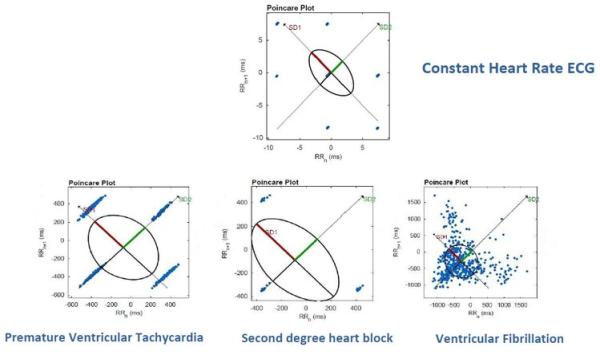
Currently available low-cost, wearable heart monitors are usually based on less accurate optical measurements while the actual electrocardiography-based monitors are either too expensive or difficult to use. Similarly, heart-rate variability (HRV) data is used in fitness and training, but can also be used to detect some of the basic cardiac arrhythmias. Getting accurate R-R intervals for HRV studies is also tricky with most heart-rate monitors.
What is Heart-rate Variability?
Heart-rate variability, or HRV, is a measure of the variance of heart-rate in real-time. More specifically, it is the time difference between two R-R intervals (the signal peaks) in an electro-cardiogram (ECG or EKG) plot.
Studies of heart-rate variability have shown that HRV can be indicative of some common forms of arrhythmia, including atrial fibrillation (AF) and atrial tachycardia (AT), among others. HRV can be detected with a single lead ECG, like HeartyPatch, which, for cardiac patients being monitored for such forms of arrhythmia, is much easier to wear long term than a full Holter configuration (three or five leads).
In fitness applications, some high-performance athletes train using biofeedback for heart-rate control and also for knowing when to start and stop training (based on heart-rate).
HRV has also be known to reflect emotion, mood, anxiety, and stress. When such psychological events happen, there is a known pattern of variance in heart rate. This makes HRV useful tool for studying mood and managing stress in people who are prone to such psychological states.
Finally, since HeartyPatch can detect individual heart-beats in real-time, it can also be used in the areas of design and non-medical wearables to detect heart beats to activate lights or any other form of feedback. Cardio-biofeedback is an example of controlling heart-rate.
Who Needs HeartyPatch
- Medical professionals, caregivers, and researchers (for continuous event monitoring)
- High performance sports and fitness professionals (for precision cardio training)*
- Hardware/software developers (as a reference design)
- Curious poeple (because knowing your own heart-patterns is cool)
*Activities that cause sweating can prevent adhesive electrodes from adhering properly.
HeartyPatch Modes of Operation
HeartyPatch is open source. This means that the software on the device can be modified to work in any way you choose, providing access to raw heart-rate and inter-beat interval (IBI) data. Because of this flexibility, HeartyPatch can be operated in any or all of the following modes. * Continuous ECG streaming mode displays live ECG recording from the chest. This works similar to a heart-rate monitor. Below is a screen capture of the device working in ECG mode.
Read more: HeartyPatch – Open source ECG patch with Wifi
- What is the main advantage of HeartyPatch over current low-cost wearables?
It uses accurate electrocardiography-based monitoring instead of less accurate optical measurements. - Can HeartyPatch detect cardiac arrhythmias?
Yes, it can detect common forms of arrhythmia like atrial fibrillation and atrial tachycardia using HRV. - How does HeartyPatch compare to a full Holter configuration?
It is much easier to wear long-term because it requires only a single lead rather than three or five leads. - Is the software on HeartyPatch customizable?
Yes, the device is open source, allowing users to modify the software to access raw heart-rate and inter-beat interval data. - What are the two primary modes of operation mentioned for this device?
The article highlights continuous ECG streaming mode and the ability to operate in any mode chosen by modifying the open-source software. - Who are the target users for HeartyPatch?
Target users include medical professionals, high-performance athletes, hardware developers, and curious individuals interested in heart patterns. - Does sweating affect the use of HeartyPatch?
Yes, activities that cause sweating can prevent adhesive electrodes from adhering properly. - Can HeartyPatch be used for non-medical feedback?
Yes, it can detect heartbeats in real-time to activate lights or provide other forms of cardio-biofeedback.