
Summary of GPS VS. BEACONS VS. WI-FI: THREE LOCATION IDENTIFIER TECHNOLOGIES
This article explores location-based services in the IoT era, comparing GPS, WiFi, and Beacons. It highlights GPS's reliance on satellite visibility for outdoor use, while noting that WiFi and Beacons are better suited for indoor or hotspot-rich environments. The text details how GPS modules communicate via UART using NMEA messages and mentions specific hardware like ESP32 and ESP8266 for WiFi positioning.
Parts used in the Location Detection Project:
- GPS modules/receivers (e.g., Neoway, u-blox)
- Ready-made antenna
- Microcontroller Unit (MCU)
- UART interface
- NMEA format data stream
- WiFi transceiver modules (e.g., ESP32, ESP8266)
In IoT and digital age, location-based services applications are widespread: starting from Google maps to anti-loss devices and not ending with location-based marketing. The most common technologies used for user location identification are: GPS, WiFi and Beacons (a custom BLE profile).
Location-based (geofencing) marketing is a new way to enhance the personal experience while shopping. For example if you were near the shampoo section you will get on your mobile exclusive offers about that section.
Choosing the right location detection technology needs to take into consideration that GPS works optimally in the open sky environments and WiFi and Beacons can work probably indoors (and outdoors but within inhabited areas with hotspots). Now let’s get a brief look at each technology:
GPS
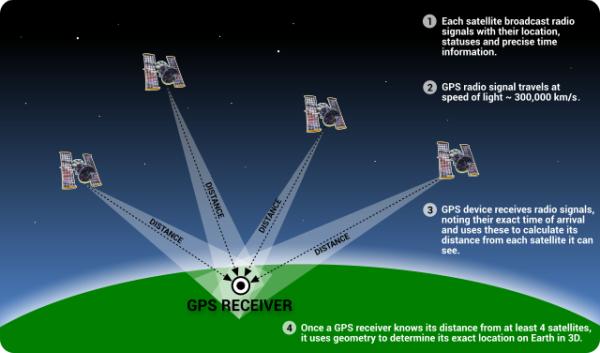
Thanks to on-the-shelf GPS modules/receivers from vendors like: Neoway and u-blox it’s easy to embed a GPS receiver into your project. What you need is a module sending its messages via UART to the MCU and a ready-made antenna attached to the module. There is a standard format for these modules messages called NEMEA. These messages contain information about the location that includes longitude, latitude, direction, speed … etc. These receivers need to see at least 4 satellites to compute a position.
There are many navigation systems like the Russian GLONASS, the European Union’s Galileo and the American GPS.
WiFi
WiFi can be used in location detection (AKA Wi-Fi positioning system) when your phone or WiFi transceiver module like ESP32 or ESP8266 is near hotspots. You can consider WiFi like a coexisting system with GPS for indoor areas. Moreover, WiFi can be used to detect the location inside the enclosed/underground area; you can see the SubPos project on Hackaday to know how.
Read More: GPS VS. BEACONS VS. WI-FI: THREE LOCATION IDENTIFIER TECHNOLOGIES
- What technologies are most common for user location identification?
The most common technologies are GPS, WiFi, and Beacons. - How does GPS work optimally?
GPS works optimally in open sky environments where it can see at least 4 satellites. - Can WiFi be used for indoor location detection?
Yes, WiFi is considered a coexisting system with GPS for indoor areas and enclosed spaces. - What communication format do GPS modules use?
These modules send messages in a standard format called NMEA containing longitude, latitude, direction, and speed. - Which hardware components are needed to embed a GPS receiver?
You need a module sending messages via UART to the MCU and a ready-made antenna attached to the module. - Are there navigation systems other than American GPS?
Yes, other systems include the Russian GLONASS and the European Union's Galileo. - How can an ESP32 be used in this context?
An ESP32 can act as a WiFi transceiver module to detect location when near hotspots.
