FISCHER FREEDOM’S MAJOR EXTENSIONS ENABLE VERSATILE INNOVATIONS IN CONNECTIVITY

Summary of FISCHER FREEDOM’S MAJOR EXTENSIONS ENABLE VERSATILE INNOVATIONS IN CONNECTIVITY


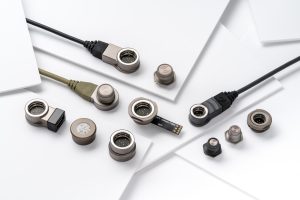
The Fischer FreedomTM Series expands its connectivity platform with nine new products launched in September 2019, centered on the modular LP360TM connector. These innovations optimize SWaP, cable management, and integration for defense, medical, robotics, and IoT markets. Key features include non-magnetic quick-release locking, membrane-sealed contacts, and low-profile designs. New additions include USB 2.0 adaptors, LED flash drives with integrated connectors, and a cabled metal receptacle with seven contacts, enabling advanced wearable and robotic solutions.

Parts used in the Fischer FreedomTM Series:

  • Fischer LP360TM connector
  • USB 2.0 adaptor
  • LED flash drive
  • Cabled receptacle in metal
  • 7 signal and power contacts

Fischer Freedom Expands Beyond Traditional Connectors

Fischer Connectors expanded its Fischer Freedom Series with nine products built around the LP360 connectivity platform. Rather than functioning only as a conventional plug-and-socket family, the system combines connectors, cabled receptacles, and active accessories intended for compact electronic installations.

FISCHER FREEDOM’S MAJOR EXTENSIONS ENABLE VERSATILE INNOVATIONS IN CONNECTIVITY

This modular approach is particularly relevant where designers need to manage power, signals, device size, and cable routing within the same system.

LP360 Supports 360-Degree Mating

One of the distinguishing features of the Fischer LP360 connector is its ability to mate without a conventional keyed orientation.

The connector can engage from different rotational positions, which can make connection faster when visibility or access is limited. This can be useful in wearable equipment, portable electronics, robotics, and field systems where users may need to connect or disconnect hardware frequently.

The quick-release mechanism is also non-magnetic, which may be useful in applications where magnetic materials are undesirable.

Low-Profile Construction Supports SWaP Requirements

The platform is designed around reduced Size, Weight, and Power requirements, commonly summarized as SWaP.

A low-profile connector can help engineers reduce enclosure thickness and avoid bulky cable assemblies. These advantages become especially important in body-worn equipment and compact embedded systems where every additional millimeter or gram can affect usability.

Connector size alone does not determine overall SWaP performance, but it can contribute meaningfully to a more compact system architecture.

Membrane-Sealed Contacts Simplify Cleaning

The LP360 design uses membrane-sealed contacts intended to make the connector surface easier to clean.

Traditional recessed connector contacts can collect dirt or other contaminants in areas that are difficult to reach. A more accessible contact interface can therefore be beneficial in medical, industrial, outdoor, and wearable equipment where connectors may be exposed to frequent handling.

The required environmental protection level should still be checked against the specifications of the particular connector configuration.

New Products Add Both Passive and Active Functions

The 2019 expansion introduced more than different connector housings. It also included active devices such as a USB 2.0 adapter, LED module, and rugged flash drive with the LP360 panel plug integrated directly into their housings.

This allows the connector interface to become part of the functional electronics rather than simply acting as a cable termination.

Such integration can reduce the number of separate adapters and intermediate connections required within a system.

Seven-Contact Versions Carry Signals and Power

The Size 14 LP360 products use seven contacts intended for combinations of signal and power connections.

The expansion included both a cabled receptacle and panel plug, giving designers additional ways to integrate the interface into equipment.

Using one connector for both power and data can simplify cabling in suitable applications, although voltage, current, signal integrity, and contact assignments must still remain within the connector’s specified limits.

Smaller Four-Contact Versions Increase Design Flexibility

The Series was also expanded with Size 08 configurations containing four signal and power contacts.

These versions were offered in both metal and a high-performance composite material based on PEEK. Providing different sizes and materials allows designers to choose between mechanical, weight, environmental, and integration requirements.

Smaller variants can be especially useful where the full seven-contact configuration would occupy unnecessary space.

PEEK-Based Components Reduce Weight

Some of the Size 08 connectors use a high-end composite based on PEEK rather than metal.

PEEK is commonly selected in engineering applications for its combination of mechanical strength, temperature resistance, chemical resistance, and relatively low weight.

For wearable equipment, replacing some metal components with suitable engineering polymers can help reduce mass while retaining the mechanical characteristics required by the application.

USB Adapter Extends the Platform Into Data Connectivity

The integrated USB 2.0 adapter demonstrates how the LP360 interface can connect with established electronic communication standards.

Instead of requiring a separate adapter cable, the active module incorporates the Fischer connector directly into the device housing.

This can support designs where a central hub distributes data and power to several accessories through a consistent connector platform.

Integrated Flash Storage Adds Another Functional Module

A rugged flash drive was also introduced as part of the Freedom expansion.

Integrating removable storage directly into the connector ecosystem could be useful for transferring configuration files, mission data, diagnostic information, or other digital content in specialized systems.

Its practical value depends on factors such as storage capacity, environmental rating, interface speed, and the security requirements of the final application.

LED Module Can Provide Local Visual Feedback

The LP360-based LED accessory adds a simple visual output device to the connectivity platform.

An integrated light module could potentially be used for status indication, identification, alerts, or localized illumination without requiring a separately wired indicator.

This illustrates the broader idea behind the platform: the same physical connection can support different functional devices rather than only conventional cables.

Centralized Power and Data Can Reduce Cable Complexity

Fischer described the new active devices as suitable for systems where communications and power are centralized through shared buses and hubs.

A centralized architecture can reduce the number of separate cables running between electronic modules. Instead of every accessory requiring its own independent power and communication connection, compatible devices can potentially share a common infrastructure.

This may simplify installation and maintenance, although the complete electrical and network architecture still needs to be engineered according to device requirements.

Wearable Systems Benefit From Easier Cable Management

The Freedom platform is particularly relevant to body-worn electronics such as smart vests and other connected equipment.

Wearable systems often combine sensors, communications hardware, batteries, displays, and other modules in a relatively small area. Bulky connectors and poorly routed cables can interfere with comfort and movement.

Low-profile connectors, quick mating, and modular accessories can therefore contribute to more practical wearable designs.

Robotics Can Use Modular Connections

The new cabled receptacle is also positioned for robotic applications.

Robotic systems may contain sensors, actuators, cameras, communication modules, and removable tools that require reliable connections while still being easy to service.

A connector that can be integrated into compact mechanical structures and connected without precise rotational alignment may make maintenance or module replacement more convenient.

Applications Extend Across Several Industries

Fischer positioned the Freedom Series for markets including defense and security, medical equipment, instrumentation, industrial systems, robotics, wearables, and IoT devices.

These sectors have different requirements, but many share the need for compact connectors, repeated mating, manageable cabling, and combinations of power and data.

Specific suitability still depends on environmental, electrical, mechanical, regulatory, and lifecycle requirements for each application.

Connectivity Becomes Part of Product Design

An important concept behind the Fischer Freedom platform is designing connectivity into a product early rather than selecting connectors only after the electronics and enclosure have been finalized.

Connector choice affects PCB placement, enclosure dimensions, cable routing, serviceability, power distribution, and user interaction.

Treating connectivity as part of the initial mechanical and electrical design can therefore lead to more integrated products, especially where space and usability are major constraints.

Nine Extensions Broaden the Original LP360 Platform

The nine additions introduced in 2019 significantly expanded the original seven-contact LP360 concept with smaller connectors, additional materials, cabled configurations, and active electronic modules.

This made the Fischer Freedom Series more than a single connector design. It became a modular ecosystem that engineers could adapt for power, signals, storage, indication, and USB connectivity within compact electronic products.


Read more: FISCHER FREEDOM’S MAJOR EXTENSIONS ENABLE VERSATILE INNOVATIONS IN CONNECTIVITY

Quick Solutions to Questions related to Fischer FreedomTM Series:

  • What is the primary function of the Fischer FreedomTM Series?
    It serves as a technology platform in connectivity setting new standards in usability, integration capability and versatility.
  • How does the LP360TM connector facilitate mating?
    It features no key code and non-magnetic quick-release locking for easy 360° mating.
  • Which markets can benefit from this technology?
    Markets include defense & security, medical, instrumentation, industrial, civil engineering, robotics, wearables, and the Internet of Things.
  • What makes the new USB 2.0 adaptor unique?
    It has the Fischer LP360TM panel plug directly integrated into its housing.
  • Can the cabled receptacle be used in robotic systems?
    Yes, it is a ready-to-use solution that maximizes the usability of robotic systems or smart vests.
  • What feature allows for easy cleaning of the contacts?
    The contacts are membrane-sealed for easy cleaning.
  • When were these new configurations commercially available?
    They became commercially available as of September 2019.

About The Author

Muhammad Bilal

I am a highly skilled and motivated individual with a Master's degree in Computer Science. I have extensive experience in technical writing and a deep understanding of SEO practices.