Summary of SPARKFUN QWIIC HAPTIC DRIVER – DA7280
The SparkFun Qwiic Haptic Driver pairs a tiny Linear Resonant Actuator (LRA) vibration motor with Dialog Semiconductor's DA7280 haptic driver IC to provide tactile feedback. It supports control via I2C, PWM, or three GPIO inputs, and connects using the Qwiic 4-pin JST system for solderless prototyping. The board also includes 0.1" PTH pads for breadboard access to I2C, power, interrupt, and GPIO pins, making it suitable for alerts in remote controls, posture reminders, proximity warnings, and other physical-indicator applications.
Parts used in the SparkFun Qwiic Haptic Driver:
- Linear Resonant Actuator (LRA) vibration motor
- Dialog Semiconductor DA7280 haptic driver IC
- Qwiic 1mm pitch 4-pin JST connector
- 0.1" spaced plated through-hole (PTH) pads for I2C, power, interrupt, and GPIO
- Board-mounted power and signal routing components (passives and traces)
- General purpose input pins (three pins)
- PWM input interface
- I2C interface
The SparkFun Qwiic Haptic Driver includes an itty-bitty, Linear Resonant Actuator (LRA) vibration motor and Dialog Semiconductor’s DA7280 motor driver IC for applications that require haptic feedback.
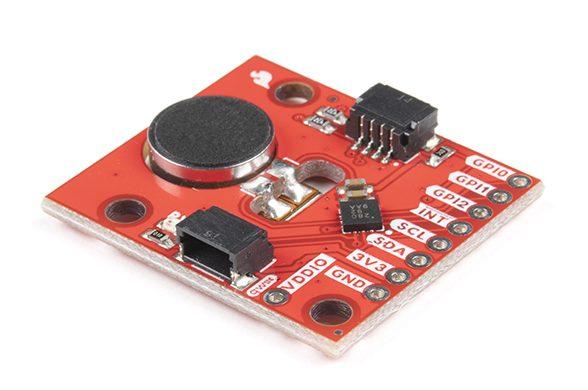
Control the vibration motor with the DA7280 via I2C, PWM, or a combination of three general purpose input pins. Utilizing our handy Qwiic system, no soldering is required to connect it to the rest of your system. However, we still include 0.1″-spaced PTH pads in case you prefer to use a breadboard to access the driver’s I2C, power, interrupt, and general purpose input pins on the edge of the board.
This board is great for projects that require a physical indicator whenever an event is triggered. Add it to your remote control to notify you when your robot has hit a wall. Combine it with an accelerometer to remind you to correct your posture. Or use it with a distance sensor to alert you when a ninja is walking up to you at your desk.
The SparkFun Qwiic Connect System is an ecosystem of I2C sensors, actuators, shields and cables that make prototyping faster and less prone to error. All Qwiic-enabled boards use a common 1mm pitch, 4-pin JST connector. This reduces the amount of required PCB space, and polarized connections mean you can’t hook it up wrong.
Read more: SPARKFUN QWIIC HAPTIC DRIVER – DA7280
- What motor does the SparkFun Qwiic Haptic Driver use?
The board includes a Linear Resonant Actuator (LRA) vibration motor. - Which driver IC controls the haptic motor?
The DA7280 haptic driver IC from Dialog Semiconductor is used. - How can I control the vibration motor?
Control is available via I2C, PWM, or three general purpose input pins. - Do I need to solder to connect the board to my system?
No, the Qwiic 4-pin JST connector allows solderless connection, though PTH pads are provided if preferred. - What is the Qwiic connector pitch and pin count?
All Qwiic-enabled boards use a 1mm pitch, 4-pin JST connector. - Are there breakout pads for breadboard use?
Yes, 0.1" spaced PTH pads expose I2C, power, interrupt, and GPIO pins for breadboard access. - What applications is this board suited for?
It is suited for physical indicators like remote control alerts, posture reminders with accelerometers, and proximity alerts with distance sensors.