
Summary of EPISHINE SIGNS DISTRIBUTION AGREEMENT WITH FARNELL TO ENABLE LIGHT ENERGY HARVESTING WITHIN ELECTRONIC DESIGN
Epishine, a Swedish maker of printed organic solar cells, signed a franchise agreement with Farnell to distribute its indoor-optimized light energy harvesting products. The recyclable, thin, flexible cells convert ambient indoor light to electricity for low-power devices, enabling battery replacement in sensors and reducing waste. Farnell will stock Epishine’s products, including the Light Energy Harvesting Evaluation Kit, which pairs a 6-cell LEH module with a supercapacitor, charge management, and programmable features to power BLE, Zigbee, and LoRa devices and support external backup batteries.
Parts used in the Light Energy Harvesting Evaluation Kit (EK01LEH3_6):
- 6-cell 50x50mm Light Energy Harvesting (LEH) module
- Supercapacitor (energy buffer)
- Intelligent charging management system
- Support circuitry for various output voltages
- Energy storage interface
- External primary battery interface (for backup)
- Programmable control/interface
The innovative Swedish manufacturer of printed organic solar cells and development kits Epishine has signed a new franchise agreement with Farnell, an Avnet Company and global distributor of electronic components, products, and solutions. The new-to-market printed organic solar cells are optimized for harvesting energy from indoor, low energy lighting enabling organic solar power to be used everywhere. Design engineers can utilize this new and innovative technology with Epishine’s Light Energy Harvesting Evaluation Kit. Farnell is the first high-service distributor to stock products from Epishine.
Epishine’s organic solar cells are small, thin, flexible, and printed on recyclable plastic. The cells can be easily integrated into any low-power electronic equipment where they convert ambient indoor light into electricity. New product designers can replace batteries in wireless sensors and similar devices with organic solar cells, reducing the environmental impact of battery waste and saving battery replacement costs.
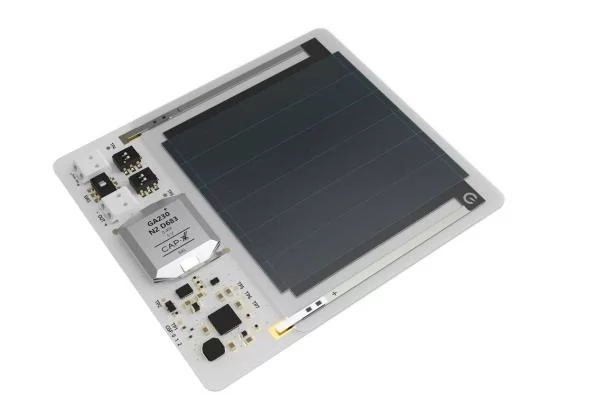
The Light Energy Harvesting Evaluation Kit (EK01LEH3_6) demonstrates how Epishine’s Light Energy Harvesting (LEH) modules can power indoor wireless low-power devices that are usually powered by batteries. It combines a 6-cell 50x50mm LEH module with a supercapacitor which acts as an energy buffer and intelligent charging management system to support various output voltages and energy storage solutions. It can even use an external primary battery as a backup. The evaluation kit can deliver sufficient output current to power most low-power wireless devices such as BLE, Zigbee, and LoRa. The ability to program the evaluation kit provides added flexibility and showcases the unique product integration and design possibilities of Epishine’s LEH modules.
- What does the evaluation kit include?
It combines a 6-cell 50x50mm LEH module with a supercapacitor, intelligent charging management, support for various output voltages and energy storage, and a programmable interface. - Can the LEH modules power low-power wireless devices?
Yes, the evaluation kit can deliver sufficient output current to power most low-power wireless devices such as BLE, Zigbee, and LoRa. - Are the organic solar cells recyclable?
Yes, the cells are printed on recyclable plastic. - Can the kit use a backup battery?
Yes, it can use an external primary battery as a backup. - What is the form factor of the LEH module in the kit?
The kit uses a 6-cell 50x50mm LEH module. - Does the kit offer programmability?
Yes, the ability to program the evaluation kit provides added flexibility for integration and design demonstrations. - What benefits do Epishine’s organic solar cells provide to product designers?
Designers can replace batteries in wireless sensors and similar devices, reducing battery waste and saving replacement costs. - Why is Farnell significant for Epishine?
Farnell is the first high-service distributor to stock Epishine products, expanding access for design engineers.