
Summary of WORLD’S SMALLEST UWB MODULE DELIVERS LOW-POWER FOR IOT DEVICES
Murata has introduced the Type 2AB, the world’s smallest ultra-wideband (UWB) + Bluetooth Low Energy module (10.5 mm x 8.3 mm x 1.44 mm). It combines high accuracy, strong security, low power consumption and a three-antenna system (two UWB, one BLE) for phased difference of arrival (PDoA). Targeted at IoT applications—asset tracking, indoor navigation, smart lighting, digital payments, proximity finding, healthcare wearables, industrial and consumer use—the module enables compact, battery-driven devices and outperforms WiFi/Bluetooth and GPS for indoor positioning.
Parts used in the Type 2AB UWB + BLE module project:
- Type 2AB ultra-wideband (UWB) + Bluetooth Low Energy (BLE) system-in-package module
- Two UWB antennae for phased difference of arrival (PDoA)
- One Bluetooth Low Energy (BLE) antenna
Murata has launched the world’s smallest ultra-wideband (UWB) module – measuring just 10.5 mm x 8.3 mm x 1.44 mm – that combines elevated levels of accuracy and reliability with low-power to ensure compact and battery-driven IoT devices operate as efficiently and cost-effectively as possible.
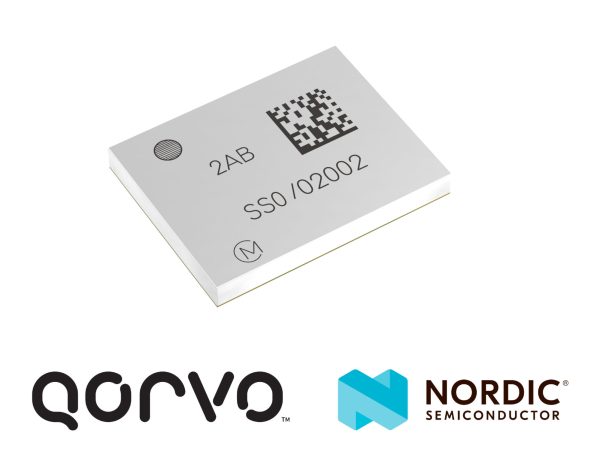
Using short-range radio frequency (RF) technology, the Type 2AB UWB + BluetoothⓇ low-energy (BLE) connectivity module can be used in a wide variety of applications where precise detection is essential. These include ensuring social distancing in the workplace to minimise the spread of COVID-19.
Ideal for manufacturing engineers developing advanced products for the IoT market, the system-in-package module incorporates three antennae – two UWB for phased difference of arrival (PDoA) functionality and one for BLE. The module’s high-accuracy position detection capabilities and strong security functions make it particularly suited to such sectors as healthcare/wearables, industrial/commercial and home/consumer. The Type 2AB module makes light work of asset tracking, indoor navigation, smart lighting, digital payments and such location applications as proximity device finding. It is equally well suited to use in smart factories, POI/indoor marketing, hospitals, museums, warehouses and underground construction projects. The UWB module offers significant benefits over systems based around WiFi/Bluetooth or GPS technology, the latter proving unsuitable for indoor use due to its reliance on satellite signals.
Read more: WORLD’S SMALLEST UWB MODULE DELIVERS LOW-POWER FOR IOT DEVICES
- What are the physical dimensions of the Type 2AB module?
The module measures 10.5 mm x 8.3 mm x 1.44 mm. - What wireless technologies does the Type 2AB module combine?
It combines ultra-wideband (UWB) and Bluetooth Low Energy (BLE). - How many antennae are integrated in the module and what are they for?
It incorporates three antennae: two UWB for phased difference of arrival (PDoA) functionality and one for BLE. - What types of applications is the Type 2AB module suited for?
It is suited for asset tracking, indoor navigation, smart lighting, digital payments, proximity device finding, healthcare/wearables, industrial/commercial and home/consumer applications. - Why is the module beneficial for battery-driven IoT devices?
Because it delivers low power consumption while offering high accuracy and reliability, enabling compact and efficient battery-driven operation. - How does UWB performance compare to GPS for indoor use?
UWB is more suitable for indoor positioning because GPS relies on satellite signals and is unsuitable indoors. - Can the Type 2AB module help with social distancing applications?
Yes, using short-range RF technology it can be used to ensure social distancing in the workplace. - What sectors particularly benefit from the module's capabilities?
Healthcare/wearables, industrial/commercial, home/consumer, smart factories, hospitals, museums, warehouses, POI/indoor marketing and underground construction projects.