
Summary of CP2102 USB TO UART BREAKOUT BOARD FEATURES USB TYPE-C
CP2102 USB to UART breakout board provides USB Type-C connectivity for converting USB to UART using the CP2102 chip. It integrates a USB transceiver, 1KB programmable ROM and one-time EPROM, a 3.3 V regulator, 576-byte RX and 640-byte TX buffers, hardware handshaking, and supports up to 1 Mbaud USB 2.0 speeds. The board exposes RX/TX/RTS/CTS and many other pins (5V tolerant) and includes RX/TX LEDs for debugging. Virtual COM port and direct access drivers allow host communication.
Parts used in the CP2102 USB to UART Breakout Board:
- CP2102 chip (Silicon Labs CP210x series USB to UART bridge)
- USB Type-C plug
- Integrated USB transceiver (on CP2102)
- 1KB programmable ROM (on CP2102)
- One-time programmable EPROM (on CP2102)
- 3.3 V voltage regulator (on board)
- RX and TX LEDs
- Breakout pins: RX, TX, RTS, CTS and other signal pins (5V tolerant)
Most of the devices now come with a USB Type-C for interfacing and connectivity. Also, the USB to UART conversion is crucial for interfacing if the working device only supports a UART port. CP2102 features a USB Type-C plug for this conversion from USB to UART. We also saw a USB to UART module based on MCP220 through GPIOs, also compact USB to a UART converter using a CH330 chip with an interface speed of 2Mbps. However, there is no mention of USB Type-C for these devices.
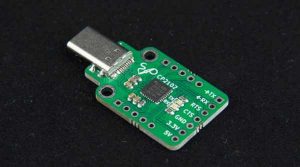
CP2102 USB to UART is a breakout board supporting USB Type-C. The board features the CP2102 chip which belongs to Silicon Labs’ CP210x series dedicated for USB to UART Bridge through virtual COM port drivers that are needed for device functioning to facilitate host communication with CP210x based devices. These devices can also interface with a host using the direct access driver. These drivers make the USB device appear as an additional COM port available to the system.
Block Diagram Of CP2102 Chip
Talking more about the CP2102 chip, it has an integrated USB transceiver with no additional need for external resistors. It comes with a 1KB programmable ROM along with the one-time programmable EPROM. The voltage regulator gives a 3.3 V output. The asynchronous serial data bus of the C02102 USB to UART supports 576 bytes receive buffer and a 640 bytes transmit buffer with hardware handshaking functionality.
The device is a fast USB 2.0 compatible that can work at data transfer rates up to 1 Mbaud. Additionally, the board supports not only the common break-out RX/TX/RTS/CTS pins, but it also breaks out almost all the other pins. For more details regarding the break-out pins, you can see them at the back of the board. “The signal pins are 5V tolerant – they should work with both 3.3V and 5V.” The CP2102 USB to UART board also comes with RX and TX LEDs for easing the debug issues by lighting up when data is transferring through an interface.
Read more: CP2102 USB TO UART BREAKOUT BOARD FEATURES USB TYPE-C
- Does the CP2102 breakout board use USB Type-C?
Yes, the CP2102 USB to UART breakout board features a USB Type-C plug. - What chip is used for USB to UART conversion on the board?
The board uses the CP2102 chip from Silicon Labs CP210x series. - What drivers are needed for the CP2102 to appear as a COM port?
Virtual COM port drivers are needed, though the device can also use the direct access driver. - What are the RX and TX buffer sizes of the CP2102?
The CP2102 supports a 576-byte receive buffer and a 640-byte transmit buffer. - What voltage does the board regulator provide?
The onboard voltage regulator provides a 3.3 V output. - Are the signal pins 5V tolerant?
Yes, the signal pins are 5V tolerant and should work with both 3.3V and 5V. - What is the maximum interface speed supported?
The device is USB 2.0 compatible and supports data transfer rates up to 1 Mbaud. - Does the board include hardware handshaking?
Yes, the CP2102 includes hardware handshaking functionality. - Are RX and TX LEDs provided for debugging?
Yes, the board includes RX and TX LEDs that light when data is transferring.
