Summary of TritiLED
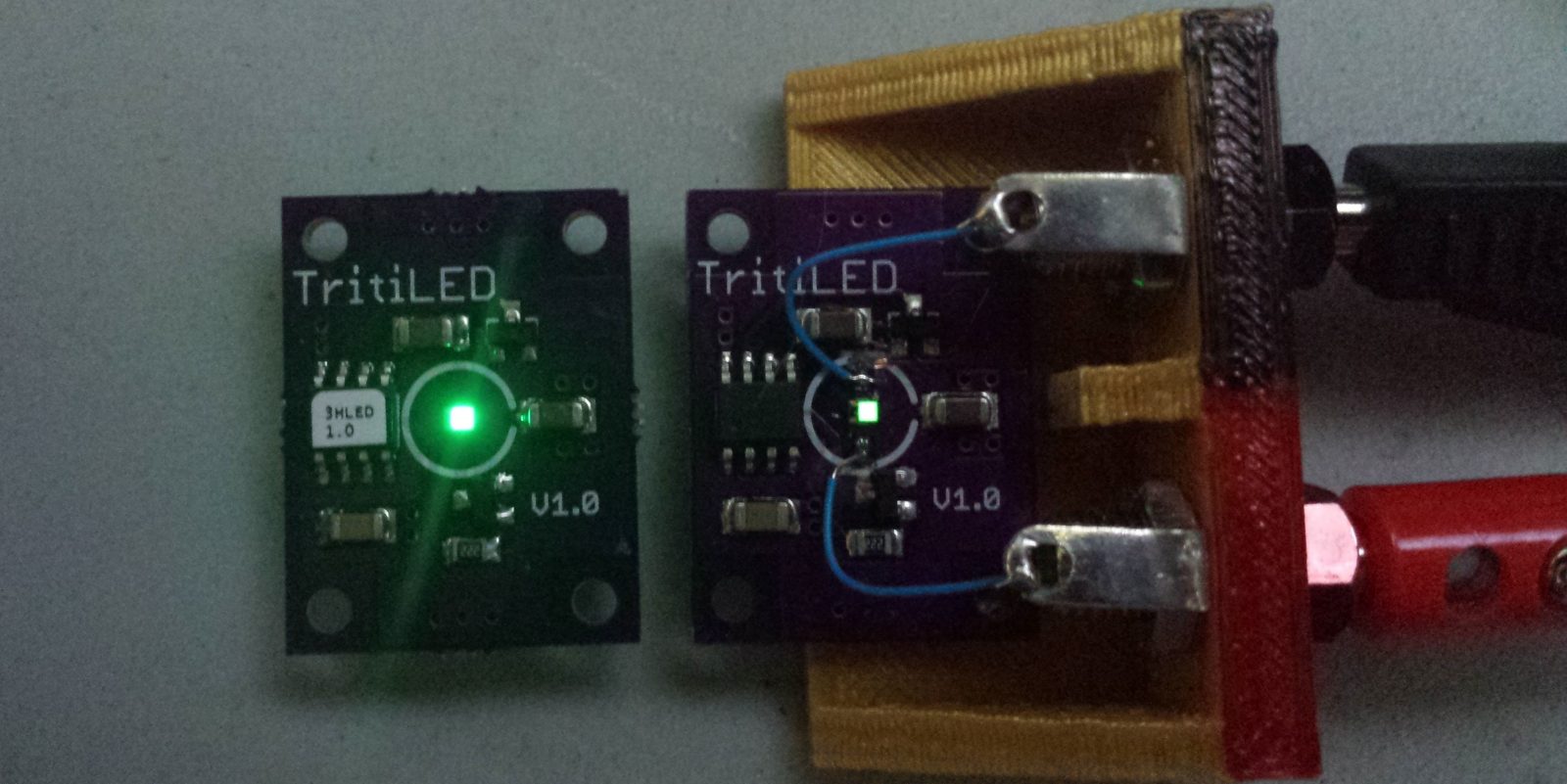
TritiLEDs are open-source, battery-powered LED lights designed to replace expensive or illegal tritium markers for night-time equipment marking. Developed by an amateur astronomer to illuminate tripods and gear safely, they leverage modern LED efficiency and microcontrollers to operate continuously for 1 to 15 years. Unlike phosphorescent materials requiring charging or single-use glow sticks, TritiLEDs offer a durable, reusable alternative under a CC-BY-SA license, with versions 1.0 released and newer iterations in development.
Parts used in the TritiLED project:
- Battery
- LED
- Microcontroller
Description
Details
Concept
This is a project born of frustration. As an amateur astronomer and astrophotographer, I often find myself stumbling around expensive and fragile equipment in the dark. A few years ago, I went looking for glow-in-the-dark markers I could attach to tripod legs and other gear to avoid costly accidents. I quickly dismissed traditional glow-in-the-dark (phosphorescent) materials because of their short half-life and the need to “charge” them before use. Chemiluminescent markers (glow sticks) are better in this regard, but are too expensive to continually replace, and end up in landfills after one night’s use. Radioactive markers (especially tritium-based), with their constant glow and multi-year half-life, are technically almost perfect for this application: you can stick them to equipment and you’re done.
For More Details: TritiLED
- What is the primary purpose of TritiLEDs?
TritiLEDs are always-on battery powered LED glow lights designed for general night-time marking use. - How long do TritiLEDs run?
They run from 1 to 15 years depending on the battery choice. - Can TritiLEDs replace radioactive tritium lighting?
Yes, they can replace expensive and sometimes illegal tritium lighting in various applications. - Why did the creator choose LEDs over other materials?
The creator dismissed phosphorescent materials for their short half-life and glow sticks for being too expensive and wasteful. - Is the TritiLED hardware and software open source?
Yes, Version 1.0 is released under an open-source CC-BY-SA license. - Are there different versions of the project available?
Version 1.0 is complete, while Versions 1.1 and 2.x are works-in-progress being documented as they develop. - Does the article mention using TritiLEDs for astronomy?
Yes, the project was born out of frustration from stumbling around expensive astronomical equipment in the dark. - Are traditional tritium markers legal for general-purpose markers?
No, general-purpose markers are considered frivolous and are prohibited in the United States.