
Summary of Toshiba to sample 20Mpixel sensor
The Toshiba TCM5115CL is a 1/2.3-inch 20MP BSI CMOS image sensor (5216 × 3920 pixels, 1.2 µm) designed for digital still cameras. It offers improved sensitivity and a 15% higher full well capacity versus the prior 16MP sensor, supports I2C/SPI and Sub-LVDS 12-lane output, various binning modes, built-in PLL, defect pixel correction, picture flip, global reset for mechanical shutter, strobe timing, low power and high-speed operation, and high frame rates (60 fps at 1080p, 100 fps at 720p). Sampling begins in January; volume production in August.
Parts used in the Toshiba TCM5115CL Project:
- Toshiba TCM5115CL 1/2.3-inch 20MP BSI CMOS image sensor (5216 × 3920, 1.2 µm)
- Backside illumination (BSI) pixel structure
- Sub-LVDS 12-lane interface
- I2C interface
- SPI interface
- Built-in Phase Lock Loop (PLL)
- Defect pixel correction circuitry
- Horizontal and vertical picture flip function
- Global reset for mechanical shutter
- Strobe timing pulse generation
- Binning circuitry (Horizontal 1/2; Vertical 1/2 to 1/8)
The Toshiba TCM5115CL is the latest addition to its sensor line-up for digital still cameras which offers high image quality using backside illumination technology (BSI) to improve sensitivity and imaging performance. The TCM5115CL is a 1/2.3-inch CMOS image sensor with an imaging pixel array of 5216 (H) × 3920 (V). Use of the CMOS process enables low power consumption and high-speed operations. The TCM5115CL is designed to meet the demands of high quality, fast frame rate image capture and HD video recording supporting smooth slow motion playback, and delivers the high frame rates 60 fps at 1080p and 100 fps at 720p.
- Features
- 1/2.3″ 20M resolution (1.2 µm)
- BSI
- I2C and SPI interface
- Sub-LVDS 12 lanes
- Binning:
- Horizontal 1/2
- Vertical 1/2 to 1/8
- Built-in Phase lock loop
- Defect pixel correction
- Picture flip (Horizontal and vertical)
- Global reset for mechanical shutter
- Strobe timing pulse
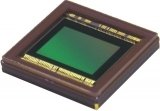
In January, Toshiba is to sample a 20-megapixel (MP) CMOS image sensor, the TCM5115CL, for digital still cameras.
Volume production is scheduled for August.
The TCM5115CL offers the industry’s highest resolution in the 1/2.3 inch optical format, using backside illumination technology (BSI) to improve sensitivity and imaging performance.
Continued advances in the resolution offered by compact digital cameras—now in the range of 10- to 16MP—have brought with them the challenge of improving performance and picture quality with smaller pixels.
The TCM5115CL does just this by achieving a 15% improvement in full well capacity—the amount of charge an individual pixel can hold before saturating—against Toshiba’s previous generation 16MP sensor (pixel size = 1.34μm).
TCM5115CL delivers frame rates 60fps at 1080p and 100fps at 720p.
Toshiba’s Analog and Imaging System business is lookng for a 30% market share in CMOS imaging sensors in 2015.
For more read: Toshiba to sample 20Mpixel sensor
- What is the resolution and pixel size of the TCM5115CL?
The sensor is 20 megapixels with an imaging array of 5216 × 3920 and a pixel size of 1.2 µm. - Does the TCM5115CL use BSI technology?
Yes, it uses backside illumination (BSI) to improve sensitivity and imaging performance. - What frame rates does the TCM5115CL support for HD video?
It delivers 60 fps at 1080p and 100 fps at 720p. - What interfaces are supported by the TCM5115CL?
It supports I2C, SPI, and a Sub-LVDS 12-lane interface. - Does the sensor include binning options?
Yes, it supports horizontal 1/2 binning and vertical binning from 1/2 to 1/8. - What features help with image quality and defects?
It has defect pixel correction and achieved a 15% improvement in full well capacity versus Toshiba's previous 16MP sensor. - Is there support for mechanical shutters?
Yes, it provides a global reset for mechanical shutter operation. - When will sampling and volume production occur?
Sampling is scheduled to start in January and volume production is planned for August. - Does the sensor include timing for external lighting?
Yes, it provides a strobe timing pulse. - What enables low power and high-speed operation?
The CMOS process implementation enables low power consumption and high-speed operations.